UK's Starmer defies calls to quit as safeguarding minister resigns in protest of leadership
Updated 53 minutes ago

Death penalty for Palestinian prisoners pushes through despite growing divisions, historical contradictions
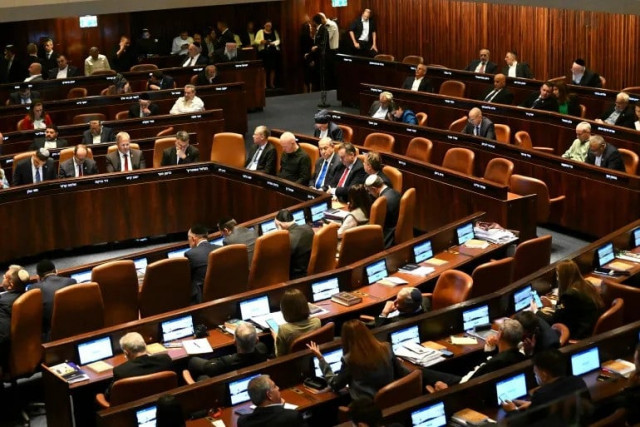
Israel’s Knesset approved a controversial law on Monday allowing the death penalty for Palestinian prisoners, with 62 lawmakers voting in favour, 47 against and one abstaining, according to an official Knesset voting record.
A contentious bill introduced by the far-right Jewish Power party led by National Security Minister Itamar Ben-Gvir was approved in its second and third readings in the Knesset.
Prime Minister Benjamin Netanyahu voted in favour of the bill, according to Israeli media. The bill passed its first reading in November.
Critics say the bill’s scope would, in practice, apply almost exclusively to Palestinian prisoners, raising concerns over discriminatory enforcement.
The vote exposed sharp divisions between the ruling coalition and opposition, including Arab parties.
SOURCE: ANADOLU AGENCY
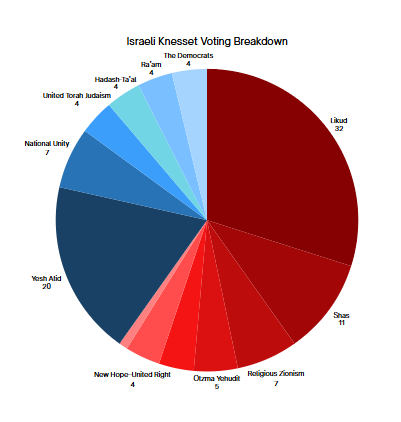
The bill was heavily favoured by right-wing and religious coalition parties such as Likud (led by Netanyahu), Shas, Religious Zionism, and Jewish Power (colored in red).
Centrist and left-leaning groups like Yesh Atid, National Unity, and Arab parties, including Ra’am and Hadash-Ta’al, led the opposition, even though Hadash Ta'al has not aligned itself with either political bloc (coloured in blue).
Figures like Yair Lapid and Benny Gantz were among those opposing the measure, highlighting a widening gap between the government and opposition blocs.
United Torah Judaism showed internal division, with members voting both for and against the motion.
Israel’s ultra-Orthodox party, UTJ, announced it is quitting the country’s fractious right-wing coalition in July 2025 due to a long-running dispute over mandatory military service, threatening Netanyahu’s hold on power.
Also Read: Israeli parliament rejects bill to label Qatar as ‘enemy state’
The bill to impose the death penalty on Palestinians, however, was passed despite significant opposition.
Israel, as a part of its initial state reforms, banned the death penalty for ordinary murder, but kept it in place for treason.
While it has historically only carried out a single death penalty, it kept in place the British emergency legislation – Defence (Emergency) Regulations – that stated national security offences as a basis for capital punishment to be enacted.
Israel introduced the Nazi Criminals Prosecution Law in 1950, which imposed the death penalty for Nazi crimes. Holocaust architect Adolf Eichmann was hanged for genocide and crimes against humanity on June 1, 1962.
When Israel occupied the territories of the West Bank and the Gaza Strip in 1967, the military law imposed in these territories also included the death penalty.
The last death penalty was handed out to a Nazi guard, John Demjanjuk, but it was overturned in 1993. Since then, no Israeli prosecution has sought capital punishment until now.
















This material may not be published, broadcast, rewritten, redistributed or derived from. Unless otherwise stated, all content is copyrighted © 2026 The Express Tribune.






COMMENTS
Comments are moderated and generally will be posted if they are on-topic and not abusive.
For more information, please see our Comments FAQ