PHC issues notices in multiple missing persons cases, refers two to commission
Updated 16 minutes ago

Transit marks first 'confirmed crossing by major carrier since start of conflict,' according to MarineTraffic
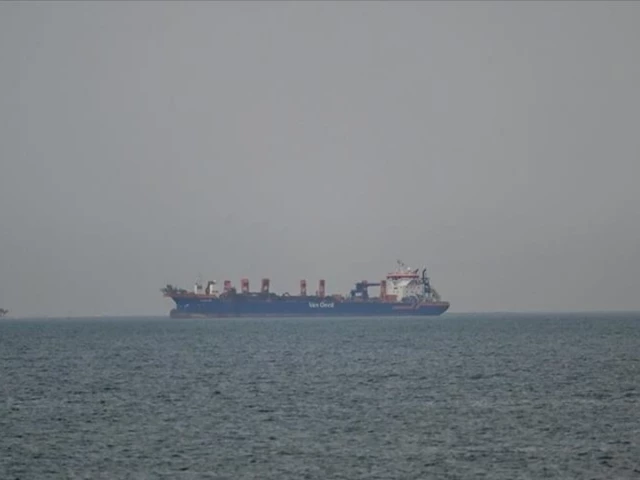
Three Chinese ships recently sailed through the Strait of Hormuz after coordination with relevant parties, a foreign ministry spokesperson told a regular daily press briefing on Tuesday, while calling for peace and stability in the Gulf Region.
"The Strait of Hormuz and the surrounding waters are an important route for global trade and energy supplies. China calls for an immediate ceasefire, an end to the fighting and restoration of peace and stability in the Gulf Region," Chinese foreign ministry spokesperson Mao Ning told reporters regarding reports of the vessels' passage.
Mao did not offer details about the Chinese ships.
Ship-tracking data showed two Chinese container ships sailed through the Strait of Hormuz on Monday on their second attempt to leave the Gulf after turning back on Friday.
The vessels sailed in close formation out of the strait and into open waters, data on the MarineTraffic platform showed.
Also Read: Trump seeks end to Iran war without reopening Hormuz
Business Recorder reports that Beijing expressed “gratitude” on Tuesday as it said three Chinese ships had transited the crucial Strait of Hormuz.
"Both vessels successfully crossed on a second attempt today, marking the first container vessels to leave the Persian Gulf since the start of the conflict, excluding Iranian flag vessels," said Rebecca Gerdes, data analyst with Kpler, which owns MarineTraffic.
"Both vessels are steaming at an elevated speed toward the Gulf of Oman at the moment."
Officials from China's COSCO, the shipping group that operates the two vessels, did not respond to requests for comment.
COSCO had said in a March 25 client advisory that it had resumed bookings for general cargo containers for shipments from Asia to the Gulf including the United Arab Emirates, Saudi Arabia, Bahrain, Qatar, Kuwait and Iraq.
Iran has launched attacks on Gulf shipping and threatened more, stranding hundreds of vessels and 20,000 seafarers inside the Gulf.
Energy exports, including crude oil from Saudi Arabia and liquefied natural gas from Qatar, have been effectively halted.
While there have been some discussions with Iran and countries such as India and Pakistan on getting their fleets through the strait, oil and tanker markets have been looking for any signs that shipping traffic has picked up pace.
The majority of energy shipments that have passed through the waterway have related to Iran's oil exports, with a few other ships managing to sail through every day.
Greek oil tanker departs
A Greek-operated tanker bound for India carrying Saudi crude also exited the Gulf via the strait recently, LSEG ship-tracking data showed.
The Maltese-flagged Marathi began broadcasting its position off the coast of India on March 26 after last reporting its position inside the Gulf on March 2.
The vessel was last seen off the west coast of India on Monday, the LSEG data showed.
It was the third loaded crude tanker operated by Greek firm Dynacom to exit the Gulf since the war began.
Dynacom did not immediately respond to a request for comment.
Dynacom is one of the few shipowners willing to risk crossing the strait where the risks from Iran include possible floating mines, missiles and drones.
Companies making the voyage have used tactics including switching off their AIS tracking transponders and sailing at night to be less visible, sources have told Reuters.
Two Indian-flagged liquefied petroleum gas (LPG) tankers crossed the strait on Saturday, following two others which exited carrying critical supplies of the cooking gas bound for India in recent days.















This material may not be published, broadcast, rewritten, redistributed or derived from. Unless otherwise stated, all content is copyrighted © 2026 The Express Tribune.






COMMENTS
Comments are moderated and generally will be posted if they are on-topic and not abusive.
For more information, please see our Comments FAQ