Rs107b price differential claims remain unpaid
Updated 2 hours ago

Cold storage gap, energy outages disrupt supply chains; processed fruit exports enter Japan
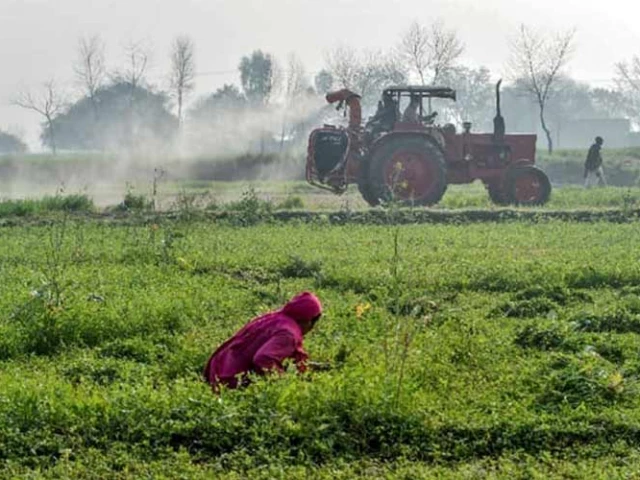
The agricultural heartland of Sindh is currently grappling with a systemic infrastructure failure that threatens to turn its surplus harvests into a source of economic ruin rather than national wealth. Despite the province's immense potential as a global fruit and vegetable hub, the absence of a functional supply chain and the government's preoccupation with large-scale corporate ventures are stifling the growth of small and medium-sized enterprises (SMEs) that form the backbone of the sector. The crisis is multifaceted, involving energy insecurity, a lack of technical innovation, and a post-harvest loss rate that has now reached an alarming 35% to 40%.
At the same time, the limited development of value-added processing – such as juices, pulps, and dried products – means Pakistan is missing opportunities to tap high-value export markets like Japan, where demand for processed agricultural goods is steadily growing.
Sindh Abadgar Board (SAB) President Syed Mehmood Nawaz Shah paints a grim picture of the current baseline, noting that while Pakistan produces approximately 13 million tonnes of fruits and vegetables, the country's total cold storage capacity does not exceed one million tonnes. This massive disparity creates a "forced waste" cycle where farmers are frequently penalised for their own productivity. In the absence of preservation facilities, bumper harvests trigger immediate market gluts, forcing growers to offload produce at throwaway prices that fail to cover the basic costs of harvesting and transport. He argues that the government's focus on Government-to-Government (G2G) interactions is misplaced, as the real success in horticulture – exemplified by the 200 to 250 small, privately funded Kinnow pack-houses – comes from the SME sector.
The energy crisis further compounds these issues. Shah points out that any attempt to modernise the supply chain is thwarted by the "dismal" state of Pakistan's energy grid. In rural Sindh, electricity is available for barely twelve hours a day, and even minor weather disruptions can cause day-long outages without accountability. While there is a push for solar energy, the high capital costs and the need for backup generators for night-time operation make these systems economically unviable for many. Without a reliable, 24-hour power supply, the operation of climate-controlled storage and processing facilities remains impossible.
Pakistan Fruit and Vegetable Exporters, Importers and Merchants Association (PFVA) Patron-in-Chief Waheed Ahmed echoed these concerns, focusing on the external cost of this internal failure. He explains that highly perishable items can only be stored for three to five days at most, and once they reach markets, the cold chain is often broken. The inability to maintain a controlled temperature from the farm gate to the market means quality is compromised during long transit times, such as moving produce from Sindh to Punjab. This break in the chain leads to rapid spoilage and a significant loss in export value. Ahmed stresses that while the global market is moving towards high-efficiency preservation, Pakistan is falling behind due to an "ad-hoc" approach to governance.
Furthermore, both associations' leaders call for a radical shift toward research and development (R&D) and innovation. As climate change brings unpredictable weather patterns and impending water scarcity, there is an urgent need for new crop varieties that can survive these shifts. They advocated a transition from traditional flood irrigation, which currently accounts for 99% of the system, to drip and sprinkler systems to conserve water. Both emphasised that Pakistan must adopt a comprehensive 10-year agricultural policy. They argue that by improving the entire supply chain and focusing on quality, the shelf life of produce will naturally increase, alleviating the chronic financial issues faced by farmers and securing Pakistan's food future.
Meanwhile, Pakistan's value-added fruit products are steadily entering the international market in Japan, reflecting growing global demand for processed foods like dried mangoes, pulps, and juices.
The recent entry of Pakistan's value-added juice products in Japan reflects not just export growth but the strengthening of the country's supply chain – from modernised orchards and efficient fruit sourcing to processing, packaging, and cold-chain logistics. PFVA's Ahmed said meeting Japan's strict quality standards requires consistency at every stage, highlighting how improvements in storage, transportation, and quality control are enabling Pakistani products to compete in high-end global markets such as Tokyo.














This material may not be published, broadcast, rewritten, redistributed or derived from. Unless otherwise stated, all content is copyrighted © 2026 The Express Tribune.







COMMENTS
Comments are moderated and generally will be posted if they are on-topic and not abusive.
For more information, please see our Comments FAQ