Mills demand sugar export
Updated 8 hours ago

Mobile banking users hit 126 million but ATM withdrawals still dominate transaction values
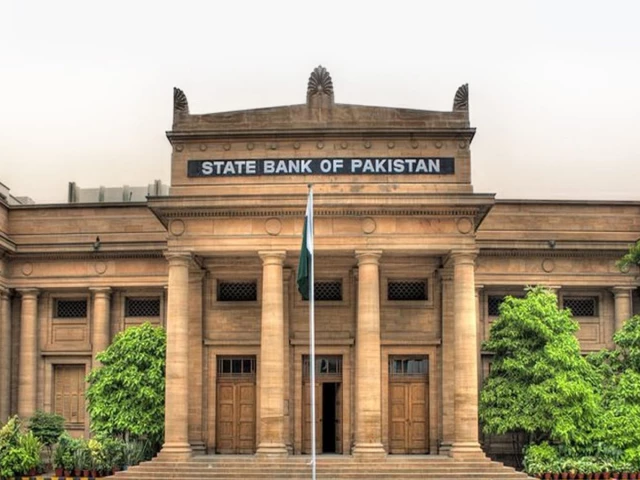
Pakistan's payments landscape continues to undergo rapid digitisation, but cash remains deeply entrenched in the economy, with ATM withdrawals still dominating transaction values, according to the State Bank of Pakistan's (SBP) Payment Systems Quarterly Review for Q2 FY26.
The report highlights a striking contrast: while digital channels now account for 92% of total retail payment volume, a large share of these transactions ultimately converts into cash. During the quarter, cards were used for 279.4 million transactions at ATMs, primarily for cash withdrawals, underscoring the continued dependence on physical currency. This divergence reflects a structural dynamic in which digital adoption is rising in frequency, but cash continues to hold "gravity" in terms of value. For millions of users, digital wallets and mobile banking platforms act as transitional tools rather than endpoints, with funds often withdrawn in cash to meet every day transactional needs in an economy where informal markets still dominate.
The reliance on cash is also evident in the strain it places on physical infrastructure. With 279.4 million ATM transactions processed through a network of 20,976 machines nationwide, each ATM handled an average of approximately 144 transactions per day. This high utilisation rate points to capacity constraints, frequently resulting in outages and long queues, particularly during salary cycles and festive periods.
Despite these challenges, the report points to a significant structural shift underway within the digital ecosystem, especially in e-commerce payments. Account-based transactions have emerged as the dominant mode, accounting for 95% of total e-commerce activity, or 305 million transactions during the quarter. This marks a decisive move away from card-based payments. The growing preference for direct bank transfers is largely driven by cost considerations. Merchants and consumers are increasingly bypassing card schemes to avoid the Interchange Reimbursement Fee (IRF), which can erode profit margins. By adopting account-to-account payment methods, merchants retain a greater share of revenues, while consumers benefit from lower service charges, creating a mutually beneficial dynamic within the domestic payments' ecosystem.
The shift toward account-based payments is also reflected in the stagnation of credit card usage. Out of 66.7 million cards in circulation, 58.2 million are debit cards, while credit cards account for just 3.1 million, representing less than 5% of the total. This limited penetration highlights deeper structural and cultural dynamics, including high borrowing costs, low levels of documented income, and a general reluctance to engage in consumer credit.
In contrast, Pakistan's instant payment system, Raast, is emerging as a key enabler of digital financial inclusion. Initially designed for person-to-person transfers, Raast has expanded rapidly into the Person-to-Merchant (P2M) segment. The number of merchants onboarded has crossed 2.1 million, while QR code-based payments reached Rs288 billion during the quarter, registering a threefold increase compared to earlier periods. The expansion of Raast into everyday commerce, ranging from small kiryana stores to street vendors, signals a broader shift toward low-cost, accessible digital payments. Importantly, this transition is also creating a digital trail of transactions within the informal sector, offering policymakers an opportunity to improve documentation and potentially widen the tax net.
At the macro level, the SBP's real-time gross settlement system, PRISM+, continued to handle high-value transactions, settling Rs370 trillion during the quarter, largely driven by government securities and interbank transfers. This highlights the dual nature of Pakistan's financial system, where large-value transactions are fully digitised, while retail payments remain fragmented between digital and cash.
Overall, the data suggests that Pakistan is not transitioning from cash to digital in a linear manner but is instead evolving toward a hybrid model of "integrated liquidity," where both forms coexist. While digital platforms are increasingly used for convenience and speed, cash remains essential for value storage and settlement in large segments of the economy.
With mobile banking users reaching 126 million, the foundation for a digital economy is strengthening. However, bridging the gap between digital access and actual usage remains a key challenge.










This material may not be published, broadcast, rewritten, redistributed or derived from. Unless otherwise stated, all content is copyrighted © 2026 The Express Tribune.



COMMENTS
Comments are moderated and generally will be posted if they are on-topic and not abusive.
For more information, please see our Comments FAQ