Bill Gates to testify over Epstein scandal
Updated 1 hour ago

Strait of Hormuz, Kharg Island in focus as war continues
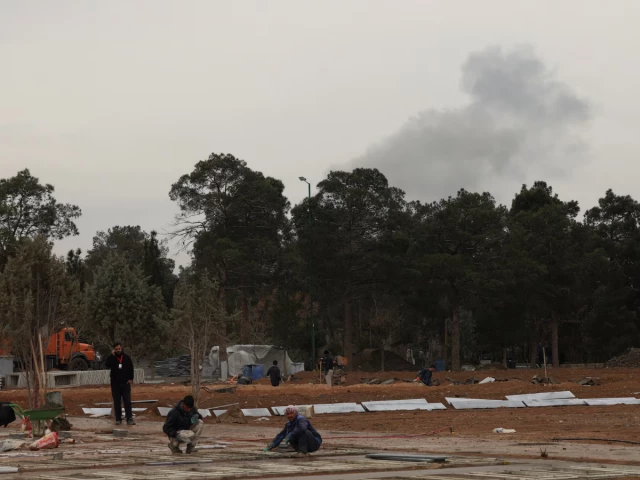
The Trump administration is considering sending thousands of US troops to the Middle East to reinforce operations against Iran, as the conflict enters its third week, according to a US official and three people familiar with the matter.
The deployments could provide additional options for expanding U.S. operations, the sources said. Options include securing safe passage for oil tankers through the Strait of Hormuz, primarily using air and naval forces. Four sources, including two U.S. officials, added that securing the Strait could also require deploying troops along Iran’s coastline.
Read: Iran war energy shock sparks global push to reduce fossil fuel dependence
Officials granted anonymity to discuss sensitive military planning.
The administration has also explored sending ground forces to Kharg Island, Iran’s key oil export hub, which handles 90% of the country’s crude exports. One official noted that such an operation would carry significant risks, as the island is within range of Iranian missiles and drones.
The U.S. struck military targets on Kharg Island on March 13, and Trump has threatened to target critical oil infrastructure there. Military analysts say controlling the island could be strategically preferable to destroying it, given its vital role in Iran’s economy.
Deploying U.S. ground troops, even for a limited mission, could pose political risks for Trump. Public support for the Iran campaign remains low, and his election pledges included avoiding new Middle East entanglements.
Officials have also discussed securing Iran’s stocks of highly enriched uranium, a mission that experts describe as complex and risky, even for U.S. special operations forces.
Sources do not expect an imminent deployment of ground forces and declined to provide operational specifics.
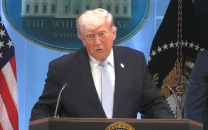
A White House official, speaking on condition of anonymity, said: “There has been no decision to send ground troops at this time, but President Trump wisely keeps all options at his disposal.
“The president is focused on achieving all of the defined objectives of Operation Epic Fury: destroy Iran’s ballistic missile capacity, annihilate their navy, ensure their terrorist proxies cannot destabilize the region, and guarantee that Iran can never possess a nuclear weapon.”
The Pentagon declined to comment.
The remarks come as the U.S. military continues to target Iran’s navy, missile and drone stockpiles, and its defence industry. Since the conflict began on February 28, the U.S. has carried out more than 7,800 strikes and damaged or destroyed over 120 Iranian vessels, according to a Wednesday factsheet from U.S. Central Command, which oversees roughly 50,000 U.S. troops in the Middle East.
US casualties
Trump has said his objectives go beyond degrading Iran’s military capabilities, including securing safe passage through the Strait of Hormuz and preventing Tehran from developing a nuclear weapon. Ground forces could broaden his options, but carry significant risk. Even without direct conflict in Iran, 13 US troops have been killed and around 200 wounded, most of them minor injuries, the military says.
For years, Trump has criticised his predecessors for engaging in foreign wars and pledged to keep the U.S. out of conflicts abroad. However, he has recently refused to rule out “boots on the ground” in Iran.
A senior White House official told Reuters that Trump has multiple options for acquiring Iran’s nuclear material but has not decided how to proceed. “Certainly there are ways in which it could be acquired,” the official said.
Read More: Saudi Arabia reserves right to military action against Iran: FM
In written testimony to lawmakers on Wednesday, Director of National Intelligence Tulsi Gabbard said Iran’s nuclear enrichment program had been destroyed by strikes in June, and entrances to underground facilities had been “buried and shuttered with cement.”
Sources said discussions on U.S. reinforcements go beyond the arrival of an Amphibious Ready Group next week, which includes a Marine Expeditionary Unit of more than 2,000 Marines.
One source noted the U.S. military is losing operational capacity after sending the USS Gerald R. Ford aircraft carrier to Greece for maintenance following a fire aboard the vessel.
Trump has also vacillated on securing the Strait of Hormuz. After initially saying the U.S. Navy could escort vessels, he urged other countries to help reopen the key waterway. With little interest from allies, Trump on Wednesday mused about leaving the responsibility to regional states.
“I wonder what would happen if we ‘finished off’ what’s left of the Iranian Terror State, and let the Countries that use it… be responsible for the so-called Strait?” Trump posted on Truth Social.











This material may not be published, broadcast, rewritten, redistributed or derived from. Unless otherwise stated, all content is copyrighted © 2026 The Express Tribune.






COMMENTS
Comments are moderated and generally will be posted if they are on-topic and not abusive.
For more information, please see our Comments FAQ