China's FM Wang Yi reiterates appreciation for Pakistan’s constructive role amid US-Iran talks in meeting with Dar
Updated 5 hours ago

Announces limiting its services to UAE only to Al Ain
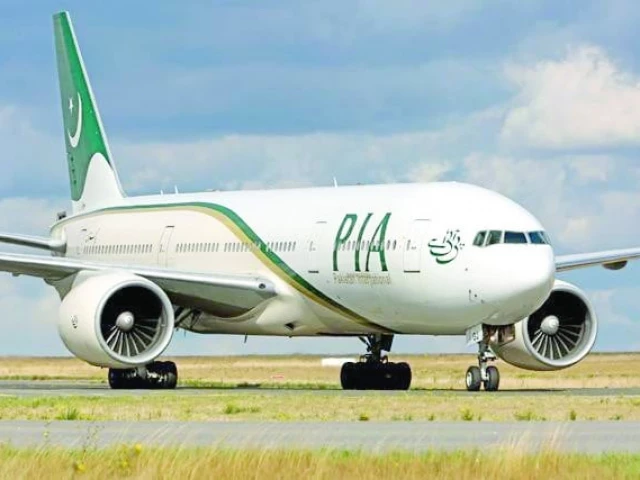
Amid escalating tensions in the Middle East, PIA on Wednesday announced operational changes to its Gulf routes, suspending flights to Fujairah in the UAE for 48 hours.
According to a statement issued by the airline's spokesperson, PIA will limit its services to the UAE only to Al Ain, an inland oasis city on the eastern border with Oman.
Airline officials said the situation is under constant review, with further adjustments likely if tensions persist. Passengers have been advised to regularly check flight schedules and remain in contact with airlines.
On Wednesday, conflict in the Gulf continued to trigger widespread disruption to Pakistan's air travel, with at least 92 inbound and outbound flights cancelled across major airports, stranding passengers and forcing airlines to scale back operations.
The cancellations affected key international routes linking Pakistan with the Gulf and beyond, underscoring the immediate fallout of regional instability on global aviation networks.
According to aviation officials, Lahore's Allama Iqbal International Airport saw 18 flights cancelled to destinations including Kuwait, Doha and Bahrain. At Karachi's Jinnah International Airport, at least 20 flights to Doha, Kuwait, Bahrain, Iran and other regional hubs were called off.
Islamabad International Airport reported the highest number of disruptions, with 28 flights cancelled on routes to Dubai, Doha, Bahrain and Muscat, while Peshawar Airport saw 16 flights to Doha, Dubai and Abu Dhabi scrapped.
Disruptions extended to smaller airports as well. Multan recorded four cancellations, while Sialkot saw six flights to Dubai, Doha, Riyadh and Bahrain suspended. In contrast, operations at Faisalabad Airport remained unaffected, with flights continuing as scheduled.
The disruption in Pakistan reflects a broader shock to global aviation, as heightened tensions in the Middle East - a critical transit corridor linking Europe, Asia and Africa - force airlines to reassess route safety and operational viability.
Aviation analysts warn that even limited airspace restrictions can trigger cascading disruptions worldwide. Airlines are increasingly diverting flights to avoid sensitive zones, adding hours to travel times, increasing fuel consumption and complicating crew and aircraft scheduling.
Major carriers have already adjusted operations, with some suspending routes and others relying on longer, costlier flight paths. Industry bodies such as the International Air Transport Association and the International Civil Aviation Organisation continue to issue risk advisories, prompting airlines to recalibrate operations in real time.













This material may not be published, broadcast, rewritten, redistributed or derived from. Unless otherwise stated, all content is copyrighted © 2026 The Express Tribune.






COMMENTS
Comments are moderated and generally will be posted if they are on-topic and not abusive.
For more information, please see our Comments FAQ