Tola budget proposes rupee at 250 per dollar
Updated 15 hours ago

ICMA submits proposals for FY27 budget to broaden revenue base

The Institute of Cost and Management Accountants of Pakistan (ICMA) has submitted new tax revenue generation measures to the Tax Policy Office, Ministry of Finance, for consideration in the federal budget for fiscal year 2026-27.
These proposals, developed by the ICMA's Research and Publications Department, are based on a careful analysis of Pakistan's economic priorities, sector-specific challenges and international best practices. They aim to broaden the tax base, formalise emerging sectors, enhance transparency and generate equitable and sustainable revenue streams.
The tax measures have been categorised under seven key segments: (1) New revenue initiatives to broaden the tax base, (2) Climate and green taxation, (3) Urban and transport revenue measures, (4) Corporate and financial services revenue, (5) Formalising digital and informal economy for tax revenue, (6) Agricultural and rural income revenue and (7) Wealth and luxury tax revenue.
To broaden the tax base, the ICMA has proposed a digital services tax to capture revenues from Pakistan's rapidly growing digital economy, including streaming platforms, gaming, mobile applications and other digital media platforms. This measure will formalise digital business activities, ensure equitable contribution to public revenue and strengthen fiscal resources. The expected impact is to encourage compliance, formalise the digital sector, and align with international best practices.
A regulated licensing and taxation framework for online and speculative gaming is also proposed. Currently, such gaming activity is largely unregulated and accessed via offshore platforms. ICMA recommends that only licensed operators be permitted to operate under government oversight, subject to a 2% tax on gross revenue. This measure will convert informal and illegal activity into a legally monitored and taxed sector, protect consumers and create a stable revenue source.
To leverage corporate visibility and turnover, the ICMA recommends a dedicated levy on corporate advertising and brand promotion spending, applicable to enterprises with turnover above Rs100 million. By leveraging existing invoices maintained by advertising agencies, this approach minimises administrative burden. The expected impact is increased transparency, equitable contribution from large enterprises and additional revenue for public programmes.
Green building incentives are proposed to promote energy efficiency and water conservation. Certified green buildings will receive a 1.5% tax concession on financing costs and rental income, encouraging sustainable construction practices. The expected impact includes reduced operating costs, increased investor interest and stimulation of green construction activities.
To improve commercial building safety, the ICMA recommends a 0.25% levy on commercial property transactions, excluding residential properties. The revenue will fund safety inspections and regulatory compliance programmes, enhancing overall building safety.
For long-standing tax disputes, it proposes a one-time settlement scheme that allows taxpayers to resolve them by paying a reduced percentage of the disputed amount. This provides a final resolution, encourages voluntary compliance and frees FBR resources for active enforcement.
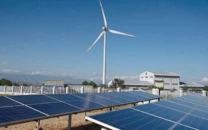
To promote sustainable development, the ICMA recommends property tax relief for electric vehicle (EV) charging operators, with an 80% reduction for the first five years and a 50% reduction for the next five years. This encourages private investment in grid-compliant public and commercial EV charging stations, expands electricity consumption and supports Pakistan's climate and EV adoption targets.
A landfill disposal tax is recommended to reduce the dumping of municipal and industrial waste while generating green revenue. Rates are proposed at Rs15,000 per tonne for general non-hazardous landfill waste and Rs1,000 per tonne for inert or partially treated waste.






This material may not be published, broadcast, rewritten, redistributed or derived from. Unless otherwise stated, all content is copyrighted © 2026 The Express Tribune.











COMMENTS
Comments are moderated and generally will be posted if they are on-topic and not abusive.
For more information, please see our Comments FAQ