Gold prices in Pakistan fall amid decline in global market
Updated 2 hours ago

Pare gains after hitting highest since 2022 stoking fears of inflation, economic slowdown
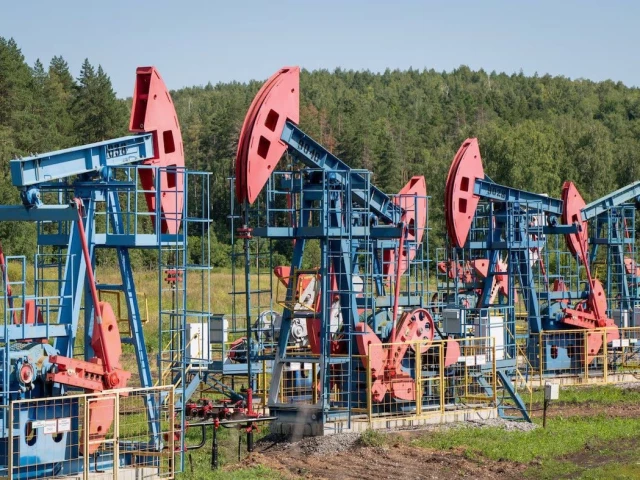
Oil prices were up about 8% on Monday, paring gains after hitting their highest since 2022 earlier in the session, as Saudi Arabia and other OPEC members cut supplies due to disruptions from the expanding US-Israeli illegitimate war with Iran.
Brent futures rose $7.21, or 7.8%, to $99.90 a barrel at 1643 GMT, while US WTI crude rose $4.50, or 5.0%, to $95.40.
In early trade, Brent soared to a high of $119.50 a barrel, its biggest-ever absolute price jump in a single day. WTI hit a high of $119.48.
Since the United States and Israel attacked Iran on February 28, Brent has surged by as much as 65% and WTI 78%.
Monday's prices compare with all-time highs of $147.50 a barrel for Brent and $147.27 for WTI in July 2008, according to LSEG data.
Analysts said the market pared gains from session highs on several factors including the possibility of a coordinated release of crude from strategic reserves, fears that soaring energy prices would cause inflation to skyrocket and lead to weaker economic growth, and profit-taking in a technically overbought market.
On the technical side, WTI was the most overbought on record, and Brent was the most since 1990.
Saudi oil giant Aramco has begun cutting output at two of its oilfields, adding to earlier reductions by the UAE, Iraq, Kuwait and Qatar as shipments continue to be blocked and they run out of storage.
The war has virtually shut the Strait of Hormuz, through which roughly one-fifth of the world's oil and liquefied natural gas passes.
Data analytics firm Kpler said that even if the strait opens on Tuesday, it would likely take six to seven weeks for exports to return to full capacity from the Gulf.
Saudi Aramco, which can divert some flows via the Red Sea port of Yanbu, has offered more than 4 million barrels of Saudi crude in rare tenders to counteract Hormuz being shut.
US President Donald Trump is expected to review a set of options to tame oil prices, including a possible joint effort with other countries to release crude from strategic reserves.
Other options include restricting US exports, intervening in oil futures markets, waiving some federal taxes and lifting requirements under a US law called the Jones Act that domestic fuel move only on US-flagged ships, among others, the sources said, speaking on condition of anonymity.
Group of Seven countries have not yet decided whether to release emergency oil reserves, France's finance minister said, adding that governments see no immediate supply shortfall.












This material may not be published, broadcast, rewritten, redistributed or derived from. Unless otherwise stated, all content is copyrighted © 2026 The Express Tribune.







COMMENTS
Comments are moderated and generally will be posted if they are on-topic and not abusive.
For more information, please see our Comments FAQ