Forces kill terrorists' ringleader in Bannu
Updated 1 hour ago

CM approves 'no-fault' compensation system, digital monitoring to protect accident victims
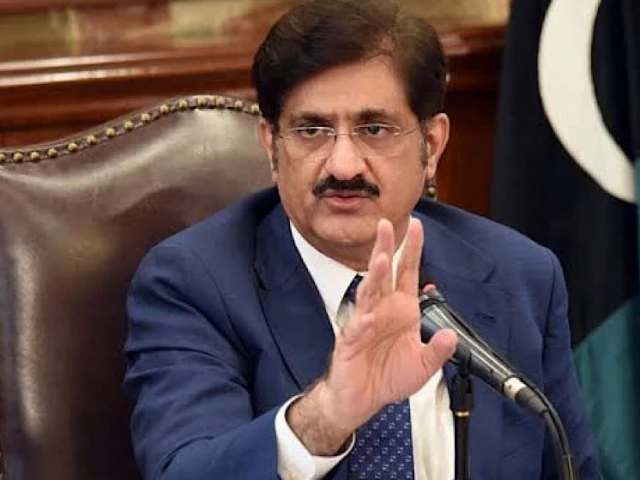
Chief Minister Murad Ali Shah has approved making third-party motor insurance mandatory for all vehicles in the province, describing the initiative as a major step towards protecting road accident victims and strengthening road safety.
Under the new policy, no vehicle will be registered in Sindh and no token tax will be accepted unless the vehicle has a valid third-party insurance policy.
The decision follows amendments to the Sindh Motor Vehicles Ordinance, under which a new provision has been added to make insurance coverage compulsory for all registered vehicles.
Announcing the initiative, the chief minister said the provincial government had also approved a "No-Fault Compensation System", under which victims of road accidents or their families would receive financial assistance regardless of who was responsible for the accident.
Under the framework, the heirs of a person who dies in a road accident will receive Rs700,000, while those suffering permanent disability will be entitled to Rs500,000 in compensation.
CM Shah said the initiative aimed to provide financial protection to families affected by road accidents.
"Providing financial security to victims of road accidents is our priority. This law will ensure that affected families are not left alone in difficult times," he said.
The chief minister added that Sindh had also introduced Pakistan's first digital insurance monitoring system to ensure transparency and effective enforcement of the law.
He directed the Sindh Excise, Taxation and Narcotics Control Department to ensure strict implementation of the new policy.
Provincial Excise Minister Mukesh Kumar Chawla said vehicles without valid insurance would neither be registered nor allowed to pay token tax under the new regulations.
Secretary Excise Saleem Rajput said the department had established digital verification of insurance policies through a linkage with the database of the Securities and Exchange Commission of Pakistan (SECP) to prevent fake or invalid insurance documents.
The new policy also requires a valid insurance policy for the transfer of vehicle ownership, ensuring that every registered vehicle on the road carries proper third-party coverage.
CM Shah termed the initiative an important milestone for road safety and consumer protection, adding that the law would particularly benefit low-income families who often suffer the most in road accidents due to a lack of financial protection.
"The system has been designed to ensure transparency so that the possibility of fake insurance is eliminated," he added.
He also directed the Excise Department to launch a public awareness campaign so that citizens could fully understand the benefits of the new law.
The chief minister appreciated the efforts of Excise Minister Mukesh Chawla and his team for completing the legislative and administrative work required to implement the insurance framework.
"Along with tax collection, our real objective is to provide services to the public, which is why insurance has been linked with vehicle registration," the CM said.
Review of energy situation
CM Murad Ali Shah on Sunday held a meeting with Federal Finance Minister Muhammad Aurangzeb and Federal Petroleum Minister Ali Pervaiz Malik to review the evolving regional situation and its potential impact on Pakistan's energy supplies and economy.
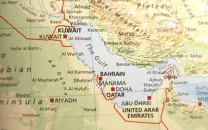
Participants were given a detailed briefing on the rise in global oil prices and the country's fuel reserves. Federal officials warned that if tensions in the Middle East escalate further, crude oil prices could climb to $120 per barrel, placing additional pressure on Pakistan's fragile economy.
The meeting also discussed emergency energy conservation measures aimed at managing fuel consumption while ensuring continuity of economic activity.
Speaking on the occasion, CM Shah stressed the need for responsible energy use and public cooperation. "The government's priority is to keep the wheels of the national economy moving while managing the energy situation prudently," he said, adding that the proposals discussed during the meeting would be presented before the provincial cabinet for further deliberation.
The meeting was informed that three petrol cargoes were expected to reach Pakistan by Monday. However, officials expressed concern about the possibility of hoarding at petrol pumps.
The participants decided to strengthen coordination between federal and provincial authorities to prevent hoarding and ensure uninterrupted fuel distribution nationwide.






This material may not be published, broadcast, rewritten, redistributed or derived from. Unless otherwise stated, all content is copyrighted © 2026 The Express Tribune.





COMMENTS
Comments are moderated and generally will be posted if they are on-topic and not abusive.
For more information, please see our Comments FAQ