Rare display of bonhomie in NA
Updated 7 hours ago

Independent, Professional groups clash across provinces
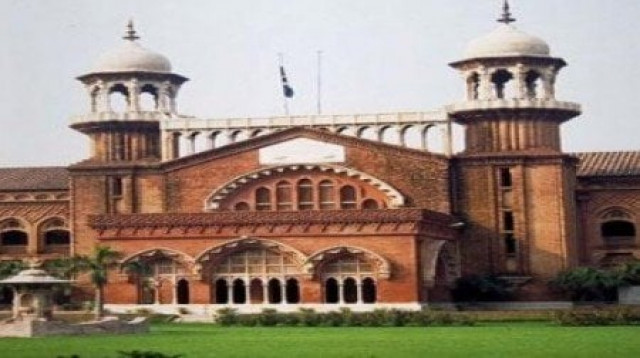
Much like Pakistan's general elections, elections within the superior bars have increasingly become a source of dispute over the past several years.
Once an internal professional exercise, it has now evolved into a series of regulatory and political confrontations across multiple provinces.
At present, several serious disputes remain unresolved regarding elections of different bar associations. Questions are also being raised about the conduct of regulatory bodies of lawyers, with allegations of partiality in resolving election disputes.
Bar politics remains sharply divided between two dominant factions. The Independent Group - which holds a majority in the Pakistan Bar Council (PBC) and is widely regarded as the pro-government lawyers' section - and the Professional Group, which has been strongly opposing the 26th and 27th constitutional amendments.
The Independent Group's majority in the PBC, the apex regulatory body of the legal community, gives it a decisive advantage in election-related disputes.
The latest controversy erupted following the Lahore High Court Bar Association (LHCBA) election held on Saturday.
The Independent Group has refused to accept the LHCBA result until a forensic audit of the biometric system used in the election is conducted.
Meanwhile, the election board has notified the result declaring Professional Group candidate Babar Murtaza Khan as LHCBA president by a margin of three thousand votes.
Subsequently, the Punjab Bar Council, where the Independent Group also holds a majority, suspended the election board's notification to the extent of the presidential result.
Both groups have now agreed to form a committee led by PBC Vice Chairman Masood Chishti and Shafqat Chohan to conduct a forensic examination of the biometric system. The committee's first meeting is scheduled for Tuesday.
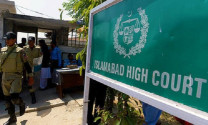
A similar dispute continues over the Islamabad High Court Bar Association (IHCBA) election.
Wajid Gilani, backed by the pro-government lawyers' section, has been declared IHCBA president.
However, his opponent Ashraf Gujjar claims he won by nine votes and has challenged the result before the Islamabad Bar Council.
Gujjar is now accusing the council of failing to decide the dispute expeditiously.
It is noteworthy that the majority of Islamabad Bar Council members supported Wajid Gilani during the election campaign.
Meanwhile, the Pakistan Bar Council has restrained the Sindh Bar Council from holding the Karachi Bar election, which has already been delayed for three months.
A member of the Professional Group alleges that the delay is intended to favour the executive.
Aamir Nawaz Waraich, a strong opponent of the 26th and 27th constitutional amendments, is considered the frontrunner to again become president of the Karachi Bar Association.
According to critics, the executive does not want him re-elected, which is why the election is being delayed.
'Unlawful interference'
The most serious institutional confrontation, however, has emerged in Balochistan, where the Balochistan Bar Council (BBC) has formally accused the Pakistan Bar Council of overstepping its legal mandate and engaging in "unlawful interference" in provincial affairs.
The dispute centres on a January 14 order of the PBC Appeal Committee endorsing the unopposed election of the Quetta Bar Association.
The BBC maintains that the order bypasses statutory procedure, violates established legal norms and undermines the autonomy guaranteed to provincial bar councils under the law.
The confrontation formally escalated when the BBC secretary, acting on the instructions of its vice chairman, sent a strongly worded letter to the chairman of the PBC Appeal Committee Balochistan, registering an official protest agaist the committee's decision to directly notify the president and cabinet of the Quetta Bar Association.
It is learnt that the BBC had earlier suspended the unopposed election of the Quetta Bar Association. The aggrieved party then approached the PBC Appeal Committee, which issued the contested directive.
The BBC, led by the Professional Group, has already protested the Judicial Commission of Pakistan's decision to drop Balochistan High Court Additional Judge Ayub Tareen on the grounds of his brother's political affiliation. In contrast, the PBC is led by the Independent Group.
In its letter, the BBC stated that the PBC Appeal Committee's order was "without lawful authority, beyond jurisdiction, ultra vires the Legal Practitioners & Bar Councils Act, 1973, and a blatant intrusion into the exclusive statutory domain of the BBC."
"The power to supervise, regulate and notify the elections and office bearers of Bar Associations vests solely and exclusively in the Provincial Bar Council. The appeal committee has no legal mandate to notify office bearers, assume administrative control, or override the statutory functions of the Balochistan Bar Council."
"The impugned action amounts to usurpation of statutory powers and is therefore void in the eyes of law. The Balochistan Bar Council is an autonomous, independent and self-regulating statutory institution. Any attempt to interfere in its internal administration, election scrutiny, notification process or disciplinary domain is illegal, unconstitutional and unacceptable," the letter states.
The BBC further argued that the January 14 order constituted a direct assault on institutional autonomy and set a dangerous precedent.
"It is further placed on record that the alleged unopposed election process of Quetta Bar Association is and has been under serious legal and procedural scrutiny due to multiple deficiencies including verification of voters' list, eligibility of candidates, clearance of dues, neutrality and lawful constitution of the Election Board, and compliance with mandatory Bar Council Rules."
"Until and unless these legal requirements are fully satisfied, no notification can lawfully be issued. The Appeal Committee cannot compel the Balochistan Bar Council to endorse or legitimize a process that is legally questionable and under examination," the BBC said.
The letter emphasised that politics, group affiliations, personal loyalties and external pressures must remain outside bar matters, asserting that bar institutions are not political arenas.
It warned that any perception of political maneuvering or favoritism gravely damages the credibility of the legal profession and objected that the PBC Appeal Committee passed its order without giving the BBC an opportunity of hearing, in violation of principles of natural justice and due process.
The BBC has formally cautioned the appeal committee against further interference and stated that any continued encroachment upon its lawful domain would compel it to seek appropriate legal remedies before a competent forum to safeguard its autonomy and institutional integrity.





This material may not be published, broadcast, rewritten, redistributed or derived from. Unless otherwise stated, all content is copyrighted © 2026 The Express Tribune.


COMMENTS
Comments are moderated and generally will be posted if they are on-topic and not abusive.
For more information, please see our Comments FAQ