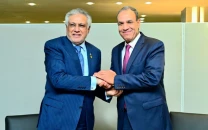
Pakistan to continue 'sincere efforts' for peace, PM tells Pezeshkian after setback in US-Iran talks
Updated 36 minutes ago

Residents seek dialogue as violence rattles towns along Pakistan-Afghanistan frontier
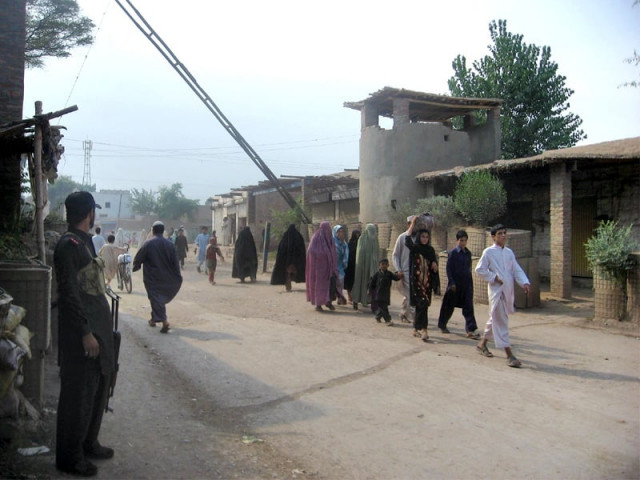
Escalating cross-border tensions between Pakistan and the Afghan Taliban have brought daily life to a standstill in the bustling markets near the Torkham border crossing, with residents and traders pleading for dialogue to resolve the crisis rather than prolonged confrontation.
The latest flare-up began on the night of February 26, when Afghan Taliban forces launched armed operations along the border, claiming retaliation for Pakistani airstrikes on February 22.
Gunfire and heavier weapons echoed through the night of February 26 and into the following day around Torkham and Landi Kotal, one of the region's largest trade hubs.
Malikdin Khel tribal elder and national figure Shaukat Khan Afridi expressed deep concern over the prospect of war. "This area is already home to many unemployed people. Trade disruptions between Pakistan and Afghanistan have worsened joblessness," he noted.
Another community leader, Haji Sahib Khan, condemned terrorism and emphasized the hardships faced by Pashtun tribes on both sides of the border due to the conflict. "We oppose terrorism. The ongoing tensions are causing suffering for Pashtuns everywhere. Resolve this through talks," he said.
Muhammad Rafiq, acting president of the Landi Kotal Traders Union, echoed these sentiments, pointing out that border residents are bearing the brunt. "Due to the recent tensions, people here are in distress. Both sides must start negotiations to solve problems," he demanded. He added that caution has kept shoppers away, and when firing intensified the previous afternoon, police announcements led to market closures. Gunshots continued into the morning, prompting many shopkeepers to shut down voluntarily.
The broader impact is stark: Five border crossings, except for returning Afghan refugees, have remained closed for the past four months.
Qudratullah, who arrived from Haripur's Camp No 12 three days ago, is severely ill after undergoing 11 operations in Pakistan. "We demolished our homes and loaded everything onto a truck to return to Afghanistan, but the border closure sent us back here," he said, lying in a truck and relying on medication. He fears unknown medical facilities in Afghanistan and worries about his ongoing treatment.
In Pakistan's last village, Awal Khan Killi, locals have abandoned homes for safety, taking refuge in old railway tunnels along the highway. Volunteers provide iftar and sehri meals to the displaced and refugees.
Movement remains restricted locally to avoid risks. Government schools are already on winter break, but private schools have been closed by district authorities.








This material may not be published, broadcast, rewritten, redistributed or derived from. Unless otherwise stated, all content is copyrighted © 2026 The Express Tribune.





COMMENTS
Comments are moderated and generally will be posted if they are on-topic and not abusive.
For more information, please see our Comments FAQ