Rs107b price differential claims remain unpaid
Updated 4 hours ago

FinMin says financing gap fully covered as IMF review begins
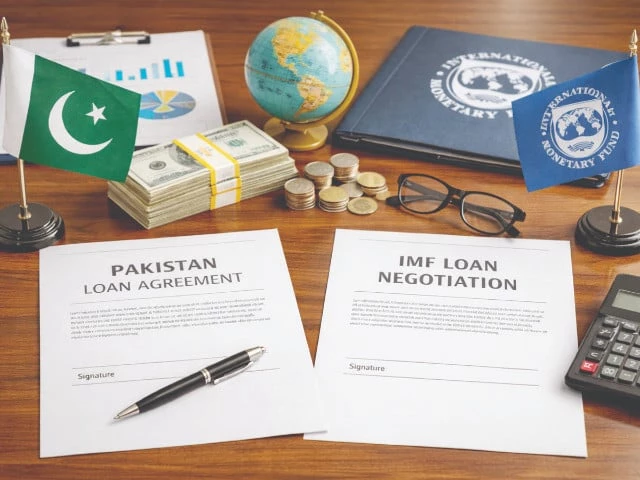
Pakistan said on Wednesday that it was in communication with the United Arab Emirates and that there was no issue in the rollover of a $2 billion debt, but did not confirm whether the Gulf nation had formally conveyed its decision to further extend the repayment period.
"We are in communication with the UAE authorities and there is absolutely no issue in the rollover of the $2 billion debt," Finance Minister Muhammad Aurangzeb said while responding to a question about the status of the UAE debt. He was speaking to journalists after attending a meeting of the National Assembly Standing Committee on Finance.
The minister's reference to continued communication suggests that the UAE has not yet rolled over the debt for one or two years, as requested by Pakistan in December.
Responding to a question about ambiguity surrounding the rollover, which first matured between January 16 and 22, the finance minister reiterated that the external financing gap had been fully met and there was no issue.
He said external financing needs had been discussed with the International Monetary Fund (IMF) at the start of the programme and would again be reviewed during upcoming talks. Under the $7 billion IMF programme, the UAE, Saudi Arabia and China have committed to maintaining their combined $12.5 billion in cash deposits with the State Bank of Pakistan (SBP) at least until the programme expires in September next year.
However, unlike in the past when the UAE would extend the debt for one year, this time it initially extended the repayment period by only one month, and there has still been no official word on the status of the rollover period.
In December, SBP Governor Jameel Ahmad had requested the UAE government to roll over $2.5 billion in debt for two years and reduce the interest rate from 6.5% to 3%. Sources said that while extending the debt maturity in January last year, the UAE had indicated that it would be the last extension. The UAE's total exposure stands at $3.5 billion, with another $1 billion maturing in July this year.
Deputy Prime Minister Ishaq Dar had earlier said that the UAE was also in discussions to acquire $1 billion worth of shares in the Fauji Foundation. Pakistan and the IMF have begun talks under the $7 billion Extended Fund Facility and the $1.4 billion Resilience and Sustainability Facility. A successful conclusion of the talks by March 11 may pave the way for approval of two loan tranches totalling $1.2 billion by the IMF board.
The IMF mission has arrived in Karachi to review the central bank's performance against key benchmarks, including net international reserves, net domestic assets and reduction in the swap position, as well as monetary and exchange rate policies. Prime Minister Shehbaz Sharif, Finance Minister Muhammad Aurangzeb and the national coordinator of the Special Investment Facilitation Council, Lt Gen Sarfraz Ahmad, have publicly expressed concern over keeping interest rates in double digits.
Exporters have also opposed maintaining the rupee-dollar parity around Rs279 and have demanded a 4% depreciation. The IMF mission is expected to begin discussions with the federal government from Monday.
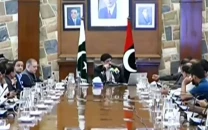
Pakistan is in a good position for the IMF talks, said the finance minister in response to a question. He added that the discussions would include a performance review and forward-looking engagements.
To meet an IMF condition, the government has proposed amendments to the Exim Bank law to bring it in line with the State-Owned Enterprises (SOEs) Act. Finance Secretary Imdadullah Bosal briefed the NA standing committee that the SOEs Act would take precedence over the Exim Bank law. He said the majority of Exim Bank board members, including the chairman, would be from the private sector.
The Exim Bank president would be appointed by the board with a three-fourths majority, including a mandatory vote from the ex-officio board member representing the Ministry of Finance, the secretary said.
However, the proposal that the board could not hire or fire a president without the finance division's vote sparked debate over bureaucratic control. "The government wants to give veto power to the finance division representative," said Syed Naveed Qamar, chairman of the standing committee. The finance secretary said the private sector had also played havoc on SOE boards and that the government should retain a say in their affairs.
He added that SOE boards had become lucrative for bureaucrats, with annual board fees in some cases exceeding their annual salaries. The standing committee rejected the proposal and asked the government to review the amendment granting veto power to the finance ministry.
Aurangzeb assured the committee that the proposals would be reviewed again.
The proposal to grant veto power to a finance ministry director also appears to run counter to the IMF's principle of minimising government involvement in running these entities. To break bureaucratic and government monopolies, the IMF has imposed a condition to amend the laws governing 10 SOEs, in consultation with the Fund, to align them with the SOE Act. The revised deadline for these amendments, including the Exim Bank law, is August 2026.











This material may not be published, broadcast, rewritten, redistributed or derived from. Unless otherwise stated, all content is copyrighted © 2026 The Express Tribune.







COMMENTS (1)
Comments are moderated and generally will be posted if they are on-topic and not abusive.
For more information, please see our Comments FAQ