Azerbaijan ready to supply LNG to Pakistan
Updated 5 hours ago

Says country determined to carry out similar retributive actions in future if such activities continue
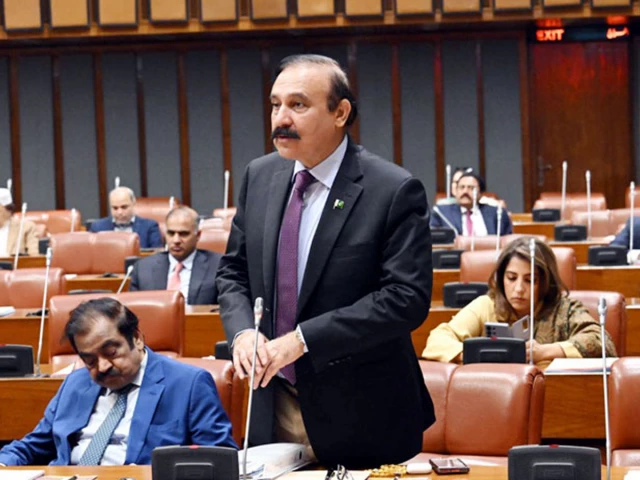
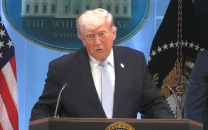
Parliamentary Affairs Minister Dr Tariq Fazal Chaudhry on Monday informed the Senate that more than 100 terrorists were killed in retributive air strikes carried out by the Pakistan Air Force (PAF) in Afghanistan.
The statement came after Pakistan carried out intelligence-based strikes on seven terrorist camps along the Afghan border early on Sunday morning following a series of recent suicide bombings, including an attack on an imambargah in Islamabad and incidents in Bajaur and Bannu. Security sources said Pakistan conducted a large intelligence-based aerial operation in eastern Afghanistan targeting seven key hideouts, killing several terrorists, including Taliban commander Akhtar Muhammad.
According to sources, jet aircraft struck terrorist shelters in Bermal district of Paktika, where loud explosions were heard across the area. Facilities used by terrorists were reported heavily damaged.
پاکستان امن چاہتا ہے، ملکی سلامتی پر سمجھوتہ نہیں ہوگا، طارق فضل چوہدری#PakistanSecurity #PeaceAndSecurity #TariqFazalChaudhry #NationalStatement #PakistanNews #BreakingNews #Defence #Sovereignty pic.twitter.com/QshlS5tcdi
— APP (@appcsocialmedia) February 23, 2026
Briefing the Upper House in today’s session, Chaudhry said the government was fully aware of its responsibility to protect citizens and territory. He confirmed that the PAF conducted intelligence-based air strikes on February 21 in three Afghan provinces, targeting what he described as safe hideouts of Tehreek-e-Taliban Pakistan (TTP) terrorists.
Chaudhry said the air strikes were conducted strictly on the basis of intelligence and that terrorist camps and training facilities were successfully targeted. He stressed that no civilians were targeted during the operation.
Read More: Pakistan launches cross-border strikes
The minister said Pakistan had presented “solid evidence” to the Taliban government regarding terrorism originating from Afghan soil. He added that details of terrorists safe havens and training camps had also been shared with Afghan authorities.
Chaudhry said Pakistan would not compromise on national security and would not allow anyone to weaken its defence.
“Pakistan reserves the right to respond to terrorist activities in self-defence,” he said, adding that the country was determined to carry out similar retributive actions in the future if such activities continued.
اب ہم صرف جنازے نہیں اٹھائیں گے بلکہ بھرپور جواب بھی دیں گے، طارق فضل چوہدری#TariqFazalChaudhry #PakistanSecurity #NationalStatement #PoliticalNews #PakistanStrong #ResponseNotJustMourning #PakistanDefense pic.twitter.com/8ZYWxcDapz
— APP (@appcsocialmedia) February 23, 2026
Referring to the Doha talks, during which Pakistan had urged Afghanistan to dismantle terrorist sanctuaries operating from Afghan soil, Chaudhry said no serious effort was made by Kabul to dismantle the networks.
“In negotiations, Rs10 billion was demanded from Pakistan to resettle terrorists on the other side,” he said, adding that Islamabad was not provided with any written guarantee ensuring there would be no further infiltration into Pakistan.
He also referred to recent attacks inside Pakistan, including the suicide bombing at an imambargah in Tarlai in which around 36 people were killed. Armed forces personnel were also martyred in separate incidents in Bajaur and Bannu, he added.
Read This: Pakistan presses Afghanistan to eliminate terrorist sanctuaries
“We are carrying out funerals. Our soldiers are fighting to defend the country,” he said.
Following such incidents, he said, the government decided that a decisive response to terrorists was necessary.
He further alleged that the “fabric of all terrorist incidents” in Pakistan originated from Afghanistan.
“Pakistan can no longer tolerate all this,” he said.
The recent strikes came after Defence Minister Khawaja Asif, in an interview with FRANCE 24 last week, said Pakistan would not hesitate to conduct further air strikes in Afghanistan if no action was taken by Kabul against militants operating from its soil to ensure peace.
The federal government has been consistently raising its voice on international forums against terrorist sanctuaries operating in Afghanistan and using its soil to launch attacks on Pakistan — a development attested to by the United Nations Security Council.
Recently, a suicide bomber struck the Imambargah Khadijah al-Kubra during Friday prayers in Islamabad, killing 36 people and injuring around 169 others. The attack was the deadliest in Islamabad in more than a decade and the deadliest nationwide since the Peshawar mosque bombing in January 2023.
Immediately following the blast, raids were conducted in Nowshera and Peshawar, resulting in the arrest of four facilitators. The Daesh-linked mastermind, an Afghan national, was also captured. Interior Minister Mohsin Naqvi stated that the network behind the blast was trained in Afghanistan and that authorities had gathered intelligence on the suspects prior to the attack.
Read This: Pakistan 'won't hesitate' to carry out more air strikes in Afghanistan
In August last year, Afghan officials claimed that two drone strikes had hit the house of a man in Shinwar district, Nangarhar province. The Afghan government had summoned Pakistan’s Ambassador in Kabul to lodge a formal protest against what it had claimed were Pakistani military strikes in Nangarhar and Khost provinces.
In November, the Afghan Taliban regime had again accused Pakistan of launching air strikes. Taliban spokesperson Zabihullah Mujahid said that Pakistan had "bombed" Afghanistan's Khost province and carried out air strikes in Kunar and Paktika. In response, Pakistan had vehemently dismissed Kabul's allegations, insisting that Islamabad neither carried out covert cross-border operations nor targeted civilians.









This material may not be published, broadcast, rewritten, redistributed or derived from. Unless otherwise stated, all content is copyrighted © 2026 The Express Tribune.







COMMENTS
Comments are moderated and generally will be posted if they are on-topic and not abusive.
For more information, please see our Comments FAQ