Govt vows to empower women-led enterprises
Updated 6 hours ago

KSE-100 index falls 3.6% WoW to 173,170 amid relentless foreign selling
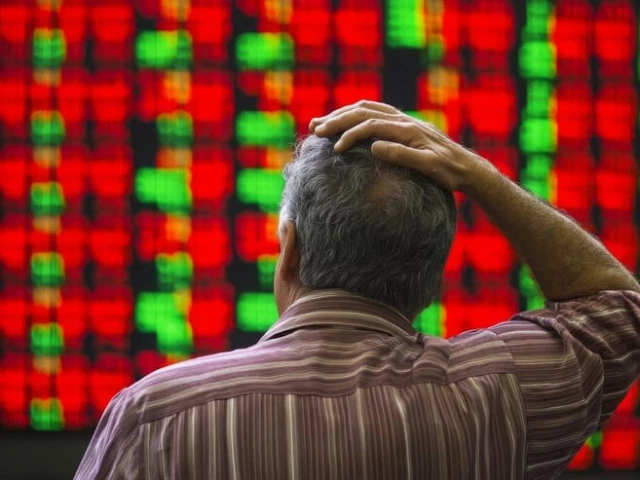
Pakistan's stock market extended its slide for a second consecutive week, with the benchmark KSE-100 index plunging 3.6% week-on-week to close at 173,170 points, as persistent foreign selling, rising geopolitical tensions and cautious investor sentiment ahead of an IMF review triggered a broad-based correction from January's peak levels, brokerage data showed.
On a day-on-day basis, the Pakistan Stock Exchange (PSX) started the week with a sharp sell-off, when the KSE-100 plunged 5,150 points (-2.87%) to close at 174,454. Notably, the benchmark declined 9.49% from its January 2026 peak of 191,000, reflecting a meaningful correction.
On Tuesday, the PSX remained under sustained selling pressure as the index declined by 1,304 points (-0.75%) to close at 173,150. The bourse staged a strong rebound on Wednesday, surging 5,703 points (+3.29%) to settle at 178,853, marking a decisive recovery following the recent correction.
On Thursday, the market came under intense selling pressure again, with the KSE-100 plunging 6,683 points (-3.74%) to end the session at 172,170. The steep fall erased gains from the previous session's rebound and reinforced the fragile undertone prevailing in the market. The PSX ended the week with consolidation around the 172,000 level, closing at 173,170, up 999 points (+0.58%). Arif Habib Limited's (AHL) weekly review stated that the KSE-100 saw a sharp sell-off during the outgoing week, closing at 173,170 (-3.6% week-on-wee). The bearish momentum was largely driven by persistent selling and geopolitical risks. Furthermore, the index fell 15,997 points, or 8.5%, from its January 2026 peak of 189,167, indicating a notable market correction.
Among macro statistics, the large-scale manufacturing (LSM) output grew by 0.4% year-on-year in December 2025 and recorded a 9.3% uptick on a month-on-month basis. As of January 2026, gross inflows into Pakistan's Roshan Digital Account (RDA) stood at $11,923 million, with $1,965 million repatriated and $7,655 million utilised locally, resulting in a net repatriable liability of $2,303 million.
In the latest revision, the high-speed diesel price went up by Rs7.32 to Rs275.70/litre; petroleum levy stayed at Rs76.21/litre, inland freight equalisation margin rose by three paisa/litre and OMC margins remained at Rs7.87/litre. Auto financing increased by 35.8% to Rs328 billion in Jan'26, up from Rs242 billion in Jan'25, AHL said.
Additionally, Pakistan recorded a trade deficit of $2.76 billion in Jan'26. Exports for the month totalled $3.1 billion, marking an increase of 3.5% YoY and 34.8% MoM, while imports totalled $5.8 billion, reflecting a decrease of 1% YoY and 4.4% MoM. Cumulatively, during 7MFY26, the trade deficit increased by 28.4% YoY to $22.1 billion. In Jan'26, a current account surplus of $121 million was recorded, compared to a deficit of $393 million in Jan'25 and a deficit of $265 million in Dec'25. During 7MFY26, the country posted a current account deficit of $1,074 million, in contrast to a surplus of $564 million in the same period of last year.
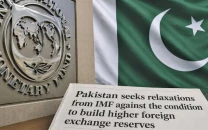
The country registered net foreign direct investment (FDI) of $173 million in Jan'26, compared to a net outflow of $135 million in Dec'25. During 7MFY26, the net FDI declined by 41% to $981 million, compared to an inflow of $1,661 million in 7MFY25, AHL added. Syed Danyal Hussain of JS Global noted that global equity markets remained under pressure during the week amid escalating geopolitical tensions between Iran and the United States, after Washington warned of potential military action if diplomatic efforts fail. Heightened uncertainty also lifted international oil prices, with Brent crude rising to a seven-month high of $72 per barrel. Reflecting the weak global sentiment, the KSE-100 index fell by 6,434 points (3.6% WoW) to close at 173,170. On the domestic front, an IMF mission is scheduled to arrive on February 26 to review Pakistan's progress under the $7 billion Extended Fund Facility and initiate discussions on the FY27 budget, Hussain said.










This material may not be published, broadcast, rewritten, redistributed or derived from. Unless otherwise stated, all content is copyrighted © 2026 The Express Tribune.




COMMENTS
Comments are moderated and generally will be posted if they are on-topic and not abusive.
For more information, please see our Comments FAQ