Kingsmen extend winning streak in PSL
Updated 15 hours ago

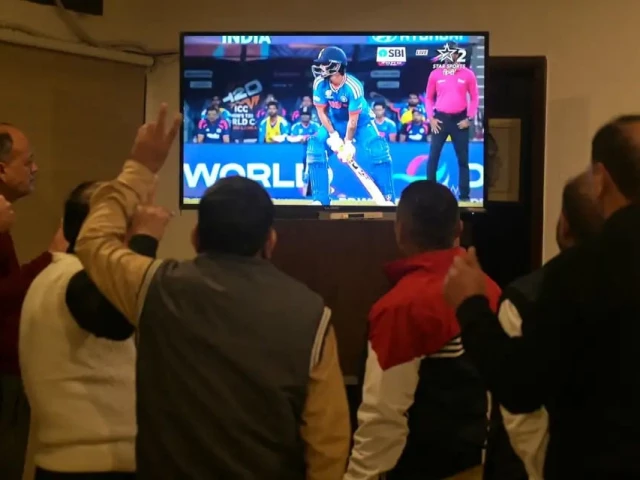
Arch-rivals, Pakistan and India, locked horns in Sri Lanka capital
If you’ve traveled abroad recently from Jinnah International Airport Karachi, you’d know it’s no longer an easy process. That’s why, for a 7 a.m. flight, I reached the airport at 2:30 a.m. There was already a line just to enter the main building. Ahead of that was the queue for baggage scanning. Then the anti-narcotics officials were selectively stopping some passengers for questioning.
The longest queue, though, was for Turkish Airlines—I’ve never seen such a massive line at any airline counter in Pakistan. Luckily, the SriLankan Airlines counter wasn’t too crowded. After getting my boarding pass, I looked toward the immigration counters, which seemed relatively better organized this time—more counters were active, though crowds still built up quickly.
In the lounge, it was clear that large numbers of passengers were cricket fans heading to Colombo. Many were traveling with their families. I noticed a man with some documents wearing a PCB shirt to help some people fast-track through all procedures—later I realised he was handling protocol for Pakistan Cricket Board (PCB) governing board members. On my flight were Zaheer Abbas and several other board members, traveling as a PCB’s guest to watch the Pakistan vs India match, something that’s happened in the past too.
The flight went smoothly, though the old aircraft reminded me of PIA—the seats were in poor condition, and the tiny screen in front of me was about the size of a phone. To be honest, I was a little nervous at first, especially when strange noises came from the plane before takeoff, but once we were in the air, everything was fine.
For Pakistanis visiting Sri Lanka, it’s easy to get an online ETA (Electronic Travel Authorization)—a simple form, a $20–25 fee, and you receive a double-entry visa within 24 hours. I had completed this in December, but many friends told me recently that there were delays due to a surge of cricket fans. Sri Lanka resolved the issue by allowing visa on arrival, and many on my flight received theirs that way. Immigration took just 3–4 minutes.
When exchanging currency, I realized the Pakistani rupee was slightly stronger than the Sri Lankan rupee. On the way from the airport, I saw large billboards advertising casinos—apparently, many people visit Sri Lanka just for gambling. Tourism drives much of their economy; during COVID-19, when tourists stopped coming, the country went bankrupt.
From the airport, I went straight to the Sinhalese Sports Club (SSC) to collect my accreditation card. Security was tight due to an ongoing Ireland vs Oman match. Fortunately, the media manager came out and handed me my card—without it, you can’t enter the stadium on match days.
Since it was Valentine’s Day, the hotel restaurant was filled mostly with couples, many women dressed in red. Outside, large screens were showing World Cup matches. After enjoying high tea, I went to my room to file my stories. In the lobby, I met a Pakistani fan who had flown in from Dubai with his Indian friends to watch the match.
I messaged team media manager Naeem Gilani, asking for updates, but even after two days, there was no reply—perhaps he’s busier than Mohsin Naqvi and Aamir Mir! For dinner, I ordered from a Pakistani restaurant, which made me nostalgic for Dubai, where you can find the best food from every country.
Talking to a few players, I learned that the PCB chairman had met the team to boost their morale. Before the match, the Indian camp seemed overly anxious about Pakistani spinner Usman Tariq, which led them to raise objections over his bowling action. Both teams practiced separately.
Even during the press conference, Salman Ali Agha fielded many questions about Usman and defended him strongly. In recent days, more people were checking weather websites than cricket updates, wondering whether it would rain on match day—but thankfully, the weather were better.
The organizers had announced that stadium gates would open at 3 p.m.—four hours before the start—to ease security checks. I arrived even earlier. Wherever a Pakistan-India match is held, it’s wise to reach the venue as early as possible.
At R. Premadasa Stadium, there was heavy police presence inside and outside—I hadn’t seen such scenes at a cricket match in a long time. Both teams were staying at separate hotels under tight security.
After placing my laptop in the media center, I took a long walk outside the stadium to interview fans for Express News. I’ll share that story tomorrow, but for now, let’s head straight to the toss.
My sources had already told me in the morning that the Indians wouldn’t back down—and again, there would be no handshake between the captains. That turned out to be true. Interestingly, former Indian player Harbhajan Singh, who’s often outspoken, did shake hands with Sahibzada Farhan before interviewing him. Even Sanjay Manjrekar has publicly criticized his country’s “no-handshake” policy.
Thankfully, this strange “virus” hasn’t reached the media center yet—journalists from both countries who know each other were shaking hands warmly. By that time, the stadium was nearly full, with a large Indian contingent in the stands. Pakistani fans were there too, though fewer in number.
I’ll share the rest of the story tomorrow. For now, let’s join the toss live.








This material may not be published, broadcast, rewritten, redistributed or derived from. Unless otherwise stated, all content is copyrighted © 2026 The Express Tribune.



COMMENTS
Comments are moderated and generally will be posted if they are on-topic and not abusive.
For more information, please see our Comments FAQ