US-Iran conflict and global disorder
Updated 5 hours ago

US tariff threats make neutrality costly in a polarised world order
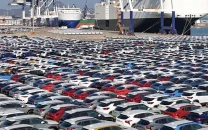
The post-9/11 order was characterised by the "with us or against us" mantra, where states were compelled into extreme positions that redefined alliances, economies and wars. Two decades later, such binary logic seems to be re-emerging, but now around Iran. Besides sanctions, Washington has threatened to impose a 25% tariff on US exports on those countries that conduct business with Tehran, pushing the pressure further on the third-party economies. The message is simple: neutrality is becoming increasingly expensive.
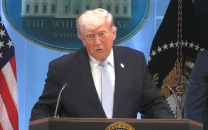
To make the matter even more uncertain is Donald Trump, whose unpredictability renders the timing and scope of these measures as important as the threat itself. The internal vulnerability of Iran increases the stakes. The nation is in what most analysts term as its "worst economic crisis" in decades, as inflation is up over 48% and vast portions of its population have been pushed below the poverty line, not to mention a continuous Washington military threat being the cherry on top. Historically, these types of domestic strains and external pressures result in long-term instability, not a rapid change of regimes.
Still, Iran is an economically resilient country, at least till now. In spite of the maximum pressure, the Islamic Republic is able to transport huge amounts of oil using complex shipping networks, bringing in essential revenues. This could be one reason why Washington shifted its policy. The suggested tariffs would now impact key economies such as China, India, the UAE, Türkiye and Brazil, extending the geopolitical boundary and including distant nations in the Iran equation.
The analogy of Afghanistan here is instructive not because Tehran mirrors Kabul but because it demonstrates how outside pressure is not usually confined and can easily cross borders, bringing instability to the neighbours. Now the same ripple effect can be caused by the course of Iran, but with much more economic implications, considering its centrality to world energy markets. The escalating US-Iran tensions are already affecting the volatility of oil prices and trade flows, and the fact that Tehran has approached blocs like BRICS and SCO demonstrates that the crisis is also rooted in the broader great-power dynamic.
In the case of Pakistan, the consequences are strategic, not theoretical. On one side, Iran is a neighbour, a potential energy partner, and a route to regional connectivity. On the other hand, the new tariff regime implies that the interaction with Tehran can be associated with reputational and financial risk. Sanctions are imposed secondarily not to punish, but to deter, and can normally be effective prior to formal application. Hence, Pakistan might find itself in a well-known predicament of maintaining autonomy whilst dealing with exposure to economic and political pressure.
The more profound lesson Afghanistan taught us is not to pick sides but to avoid reactive policymaking. States that waited to see clarity usually failed to influence the outcome. The uncertain course of Iran, reform, unrest or any confrontation may redefine regional economic geography with little or no warning. Laying down that spectrum, and not placing a bet on one thing, is the sign of strategic maturity.
With us or against us – again? is no longer a question of rhetoric; it is a question of a world in which economic relations are increasingly the mark of political loyalty. For Pakistan, it is not just the question of which side to take but being able to maintain manoeuvrability as global binaries become increasingly solid. Diversified partnerships, calculated diplomacy, and strategic foresight will thus be crucial in negotiating the pressures of an ever-polarised world order.
In today's geopolitics, it is not whether the world is returning to binaries anymore, but who will be ready when even the ability to be neutral itself will be a liability.







This material may not be published, broadcast, rewritten, redistributed or derived from. Unless otherwise stated, all content is copyrighted © 2026 The Express Tribune.

COMMENTS (1)
Comments are moderated and generally will be posted if they are on-topic and not abusive.
For more information, please see our Comments FAQ