Gold, silver prices rebound in Pakistan after five-day losing streak
Updated 2 hours ago

As climate pressure mounts, old European crop beginning to draw attention at home
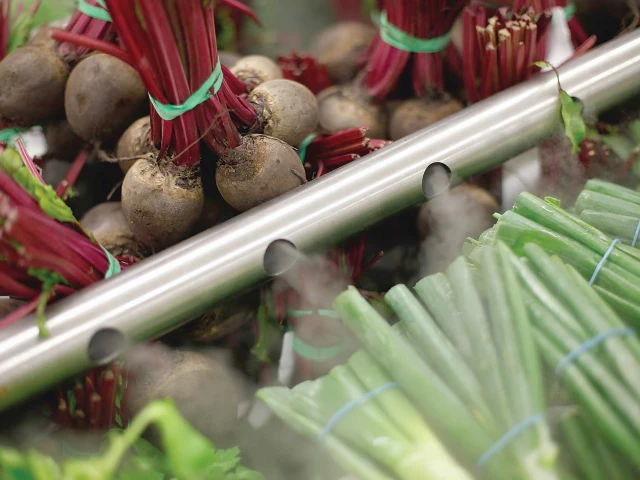
In the sprawling fields of Pakistan's agricultural heartland, a quiet but consequential shift is underway – one that carries the promise of diversification, sustainability, and fresh economic opportunity. As climate pressures mount and global sugar markets evolve, an old European crop is beginning to attract new attention at home: sugar beet.
For decades, sugarcane has dominated Pakistan's sweetener landscape, consuming vast quantities of water and tying the country's sugar economy to a single crop cycle. Beetroot sugar, by contrast, offers a compelling alternative. It requires 30-40% less water than sugarcane, matures in five to six months instead of 12-14, and delivers higher sugar recovery rates, often ranging between 14% and 18%, compared to the national cane average of 9-10%.
What was once viewed as an experiment is now slowly becoming a strategic option. Farmers in Punjab and Khyber-Pakhtunkhwa are beginning to recognise that sugar beet is not merely a substitute crop, but a structural solution to rising water stress, declining soil health, and volatile cane pricing.
Globally, sugar beet is a cornerstone of industrial agriculture. In 2024, world sugar beet production stood at an estimated 294 million tonnes, accounting for nearly 20% of global sugar output. Russia led production with over 45 million tonnes, followed by Germany and France, where beet-based sugar industries are deeply integrated with advanced mechanisation, research-driven seed development, and efficient processing systems. Europe collectively dominates beet cultivation, while countries such as the United States and Canada also maintain strong export positions.
Trade data underscores the crop's commercial relevance. In 2024, Germany alone exported more than 545,000 tonnes of fresh and dried beet products, while Romania, Sweden, and Belgium emerged as leading exporters of raw beet sugar. These figures highlight not only production capacity, but the crop's seamless integration into global value chains — a benchmark Pakistan is only beginning to approach.
By comparison, Pakistan's beetroot sugar sector remains modest but increasingly visible. Though beet accounts for just over 1% of total national sugar production, momentum is building. During the 2022-23 season, beet processing yielded more than 51,000 tonnes of sugar, reflecting growing interest among both farmers and millers. More importantly, yields per hectare in pilot areas have reached 60-70 tonnes, significantly outperforming average cane yields when adjusted for water use and time.
"This is not a blip. It's the beginning of a trajectory," remarks one industry analyst, pointing to expanding acreage and renewed private-sector interest.
Sugar beet cultivation remains concentrated in regions with favourable temperatures, soil structure, and irrigation access. Punjab continues to lead, particularly in Faisalabad, Sargodha, and Gujranwala, where existing agro-industrial infrastructure supports early adoption. However, Khyber-Pakhtunkhwa (K-P) has emerged as a promising frontier. Districts such as Mardan, Swabi, and Charsadda benefit from cooler winters and dependable canal irrigation, conditions that align closely with beet's agronomic requirements.
Limited cultivation also exists in northern Sindh, though water scarcity and heat stress constrain expansion. Farmers across these regions report that beet cultivation delivers higher net returns per hectare, reduced input costs, and more predictable harvesting cycles.
KP-based grower Umar Latif notes that beet's water efficiency alone makes it attractive in a province increasingly vulnerable to climate variability. "With beet, the margins are clearer and the risks are lower," he says. "It's not just about yield, it's about control."
Pakistan's beet sugar exports are still small in volume, but early indicators are encouraging. Qatar, Bahrain, and Kuwait have emerged as primary destinations, driven by demand for refined and specialty sugar products. Export prices averaged over $3,300 per tonne in 2024, signalling improving quality, packaging, and market acceptance.
"We are not going to outproduce Europe," Latif acknowledges. "But we can specialise. We can serve niche markets that value consistency and quality." His assessment reflects a broader strategic reality: Pakistan's comparative advantage lies not in scale, but in selective diversification and value-added exports.
Despite its promise, the beet sector faces clear constraints. Mechanisation remains limited, seed quality varies, and processing infrastructure is still geared overwhelmingly towards cane. Policy support has also been inconsistent. Unlike cane, beet receives no stable pricing framework, limited research funding, and minimal extension services.
"We need coordinated policy frameworks," argues agricultural economist Dr Nazir. "Grower incentives, modern hybrid seed access, and dedicated processing capacity are not luxuries – they are prerequisites."
Exporters echo similar concerns, citing logistics costs, tariff barriers, and competition from subsidised cane sugar as persistent obstacles. Without targeted reforms, beet risks remaining a marginal supplement rather than a transformative crop.
Encouragingly, progress is visible. Several sugar mills have begun installing beet-specific processing lines, while international collaborations are helping improve sugar recovery and disease resistance. These investments signal a sector moving cautiously, but deliberately, towards maturity.
The economic logic is compelling. Expanding beetroot sugar can reduce dependence on sugarcane, smooth seasonal supply fluctuations, conserve water resources, and unlock non-traditional export revenues. At a time when climate volatility and global price swings threaten agricultural stability, diversification is not simply prudent – it is essential.
Pakistan's turn towards beetroot sugar is therefore about far more than sweetening tea. It represents an effort to modernise agriculture, empower farmers, and future-proof a vital industry long shaped by tradition and inertia. With coherent policy support, sustained investment, and market-driven ambition, beetroot sugar could emerge as one of Pakistan's most quietly transformative agricultural success stories.
The writer is a Mechanical Engineer














This material may not be published, broadcast, rewritten, redistributed or derived from. Unless otherwise stated, all content is copyrighted © 2026 The Express Tribune.






COMMENTS
Comments are moderated and generally will be posted if they are on-topic and not abusive.
For more information, please see our Comments FAQ