Afghan hackers breach Indian media network, air political message rejecting Taliban-India ties
Updated 47 minutes ago

With meagre fire safety arrangements, healthcare facilities are at risk of deadly blazes
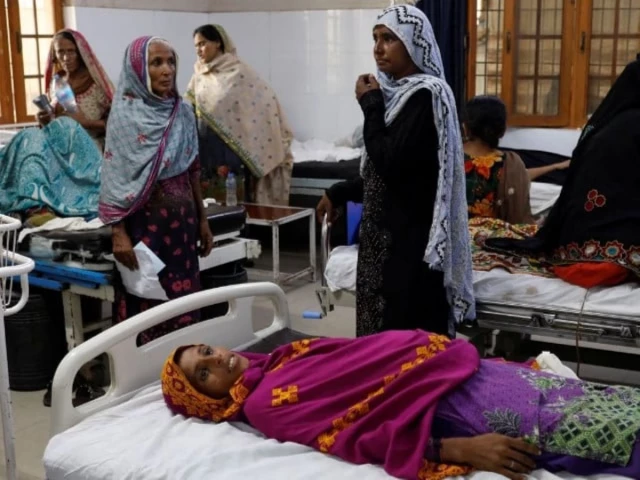
Government hospitals established in historic buildings before the creation of Pakistan are operating with outdated and unsafe electrical systems, while most lack proper firefighting arrangements, posing serious risks to patients, staff and visitors.
Civil Hospital, built in 1898, and Jinnah Hospital, established in 1930, have seen a significant increase in departments and patient load over the decades. However, their electrical systems have not been upgraded to meet modern requirements, despite the heavy reliance on electricity-powered medical equipment.
Loose and exposed electrical wiring can be seen across hospital premises, increasing the risk of short circuits. Unfortunately, none of Karachi's government hospitals has a dedicated firefighting department, hence in the event of a fire, there is no organised emergency response system.
In several district hospitals and primary healthcare centres, firefighting equipment is installed on walls, but there are no trained staff to operate it. Additionally, large oxygen plants installed in government hospitals lack proper fire suppression systems. Fires involving oxygen plants are particularly dangerous and difficult to control.
Most government hospitals in Karachi are either poorly equipped or completely lacking firefighting facilities. In February 2024, a fire at Sindh Government Liaquatabad Hospital claimed the lives of five people. Hospital officials revealed that more than three fire incidents caused by electrical short circuits occurred in government hospitals during 2024, though most did not result in major damage.
Medical Superintendent of Sindh Government Liaquatabad Hospital Dr Atiq Qureshi informed that a fire broke out in February 2024 due to an electrical short circuit in a room located near the emergency department. Seven hospital employees present in the room were severely burned. They were shifted to the Burns Centre at Civil Hospital, where five later died, while two survived.
"No firefighting equipment was available at the time of the incident. Following written orders from the Health Department, firefighting equipment has now been installed in every department. The families of the deceased employees were given Rs5 million each, while the injured employees received Rs2.5 million each," said Dr Qureshi.
While monetary compensation can offer some financial relief to grieving families, the government's lack of long-term investment in fire safety continues to plague healthcare settings. Apart from primary healthcare units, district hospitals, medical universities and other educational institutions in the city face similar conditions, with no proper firefighting arrangements or trained personnel.
A survey by The Express Tribune found that firefighting systems in major government hospitals, as well as basic health units, were ineffective. Smaller medical centres also lacked firefighting equipment.
The public hospitals surveyed included Jinnah Postgraduate Medical Centre, Dr Ruth KM Pfau Civil Hospital, Sobhraj Hospital, and Abbasi Shaheed Hospital. Most hospital buildings did not have emergency exits, sand buckets or built-in fire suppression systems.
According to official data, five fire incidents caused by electrical short circuits were reported in Civil Hospital and other government hospitals in Karachi during 2024, all of which were brought under control. In 2023, 10 fire incidents were reported in government hospitals, with no loss of life.
Medical Superintendent of Civil Hospital Dr Khalid Bukhari too claimed that firefighting equipment had been installed in all departments and was inspected on a monthly basis however, several fire safety loopholes exposed the hospital to fire hazards.
"Some hospital buildings are over a century old, and rainwater often seeps into electrical wiring, causing short circuits. A fire broke out in the Medical ICU in 2020 due to a short circuit, but no casualties were reported. Expiry dates are clearly marked on all cylinders. While the hospital does not have a dedicated firefighting department, staff members have been trained to respond to fire emergencies," shared Dr Bukhari.
Jinnah Hospital spokesperson Dr Waqas Khan too conceded that there was no firefighting department in the hospital however, firefighting equipment was installed in most units and was managed by the hospital's security staff.













This material may not be published, broadcast, rewritten, redistributed or derived from. Unless otherwise stated, all content is copyrighted © 2026 The Express Tribune.






COMMENTS
Comments are moderated and generally will be posted if they are on-topic and not abusive.
For more information, please see our Comments FAQ