BOI ramps up investor outreach in UK
Updated 5 hours ago

Cotton arrivals inch up by 0.62% as industry warns of export losses without urgent govt action
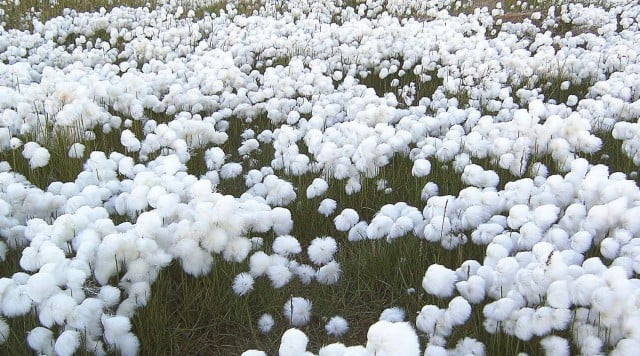
Pakistan’s cotton industry is in a quandary after the United States unexpectedly reduced tariffs on Indian goods. This follows the European Union’s decision to grant almost duty-free access to Indian exports, raising concerns about a further decline in Pakistan’s exports.
Cotton Ginners Forum Chairman Ihsanul Haq warned that unless the federal and provincial governments take immediate and targeted measures for the cotton and textile sectors, Pakistan would face a sharp decline in exports. He stressed that delayed policy action would widen the cost gap with regional competitors and weaken Pakistan’s position in global markets.
He said according to the latest figures released by the Pakistan Cotton Ginners Association (PCGA) on Tuesday, as of January 31, 2026, cotton arrivals at ginning factories nationwide increased by 0.62% to reach 5.545 million bales. The report stated that during this period, 2.63 million bales arrived at ginning factories in Punjab, while 2.915 million bales reached ginning factories in Sindh and Balochistan, reflecting a decrease of 3% and an increase of 4%, respectively.
During the review period, textile mills purchased 4.987 million bales from ginning factories, while exporters bought 178,000 bales. As a result, ginning factories currently hold saleable stocks of around 380,000 bales. The PCGA data further shows that only 16 ginning factories are operational in Sindh, compared to 84 in Punjab, underscoring the uneven regional impact on the sector.
He added that although the federal government had set a cotton production target of 10.2 million bales for the 2025–26 cotton year, total national cotton output is now expected to be around 5.6 million bales.
Read More: Trump agrees trade deal with India, slashes reciprocal tariff to 18% after call with Modi
He said the industry’s anxiety intensified after the European Union reduced its import duty on Indian products to zero, while the United States cut tariffs on Indian exports from 50% to a range of 18%–25%. In contrast, Pakistani products still face a 19% tariff in the US market. According to the industry, this disparity shows price competitiveness decisively in favour of India.
“The entire cotton and textile value chain in Pakistan is under stress,” Haq mentioned expressing serious concern, urging governments to act on industry demands on an emergency basis. He emphasised the need to align Pakistan’s production costs with those of neighbouring countries to ensure export competitiveness on price.
The Cotton Ginners Forum also renewed its demand for immediate release of billions of rupees in pending refunds owed to the textile industry or their adjustment against super tax liabilities, calling the move essential for liquidity and survival.
Referring to the latest report by the International Cotton Advisory Committee (ICAC), Haq said global cotton production in the 2025-26 season is estimated at 26 million tonnes, while consumption is projected at 25.2 million tonnes. The report expects China to remain the world’s largest cotton producer, followed by India and Brazil. China and India will lead global consumption, with Pakistan ranking third.
The ICAC report further projects Brazil, the United States, and Australia as the top cotton exporters, while Bangladesh has emerged as the world’s largest cotton importer, followed by Vietnam and China.














This material may not be published, broadcast, rewritten, redistributed or derived from. Unless otherwise stated, all content is copyrighted © 2026 The Express Tribune.







COMMENTS (2)
Comments are moderated and generally will be posted if they are on-topic and not abusive.
For more information, please see our Comments FAQ