Pakistan key to Iran-US talks, says Vali Nasr
Updated 52 minutes ago

Review shows literacy at 63%, well below regional average of 78%
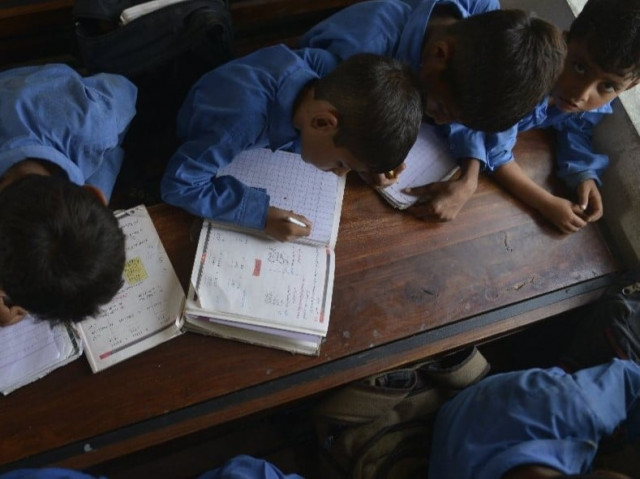
Pakistan remains the lowest-ranked country in South Asia for literacy, with 63% of people aged 10 and above able to read and write, according to a new review by the Free and Fair Election Network (FAFEN).
The review draws on official survey data from the Pakistan Social and Living Standards Measurement-Household Integrated Economic Survey (PSLM–HEIS) 2024–2025 and compares Pakistan’s performance with World Bank literacy figures for the region.
It shows literacy has risen from 60% in 2018-2019 to 63% in 2024-2025, an increase of three percentage points in around six years. Analysts described the pace of improvement as “alarmingly slow” for a country of more than 240 million people.
Regionally, the review places the Maldives at over 98% adult literacy, followed by Sri Lanka at 93%, India at 87% and Bangladesh at 79%. Nepal stands at 68% and Bhutan at 65%, while the South Asian average is 78% -- 15 percentage points higher than Pakistan.
Read: WB warns of Pakistan's failing growth model
The data also highlights sharp disparities within Pakistan. Male literacy stands at 73%, compared with 54% for women. Punjab has the highest provincial literacy rate at 68%, while Sindh and Khyber-Pakhtunkhwa are both at 58%. Balochistan records the lowest rate at 49%.
Youth literacy, covering ages 15 to 24, is reported at 77%, but overall adult literacy for those aged 15 and above lags at 60%, pointing to persistent gaps in education and skills among older age groups.
FAFEN noted that the survey defines a “literate” person as someone aged 10 or above who can read and understand a simple statement and write a simple sentence.
The organisation also pointed to Article 25A of Pakistan’s Constitution, which guarantees free and compulsory education for children aged five to 16. It said education became a provincial subject after the 18th Amendment, while Pakistan is also committed to the United Nations’ education targets under the Sustainable Development Goals.












This material may not be published, broadcast, rewritten, redistributed or derived from. Unless otherwise stated, all content is copyrighted © 2026 The Express Tribune.







COMMENTS (1)
Comments are moderated and generally will be posted if they are on-topic and not abusive.
For more information, please see our Comments FAQ