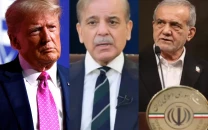
PM Shehbaz convenes key cabinet meeting on US-Iran ceasefire
Updated 1 hour ago

Absence of regular heads in HEC, FDE, DGSE and PEIRA disrupts policymaking
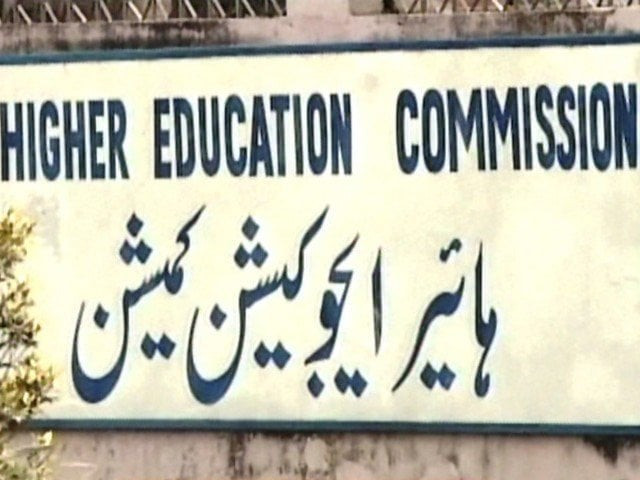
Subsidiary institutions of the Federal Ministry of Education and Professional Training have been operating on an ad-hoc basis for a long time, resulting in a serious administrative crisis.
The federal government and the federal education minister appear helpless, while bureaucrats are simultaneously holding key ministry positions along with additional charges of subordinate institutions.
Due to the non-appointment of permanent heads in the Higher Education Commission (HEC), Federal Directorate of Education (FDE), Directorate General of Special Education (DGSE) and the Private Educational Institutions Regulatory Authority (PEIRA), policymaking, decision-making and day-to-day administrative affairs are being severely affected. In some cases, reports of alleged financial irregularities have also surfaced.
The HEC is currently without a permanent chairman. After former chairman Dr Mukhtar Ahmed, a summary for appointing a new chairman was sent to the prime minister, but was rejected, after which no new process has been initiated.
At present, the additional charge of HEC chairman is held by the Federal Secretary for Education, Nadeem Mahboob.
The Association of Private Sector Universities of Pakistan (APSUP) has also written a letter to the prime minister seeking the immediate appointment of a permanent chairman.
Similarly, the DGSE, an important institution responsible for the education and training of special children, also lacks a permanent director general. Its additional charge is held by Joint Secretary Education Asif Iqbal Asif. The Federal Directorate of Education, which oversees the administrative affairs of more than 422 public educational institutions in the federal capital, has also been without a permanent DG for a long time.
The additional charge is held by Senior Joint Secretary Admin Syed Junaid Akhlaq.
Likewise, PEIRA continues to function without a permanent head, with its additional charge assigned to IBCC Executive Director Dr Ghulam Ali Mallah.
Sources said that financial and administrative decisions in these institutions are being made by officers holding additional charge, while many important decisions are being delayed indefinitely. As a result, development projects have slowed, file movement has become sluggish, and the complaint redressal system has weakened.







This material may not be published, broadcast, rewritten, redistributed or derived from. Unless otherwise stated, all content is copyrighted © 2026 The Express Tribune.


COMMENTS
Comments are moderated and generally will be posted if they are on-topic and not abusive.
For more information, please see our Comments FAQ