Forces kill terrorists' ringleader in Bannu
Updated 5 hours ago

Weak enforcement and institutional silence threaten the capital's natural heritage
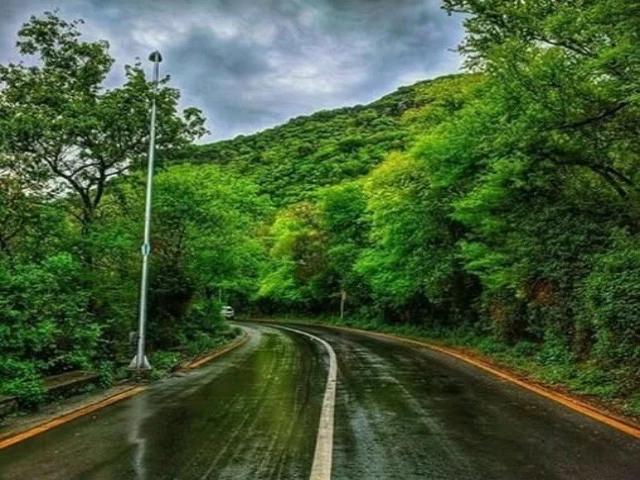
Forests in the Islamabad Capital Territory (ICT) have shaped the beautiful landscape of Islamabad. Recently, however, large-scale cutting of forests under the nose of the Capital Development Authority (CDA), Pakistan Environmental Protection Agency (Pak-EPA) and the Margalla Hills National Park (MHNP) Board has attracted widespread criticism from the public, journalists, politicians and professionals. The serene beauty of the capital city has been devastated due to such deforestation and vegetation cutting.
Islamabad is a beautiful city with undulating plains and the gentle mountains of the Margalla Hills, extending towards Murree and the Galliyat. Nature has gifted ICT with a pristine environment and a variety of forest sub-types hosting unique biodiversity. The Margalla forests contain dozens of major and many small perennial freshwater streams. Forestry around Islamabad is centred on the Margalla Hills National Park, a subtropical broadleaf forest rich in biodiversity, featuring protected areas and popular trails in Zone IV.
Islamabad's original flora primarily falls under subtropical pine and scrub forests, dominated by chir pine (Pinus roxburghii), and subtropical dry and broadleaf evergreen forests. These include olive (Olea ferruginea), phulai (Senegalia modesta), oak (Quercus incana), and various shrubs and herbs adapted to the hilly terrain and varied soils. Invasive species such as paper mulberry have altered some areas. Significant fauna, including mammals such as leopards and barking deer, and over 100 bird species, contribute to Islamabad's biological diversity.
Islamabad was made the capital of Pakistan in 1960 primarily because of its natural beauty, plains, mountains, vegetation and biodiversity. The CDA was established under the CDA Ordinance 1960 and entrusted with managing and developing the city. In 1992, the CDA promulgated the Zoning Regulations and divided Islamabad into five zones. In Zone I, only the CDA could acquire land for development. In Zones II and V, private housing societies were allowed development activities. Zone III was declared a reserved area, while Zone IV was designated for multiple activities, including the national park, agro-farming, educational institutions, and research and development. Islamabad's landscape is regulated under the Islamabad Master Plan.
Forests within the ICT and CDA jurisdictions are governed by multiple laws. The Margalla Hills National Park is regulated by the Islamabad Wildlife Management Board (IWMB), housed in the Ministry of Climate Change and Environmental Coordination. The IWMB was established under the 1979 ordinance and empowered by the Islamabad Nature Conservation Act 2023-24 to manage and protect the park, conserve biodiversity, and control illegal construction and grazing.
Tree cutting is governed by the Islamabad Wildlife (Protection, Preservation, Conservation and Management) Ordinance 1979 and the Islamabad Preservation of Landscape Ordinance 1966. These laws strictly prohibit the unauthorised cutting, removal or damage of trees, with enforcement primarily carried out by the IWMB and the CDA. The MHNP is a no-go area for illegal forest cutting, poaching, grazing or grass cutting. No such activity is allowed or can be permitted by any authority within the MHNP unless the area is de-notified. The Cutting of Trees (Prohibition) Act 1992 is a federal law applicable to the ICT and CDA, prohibiting unauthorised tree cutting across Pakistan.
Another important law is the Pakistan Environmental Protection Act 1997, enforced by Pak-EPA. The IEE/EIA Regulations 2000 require project proponents to conduct an Initial Environmental Examination, or an Environmental Impact Assessment for major impacts, and obtain environmental approval before starting forest cutting or construction. The regulations outline procedures for filing reports, agency review, public hearings, consultation, and post-approval monitoring.
Despite the existence of multiple laws and regulations within a few kilometres of jurisdiction and under the oversight of regulators such as the MHNP Board, Pak-EPA and the CDA itself, environmental crimes have been committed on a large scale. Recent reports in print, electronic and social media have strongly criticised the CDA for large-scale cutting of trees in the MHNP area near Shakarparian, as well as in other zones along Park Road and near the National Institute of Health.
Tree cutting within the MHNP area constitutes an offence of the utmost severity, as no authority can allow such activity within the park's jurisdiction. Tree cutting near the National Institutes of Health may be undertaken only after due process and permission under the IEE regulations. In these cases, the CDA has not obtained approval from Pak-EPA for forest cutting outside the MHNP jurisdiction.
The environment wing of the CDA lacks technical capacity and has been planting tree and shrub species not suited to Islamabad's eco-climatic conditions. This wing promotes the plantation of water-intensive species such as palms, effectively encouraging nursery businesses through work orders. Islamabad and the Margalla Hills support indigenous species such as wild olive, Dodonaea viscosa, amaltas and chir pine, which require less water and are climate resilient.
The recent large-scale tree cutting from the MHNP and other parts of Islamabad indicates either a lack of awareness among CDA professionals regarding the laws governing the MHNP and tree cutting, or a lack of understanding of landscape forestry and indigenous species. More importantly, the two regulators - Pak-EPA and the MHNP Board - have failed to take cognisance of these environmental offences and have not proceeded against the violators.
Forests are being cut while attempts are made to justify the actions, including claims of wild mulberry removal to eliminate allergies and plantation drives initiated out of season in frosty weather. Justifications such as planting three or ten saplings for each tree cut have also been advanced.
The most disappointing response has come from the climate ministry, which houses Pak-EPA and the MHNP Board. Instead of serving notices to the CDA, the ministry has appeared to protect it. The inaction of the Pak-EPA and the MHNP Board effectively justifies large-scale deforestation at the highest level. Consequently, Islamabad's landscape stands compromised, eroding its natural beauty.
The writer holds a PHD and a Master's degree in Forest Management. He has served the K-P Forestry Department as Divisional Forest Officer andhas also served as head of Pak-EPA











This material may not be published, broadcast, rewritten, redistributed or derived from. Unless otherwise stated, all content is copyrighted © 2026 The Express Tribune.







COMMENTS
Comments are moderated and generally will be posted if they are on-topic and not abusive.
For more information, please see our Comments FAQ