Aisha Tyler recalls working with Connor Storrie
Updated 3 hours ago

Govt permits kite flying in Lahore, wrapping festival in regulations designed to prevent a repeat of past disasters
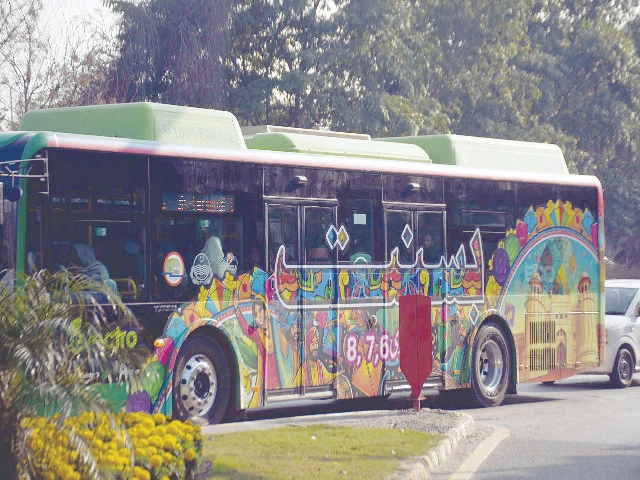
After years of silence in Lahore's winter skies, Basant is set to return, cautiously and tightly regulated, as the Punjab government prepares to revive a festival once synonymous with colour, rooftops and springtime renewal, yet long shadowed by tragedy and controversy.
The Punjab government has granted special permission for Basant to be celebrated from February 6 to 8, limiting the festival strictly to Lahore under an extensive web of legal, administrative and safety controls aimed at preventing the loss of life that previously led to its ban.
Basant, traditionally observed on the fifth day of the month of Magh in late January or early February, marks the arrival of spring and has historically been celebrated across Punjab, including in India and among Punjabi diaspora communities, with kite flying at the heart of the festivities.
In Pakistan's Punjab, however, the festival acquired a darker reputation during the early 2000s, as celebratory gunfire, glass-coated strings, metallic wires and rooftop accidents resulted in numerous deaths, prompting authorities to impose a blanket ban in 2007.
This year's revival follows the promulgation of the Punjab Kite Flying Ordinance 2025, which formally reopened the door for Basant while placing unprecedented restrictions on every aspect of the festival, from kite dimensions and string material to sound systems and rooftop access.
Under official notifications issued by the Lahore district administration on the instructions of Chief Minister Maryam Nawaz, kite flying will be permitted only within Lahore's district limits and only during the three designated days, with enforcement elsewhere in Punjab remaining absolute.
Deputy Commissioner Syed Musa Raza has confirmed that comprehensive standard operating procedures will apply across the city, covering rooftops, buildings, commercial venues and public spaces, while district officers and police have been empowered to inspect and shut down unsafe locations.
Central to the new framework is a mandatory digital registration system for kite manufacturers and sellers, accessible through the e-Biz application and the basant.punjab.gov.pk portal, with production allowed from December 30 and retail sales restricted to February 1 through 8.
Authorities report receiving more than 500 applications from vendors and manufacturers, with over 300 approvals granted so far, while several applications have been rejected or remain under scrutiny for failing to meet technical and safety requirements.
The rules impose a complete ban on nylon, plastic, chemical-coated and glass-coated strings, metallic wire and spools, permitting only cotton string wound into round 'pinna' forms, each carrying a QR code to ensure traceability and regulatory oversight.
Strict limits have also been placed on kite sizes, with 'patang' and 'guda' dimensions clearly defined, and violations punishable under the Punjab Regulation of Kite Flying Ordinance, carrying prison terms of up to five years and fines reaching Rs2 million.
Beyond physical safety, authorities have moved aggressively to depoliticise the festival, imposing a province-wide ban on kites bearing political, religious or provocative imagery after photographs of kites displaying images of Imran Khan surfaced on social media.
Under Section 144, only plain or multi-coloured kites without images, slogans or symbols will be allowed, with the Home Department warning that misuse of Basant for political messaging could trigger unrest and compromise public order.
The government has also prohibited the playing of 132 Punjabi songs deemed objectionable or inappropriate, barring their use at rooftops, public gatherings and commercial venues, with legal action promised against violators to maintain decency and law and order.
Law enforcement preparations are already visible, with Lahore police conducting raids across multiple localities and arresting dozens of kite flyers, sellers and manufacturers as part of a zero-tolerance policy ahead of the festival.
Simultaneously, the Lahore High Court has assumed an oversight role, directing authorities to ensure full implementation of safety measures, deploy adequate medical staff and guarantee that no accident occurs during the celebrations.
Officials have briefed the court that Lahore has been divided into red, yellow and green zones based on risk assessments drawn from a decade of data, with the Walled City designated a high-risk red zone requiring enhanced controls.
Emergency preparedness includes Rescue 1122, mobile clinics, hospitals on alert and 70 clinics on wheels, while authorities have been instructed to establish roadside medical camps staffed with trained doctors throughout the three-day festival.
To protect motorcyclists, one million antenna rods are being distributed and installed across the city, although concerns persist as the figure represents only about 20% of Lahore's 5.6 million registered motorcycles.
Electricity supply and fire safety have also been prioritised, with LESCO directed to secure transmission systems and remove hazardous wiring, and special teams placed on standby to respond swiftly to disruptions caused by kite strings.
Despite the heavy regulation, the provincial government has signalled its intent to present Basant as a cultural showcase, with official events planned at Lahore Fort and proposals under consideration to invite foreign diplomats to witness the festival.
Officials insist that the revival is not about nostalgia alone but about reclaiming a defining element of Lahore's cultural identity under modern safeguards, arguing that Basant's survival depends on collective responsibility and strict adherence to the law.
As February approaches, the city stands at a delicate crossroads, balancing memory and caution, celebration and control, with Lahore's skies once again poised to fill with colour, watched closely by courts, police and a public unwilling to relive past tragedies.










This material may not be published, broadcast, rewritten, redistributed or derived from. Unless otherwise stated, all content is copyrighted © 2026 The Express Tribune.



COMMENTS (1)
Comments are moderated and generally will be posted if they are on-topic and not abusive.
For more information, please see our Comments FAQ