FO slams storming of Al-Aqsa Mosque, raising of Israeli flag
Updated 1 hour ago

Landslides, blocked roads, power outages reported
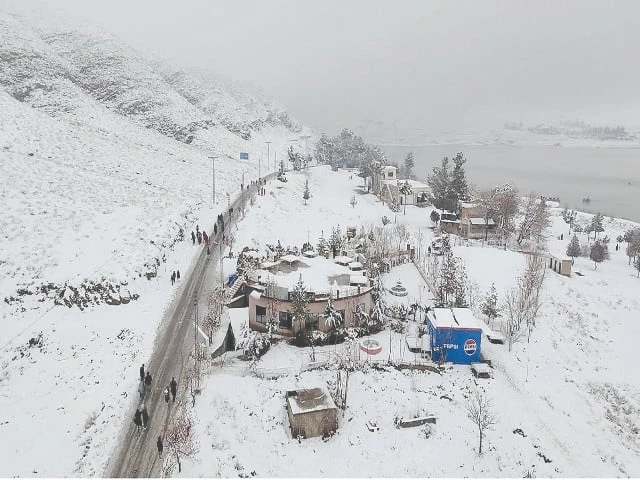
A powerful westerly weather system has tightened its grip across Pakistan, plunging temperatures below freezing in many northern areas, triggering widespread snowfall, rain and landslides, blocking roads, disrupting electricity supply and paralysing daily life in several mountainous districts.
Meanwhile, authorities have warned of further travel disruptions and urged caution.
According to the National Weather Forecasting Centre (NWFC), a westerly wave continues to affect the upper parts of the country and is expected to persist through Tuesday.
Temperatures plunged to as low as -7°C in Malam Jabba, Parachinar and Gupis, -6°C in Bagrote, -5°C in Kalam and Rawalakot, -3°C in Murree and Skardu, and -1°C in Quetta.
The weather centre warned that snowfall could cause road closures and slippery conditions across Naran, Kaghan, Dir, Swat, Kalam, Chitral, Kohistan, Mansehra, Abbottabad, Shangla, Astore, Hunza, Skardu, Murree, Galiyat, Neelum Valley, Bagh, Poonch and Haveli on January 27, with risks of landslides and avalanches in upper Khyber Pakhtunkhwa, Gilgit-Baltistan and Azad Jammu and Kashmir. Tourists were advised to avoid unnecessary travel.
Intermittent rain, strong winds and thunderstorms were forecast for upper Khyber Pakhtunkhwa, AJK and Gilgit-Baltistan, with isolated areas expected to receive heavy rain and moderate to heavy snowfall.
Lower Khyber-Pakhtunkhwa, northeastern Punjab and northern Balochistan were forecast cloudy weather with isolated rain and thunderstorms, while cold and dry conditions were expected elsewhere. The system is likely to persist through January 28.
Meanwhile, the National Highways and Motorways Police (NHMP) said it was actively ensuring traffic flow amid heavy snowfall. On the E-35 Hazara Expressway, officials remained engaged in clearing snow and assisting commuters, while heavy machinery was deployed on the Murree Expressway to keep roads open.
The NWFC had earlier warned that snowfall could disrupt traffic across northern Khyber Pakhtunkhwa, Gilgit-Baltistan, AJK and parts of Balochistan, including Quetta, Ziarat, Chaman, Pishin, Qila Abdullah, Qila Saifullah, Noshki, Harnai and Zhob.
'Critical' situation in Galiyat
Separately, conditions in Abbottabad's Galiyat region remained "critical" as heavy snowfall continued, with Nathiagali, Ayubia and Changla Gali receiving over three feet of snow in the last 16 hours, according to the state-run APP.
Snow clearance operations were underway and the situation was being closely monitored, officials said. Snowfall intensity remained high at an estimated 0.8cm per hour.
Meanwhile, a third spell of snowfall, accompanied by intermittent rain, swept across South Waziristan Upper and Lower late Monday night, intensifying cold conditions and restricting mobility in high-altitude areas.
The snowfall caused a sharp temperature drop and raised concerns over road blockages, though it also brought relief to farmers following a prolonged dry spell.
Snow continued intermittently in the upper reaches while the lower and plain areas received steady rainfall. Residents reported icy roads, reduced visibility and difficulties in daily travel.
Authorities warned that continued snowfall could again cut off remote villages if clearance operations were delayed. Affected areas included Angoor Adda, Shakai, Khamrang, Raghzai, Zam Cheena, Margha Cheena, Kaniguram, Badar, Makeen and Ladha, along with surrounding mountainous regions.
Just two days earlier, heavy snowfall in these localities had blocked at least 12 road sections, disrupting transport and delaying supplies of food and essential items.
From an agricultural perspective, farmers welcomed the precipitation, particularly for wheat crops at a critical growth stage. Local growers said rainfall and snowfall improved soil moisture, fertility and groundwater recharge.
A farmer from Wana said rain and snow acted as natural irrigation, helping seeds germinate and improving fertiliser efficiency, ultimately boosting yields and incomes.
Officials from agriculture and irrigation departments said melting snow would replenish streams, springs and underground aquifers, helping stabilise water levels after years of declining groundwater due to dry conditions and excessive tube-well use.
Despite these benefits, snowfall continued to pose challenges in elevated areas. Icy roads, fog and plummeting temperatures disrupted traffic, particularly on narrow and steep routes.
District administrations advised residents to remain cautious, avoid unnecessary travel and take preventive measures against extreme cold, especially for children and the elderly.
Authorities said instructions had been issued to ensure timely road clearance and emergency preparedness.
Landslides, power outages
Under the ongoing westerly system, rain in the plains and persistent snowfall in the upper areas blocked link roads, paralysing daily life across Upper Dir, Lower Dir and Chitral.
In Upper Dir's Gwaldai area, a landslide stranded several vehicles with passengers, causing severe hardship, while residents complained of the absence of government machinery.
In Upper Dir's Sheringal Forest Colony, a pickup vehicle skidded off a snowy road into a ravine, injuring three people who were shifted to the hospital.
In Peshawar and surrounding areas, rain that began last evening briefly stopped in the morning but resumed later, intensifying the cold. Rain continued intermittently in KP's plains, while the third snowfall spell persisted in upper and mountainous areas.
In Chitral, light snowfall resumed after a four-day gap. Snowfall continued in Lowari Tunnel area, Kalash valleys, Madaklasht and Garam Chashma, while Shandur, Laspur and Yarkhun in Upper Chitral also remained under snow.
Despite snowfall, traffic on the Lowari Tunnel Road continued due to ongoing clearance operations, with authorities directing motorists to use snow chains.
Snowfall intensified cold conditions in Chitral, sharply increasing demand for firewood. Residents reported shortages and rising prices, with sellers charging inflated rates.
In Swat's Malam Jabba and upper areas, snowfall that began overnight continued, while rain persisted in lower areas, including Mingora. Lower Dir also witnessed rain in urban areas and heavy snowfall in upper regions.
Heavy snowfall of several feet was recorded in Kumrat Valley, Jahaz Banda, Badgoi, Lowari Tunnel, Kalpani, Shahi Ban Shahi, Lajbok, Ushairai, Dara Tor, Mang Dara and Laram, cutting off link roads. Snowfall also caused electricity poles to collapse in parts of Lower Dir, Upper Dir and Chitral, resulting in prolonged power outages.
In Lower Dir, daily life remained severely disrupted, with markets witnessing negligible activity.
Punjab
Meanwhile, cloudy weather, strong winds and intermittent rain with thunderstorms were forecast for Lahore and several Punjab districts, while snowfall was expected in upper areas.
The Met Office and PDMA warned of intensifying cold and urged precautionary measures.
Rain with gusty winds and thunderstorms was expected in Rawalpindi, Chakwal, Attock, Jhelum, Sialkot, Narowal, Lahore and Kasur, while Sheikhupura, Gujrat and Gujranwala and adjoining areas were also likely to receive rain. Some locations could experience heavy downpours.
In Murree and Galiyat, intermittent rain and moderate to heavy snowfall were forecast. PDMA Punjab said snowfall had continued in Murree since last night, with 6 to 7 inches recorded so far, and warned of further rain and heavy snowfall over the next 24 hours, intensifying cold conditions.
The Met Office also forecast rain and snowfall with gusty winds in upper Khyber Pakhtunkhwa, Kashmir and Gilgit-Baltistan, with moderate to heavy snowfall at some places.
Cold and dry weather was expected elsewhere, while most parts of the country were likely to remain cold and dry on January 28, with severe cold in mountainous areas.
Light to moderate fog was expected during the night and morning hours in Punjab's plains and upper Sindh. PDMA Punjab said its control room remained on high alert and urged citizens to contact the helpline 1129 in case of emergencies.
Tourists were advised to avoid unnecessary travel to Murree and snow-hit areas and exercise caution.
















This material may not be published, broadcast, rewritten, redistributed or derived from. Unless otherwise stated, all content is copyrighted © 2026 The Express Tribune.






COMMENTS
Comments are moderated and generally will be posted if they are on-topic and not abusive.
For more information, please see our Comments FAQ