Gold, silver prices rebound in Pakistan after five-day losing streak
Updated 44 minutes ago

Decides to opt for alternative use of strategic petroleum pipelines
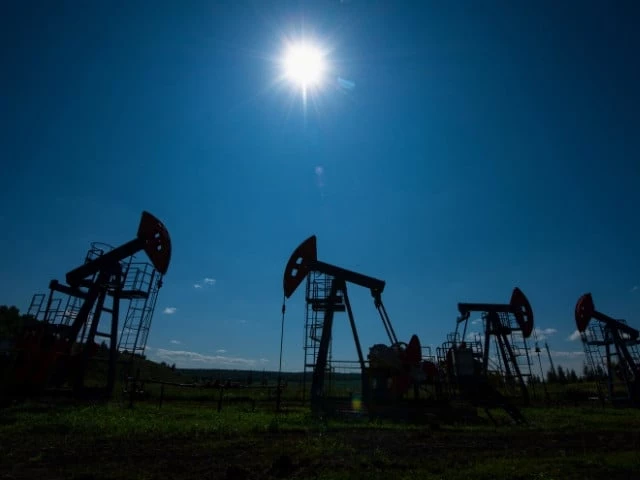
The government has dropped a proposal to unilaterally terminate the implementation agreement with Asia Petroleum Limited (APL), which may dent foreign investor confidence, and has decided to come up with an alternative use of strategic pipelines through a third entry point for white oil imports into the country.
The government believes that this option will be a win-win situation for both parties. The Economic Coordination Committee (ECC) has also constituted a high-level committee to finalise terms and conditions for the alternative use of the pipelines by January 31, 2026.
APL, set up with the World Bank's assistance in 1994 as a public limited company, owns and operates an 82km-long, 14-inch diameter pipeline system with throughput capacity of 3.2 million metric tons per annum.
The pipeline was commissioned to supply furnace oil to the Hub Power plant. APL is a joint venture between Pakistan State Oil (PSO – 40% shares), Infraone Limited, Hong Kong (20% shares), Independent Petroleum Group, Kuwait (12.5% shares) and Weco International (12.5% shares).
An implementation agreement between APL and the government of Pakistan was executed on June 28, 2009, effective from November 2, 1996 to March 30, 2027. Under the agreement, the government guarantees a minimum throughput of 1.5 million metric tons per annum at $12.13 per ton for the first 10 years and thereafter $6.99/ton.
Three options were submitted to the ECC in a recent meeting for taking a decision. The committee was informed that the National Task Force – Implementation of Reforms (Power Division) in its meeting dated October 28, 2024, which was attended by PSO MD, APL CEO and DG (Oil), had given its recommendations.
The task force recommended to unilaterally terminate the implementation agreement with APL, with effect from October 1, 2024. "This option minimises legal exposure and execution risk while remaining in line with the existing contractual framework till March 2027. It spreads payment burden across quarterly installments instead of equitable lump-sum termination payments."
To strengthen investor confidence, it was recommended to develop alternative uses of strategic pipelines, enabling a third entry point for white oil imports into the country.
The ECC was further told that unilateral termination entails higher immediate fiscal outflows, coupled with potential litigation costs, reputational damage and adverse signals to foreign investors. It was requested to approve any of the options and it may also allow a supplementary grant for payment of APL dues.
The Law Division, in its earlier comments, had advised the Petroleum Division to secure the consent of all parties involved, in line with the recommendations of the National Task Force. The Attorney General of Pakistan had no objection and supported the second option. The Ministry of Planning gave its backing to the third option.
The Special Investment Facilitation Council (SIFC) and PSO, under the ambit of the National Task Force, had decided to finalise a way forward by January 31, 2026. The ECC recommended that the petroleum and power ministers may hold discussions and suggest an alternative use of the unutilised pipeline.
The ECC considered a summary submitted by the Ministry of Energy (Petroleum Division) titled "Future of Asia Petroleum Limited Pipeline" and approved the alternative use of the pipeline for fuel supply.
The ECC also constituted a committee consisting of representatives of the Petroleum Division, Finance Division, Law & Justice Division, SIFC, PSO and National Task Force. The committee will negotiate the terms of the implementation agreement, including the guarantee agreement and the Letter of Agreement with APL, decide the ownership of the fuel in pipeline and submit a way forward for ECC's consideration by January 31, 2026.
The ECC also gave directives that the minister of petroleum and the minister of power may engage in discussions and suggest an alternative use of the unutilised pipeline.











This material may not be published, broadcast, rewritten, redistributed or derived from. Unless otherwise stated, all content is copyrighted © 2026 The Express Tribune.







COMMENTS
Comments are moderated and generally will be posted if they are on-topic and not abusive.
For more information, please see our Comments FAQ