BOI ramps up investor outreach in UK
Updated 5 hours ago

SBP defies rate-cut expectations, cites inflation risks, external vulnerabilities
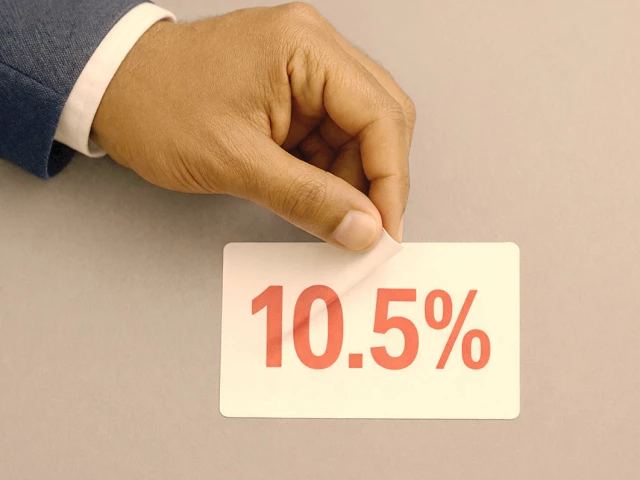
The State Bank of Pakistan (SBP) disappointed the market on Monday by maintaining a status quo on the policy rate, keeping it unchanged at 10.5%, defying widespread expectations of a cut despite painting a rosy picture of Pakistan's macroeconomic and growth outlook. Investors and market participants had largely anticipated a rate cut in view of easing inflation, improving growth indicators and strengthening external sector buffers.
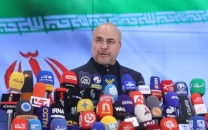
Announcing the decision after the Monetary Policy Committee (MPC) meeting on January 26, 2026, SBP Governor Jameel Ahmad, speaking alongside other MPC members, claimed economic conditions had stabilised materially, likening the economy to a "patient who is now stable and walking on its feet." Despite this assessment, the central bank opted to stay cautious, arguing that policy continuity was necessary to safeguard price stability and ensure sustainable growth.
In its Monetary Policy Statement, the MPC noted that headline inflation eased to 5.6% year-on-year in December 2025, in line with expectations, while core inflation remained sticky at around 7.4%. At the same time, high-frequency indicators (HFIs) pointed to faster-than-anticipated momentum in economic activity, particularly in domestic-oriented sectors. The committee also acknowledged a widening trade deficit driven by rising imports and falling exports but stressed that resilient workers' remittances and benign global commodity prices had kept the current account deficit relatively contained.
"Based on these trends, the outlook for inflation and the current account is broadly unchanged, while the outlook for economic growth has improved significantly," the governor said, adding that holding the policy rate was prudent to maintain macroeconomic stability.
According to the MPC, real GDP growth accelerated to 3.7% year-on-year in Q1-FY26, compared with 1.6% in the same period last year, led primarily by industry and agriculture. Recent HFIs suggest the momentum continued into the second quarter, with strong growth recorded in auto sales, domestic cement dispatches, petroleum product sales (excluding furnace oil), fertiliser off-take, and imports of machinery and intermediate goods.
Large-scale manufacturing (LSM) posted growth of 8.0% in October and 10.4% in November 2025, raising cumulative LSM growth to 6.0% during JulyNovember FY26. In agriculture, favourable sowing data and satellite imagery indicate encouraging prospects for the wheat crop, which is expected to support services sector growth through multiplier effects.
Reflecting these trends, SBP revised its growth outlook upward, projecting real GDP growth in the range of 3.75-4.75% for FY26, against the World Bank's projection of just 3.4%.
On the external front, the current account deficit stood at $244 million in December 2025, taking the cumulative deficit to $1.2 billion in H1-FY26. The deterioration was mainly driven by a widening trade deficit due to a sharp rise in imports and a decline in exports. Export weakness was attributed to a significant drop in food exports, particularly rice, although high-value-added textile exports remained resilient.
Strong growth in workers' remittances and information and communication technology (ICT) services exports helped contain the overall deficit, allowing SBP to continue building foreign exchange reserves through interbank foreign exchange purchases. SBP reserves rose to $16.1 billion by January 16, surpassing the end-December target, with the central bank projecting reserves to exceed $18 billion by June 2026 and approach the three-month import cover benchmark in FY27. The highest level of SBP reserves remains $20.15 billion, recorded in August 2021. The governor expressed an ambition to reach $20.2 billion next year, remarking that "we are playing a twenty-twenty format in the FX sphere."
On the fiscal side, Federal Board of Revenue (FBR) tax revenues grew by 9.5% in H1-FY26, significantly lower than the 26% growth recorded in the same period last year, resulting in a shortfall of Rs329 billion against targets. While financing-side estimates suggest some improvement in the fiscal balance due to contained expenditures and lower interest payments, the MPC acknowledged that achieving the annual primary surplus target would remain challenging.
The committee stressed the importance of sustained fiscal discipline and structural reforms, including broadening the tax base and privatising loss-making state-owned enterprises (SOEs), to support long-term growth.
Broad money (M2) growth picked up to 16.3% by January 9, driven by higher private sector credit and government borrowing. Private sector credit expanded by Rs578 billion in FY26 to date, with major borrowing from textiles, wholesale and retail trade, and chemicals, while consumer financing also increased. To further support credit growth, SBP announced a reduction in the average cash reserve requirement (CRR) for banks from 6.0% to 5.0%.











This material may not be published, broadcast, rewritten, redistributed or derived from. Unless otherwise stated, all content is copyrighted © 2026 The Express Tribune.







COMMENTS
Comments are moderated and generally will be posted if they are on-topic and not abusive.
For more information, please see our Comments FAQ