Pressure turns to Zverev, Ruud as French Open week two begins
Updated 11 hours ago

The decision comes after the ICC rejected BCB's request to move its matches from India to Sri Lanka
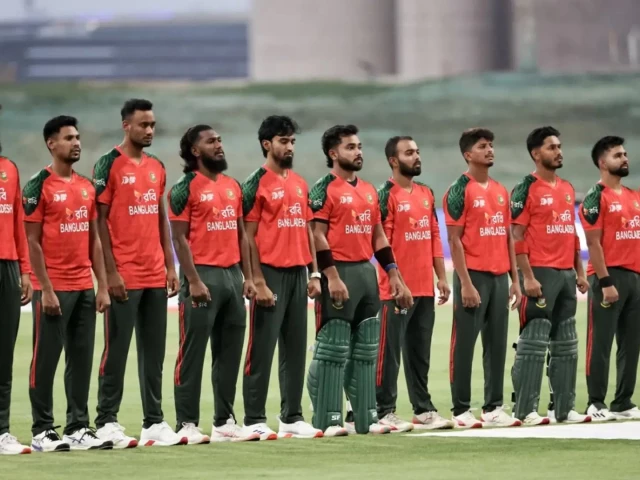
The International Cricket Council (ICC) announced on Saturday that Scotland will replace Bangladesh in the ICC Men’s T20 World Cup 2026.
Bangladesh will no longer compete in the tournament after the Bangladesh Cricket Board (BCB) declined to participate according to the published match schedule. Scotland has been called up to take Bangladesh’s place in Group C, joining England, Italy, Nepal and the West Indies.
The decision comes after the ICC rejected BCB’s request to move its matches from India to Sri Lanka, citing the absence of any credible or verifiable security threat to the Bangladesh team in India. Independent security assessments were conducted by both internal and external experts.
In a statement, the ICC said the decision was made after “an extensive process undertaken by the ICC to address concerns raised by the BCB regarding the hosting of its scheduled matches in India.”
The ICC has announced that Scotland will replace Bangladesh at the #T20WorldCup.
— ICC (@ICC) January 24, 2026
Details 📲 https://t.co/M61nOzx2fF
“Over a period of more than three weeks, the ICC engaged with the BCB through multiple rounds of dialogue conducted in a transparent and constructive manner, including meetings held both via video conference and in person,” the statement read.
“As part of this process, the ICC reviewed the concerns cited by the BCB, commissioned and considered independent security assessments from internal and external experts, and shared detailed security and operational plans covering federal and state arrangements, as well as enhanced and escalating security protocols for the event.”
The ICC concluded that “there was no credible or verifiable security threat to the Bangladesh national team, officials or supporters in India” and determined that it was not appropriate to amend the published schedule.
Following a meeting on Wednesday, the BCB was given 24 hours to confirm whether its team would participate in India as scheduled. With no confirmation received, the ICC proceeded to select a replacement team in line with its governance and qualification processes.
Earlier, Cricbuzz has also reported that Scotland have replaced Bangladesh in the ICC Men’s T20 World Cup 2026, after cricket’s governing body lost patience with Bangladesh’s refusal to play its matches on Indian soil.
ICC chief executive Sanjog Gupta formally informed the ICC Board on Saturday that the BCB was not adhering to a binding board decision and that Bangladesh’s demands were inconsistent with ICC policy, sources said. In the same communication, Gupta recommended inviting Scotland as a replacement, a proposal that was accepted. The correspondence was copied to BCB president Aminul Islam, an ICC Board member.
Gupta is also understood to have written to Cricket Scotland, extending a formal invitation to participate in the T20 World Cup to be jointly hosted by India and Sri Lanka. While Cricket Scotland did not immediately comment publicly, sources said talks between ICC headquarters in Dubai and officials in Edinburgh began early on Saturday.
Scotland’s inclusion is based on recent performances in ICC events and their current world ranking of 14. At the T20 World Cup 2024, Scotland finished third in Group B on the same points as England but missed out on progression due to net run-rate. In 2022, they stunned West Indies in the group stage, while in 2021 they beat Bangladesh—the very team they now replace—topping their group before going winless in the Super 12s.
At an ICC Board meeting on January 21, all but two members rejected Bangladesh’s request to move their matches out of India after independent security assessments concluded the threat level was “low to moderate”. The ICC then issued a 24-hour deadline for compliance.
Bangladesh disputed the findings, arguing the threat was “moderate to high”, and cited broader political concerns. The standoff intensified earlier this month after the IPL snub of pace bowler Mustafizur Rahman, who was released by Kolkata Knight Riders following a directive from the Indian board—an episode that sparked anger in Dhaka.
Despite indications during the Bangladesh Premier League final that a compromise might be possible, the BCB maintained its position and submitted objections even after the deadline had elapsed. By then, ICC officials said, patience had run out.














This material may not be published, broadcast, rewritten, redistributed or derived from. Unless otherwise stated, all content is copyrighted © 2026 The Express Tribune.





COMMENTS (3)
Comments are moderated and generally will be posted if they are on-topic and not abusive.
For more information, please see our Comments FAQ