Pakistan, Ethiopia agree to expand engagement
Updated 7 hours ago

Report projects earnings to annual 21% amidst stable macros and lower interest rates
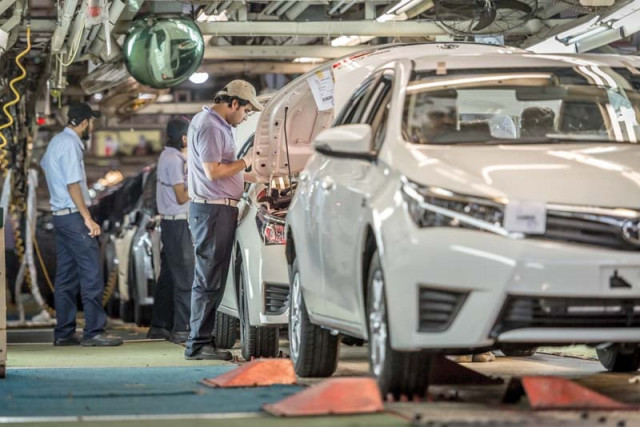
In a significant shift for the Pakistani automotive landscape, industry experts are projecting a 21% year-on-year increase in earnings for the second quarter of the 2026 fiscal year. According to the latest research preview from Optimus Capital Management, the sector's total Profit After Tax (PAT) is estimated to reach approximately Rs6.6 billion. This projection is being driven by a dramatic 76% surge in sales volumes as lower interest rates and stable macroeconomic conditions revitalise consumer demand.
While the volume of vehicles hitting the road has increased to 17,833 units, the financial success is tempered by a sharp 188% spike in distribution costs and a 25% dip in secondary income, which has caused overall net margins to shrink by 2% points to 6.9%.
Optimus analyst Muhammad Talha noted that passenger cars now dominate overall volumes among Pakistan Automotive Manufacturers Association (PAMA) members. He said intense competition has saturated the SUV and light commercial vehicle segments, where newer technology-focused new energy vehicles are competing aggressively, offering consumers a wider range of options.
The report highlighted shifting competitive dynamics as the sector prepares for new model launches by entrants such as Jaecoo and BYD. Honda Atlas Cars emerged as the standout performer during the quarter, with HR-V and BR-V sales rising 141% year-on-year, driven largely by strong demand for the HR-V HEV variant. As a result, Honda's quarterly profit is expected to jump 152% to Rs1.4 billion, while its passenger car market share is projected to increase by nearly four percentage points.
Indus Motor Company, meanwhile, is facing increased pressure in the high-end SUV segment. While Corolla and Yaris maintained a combined market share of around 23.8%, Fortuner and Corolla Cross lost 25.9 percentage points of market share due to new competition. Despite this, Indus Motor is still expected to post a quarterly profit of Rs5.1 billion and announce a dividend of Rs40 per share.
Looking ahead, reliance on the passenger car segment has deepened, with Toyota Yaris and Honda City accounting for about 84% of total sector volumes. Talha described the sector outlook as neutral, noting that future performance will depend on innovation and localisation.
Auto sector analyst Mashood Ai Khan told The Express Tribune that interest rates have fallen from 24% to 11% and are expected to drop into single digits over the next six months, which should further support car financing and sales.
He added that Japanese brands retain an advantage due to higher localisation, while Korean and Chinese manufacturers may face price pressures after June 2026, when tax relief under the current policy expires. Localisation, he said, will remain critical for competitiveness, alongside proposed reductions in electricity tariffs to lower manufacturing costs.















This material may not be published, broadcast, rewritten, redistributed or derived from. Unless otherwise stated, all content is copyrighted © 2026 The Express Tribune.







COMMENTS
Comments are moderated and generally will be posted if they are on-topic and not abusive.
For more information, please see our Comments FAQ