UN chief condemns Quetta train blast
Updated 4 hours ago

Lahore emerges as the worst-affected city, recording an average AQI of 367 — classified as ‘very unhealthy’
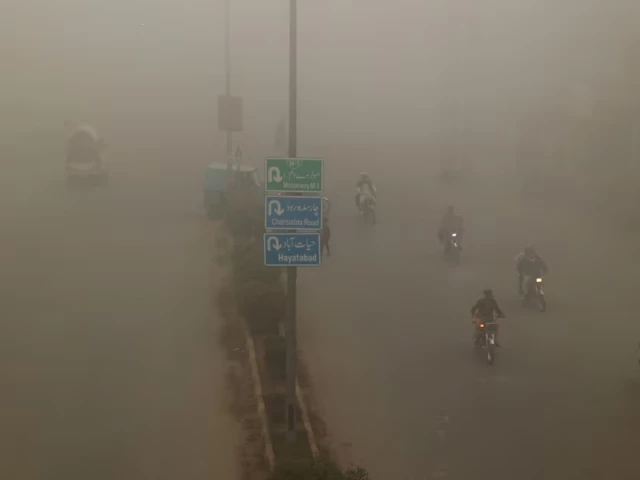
Punjab continued to grapple with hazardous air quality on Monday, with smog levels remaining dangerously high across several districts, as the province’s average Air Quality Index (AQI) during the morning-to-afternoon monitoring period remained at 233, placing overall conditions in the ‘unhealthy’ category.
According to data from the Punjab Environmental Protection Agency (EPA), Lahore emerged as the worst-affected city, recording an average AQI of 367 — classified as ‘very unhealthy.’ Several monitoring stations in the provincial capital reported even more alarming readings.
The Lahore Waste Management Company area topped the list with an AQI of 567, followed by the University of Engineering and Technology at 457 and Punjab University at 451. AQI readings above 400 fall into the ‘hazardous’ range, posing serious health risks, particularly for children, the elderly, and those with respiratory conditions.
Beyond Lahore, smog levels remained high across much of Punjab. Hafizabad, Muzaffargarh, Faisalabad, Rahim Yar Khan, Khanewal, and Multan all reported AQI readings above safe limits. EPA officials noted that the index was calculated using PM2.5 concentrations, with data drawn from the provincial AQI dashboard.
The pollution spike comes amid cold and largely dry weather dominating much of Pakistan. According to the latest forecast issued on Monday, a shallow westerly wave over northern regions is influencing current conditions. Most areas are expected to remain cold and dry on Tuesday, while upper Khyber-Pakhtunkhwa and Gilgit-Baltistan may experience intermittent cloud cover with light rain or snowfall at isolated locations.
In Punjab and upper Sindh, moderate to dense fog is forecast during night and early morning hours, particularly across central and southern districts. Reduced visibility is likely on major motorways, including sections of the M2, M3, M4, and M5, creating hazardous driving conditions from late night through early morning.
Weather over the past 24 hours reflected the broader seasonal trend. Cold and dry conditions prevailed across most of the country, while hilly areas experienced very cold and partly cloudy weather. Light rain and snowfall were reported at isolated locations in upper Khyber-Pakhtunkhwa. Kalam recorded seven millimetres of rain along with 3.5 inches of snow, while Malam Jabba received 2mm of rain and two inches of snowfall.
Temperatures dipped sharply overnight in northern regions. Leh recorded the country’s lowest minimum at minus 8°C, followed by Gupis at minus 6°C and Skardu at minus 5°C. Bagrote, Parachinar, and Quetta each fell to minus 4°C.
In Punjab, the provincial forecast points to continued cold and dry weather across most districts through Tuesday. Murree and the Galiyat are expected to remain partly cloudy, with chances of light rain and snowfall, while Kashmir is likely to experience very cold and cloudy conditions. Frost was reported at isolated locations in Kashmir over the past day, though no rainfall was recorded in Punjab or Kashmir.
Officials have urged residents to stay informed about evolving weather and air quality conditions, avoid unnecessary travel during fog or snowfall, and take precautions to minimise health and safety risks. For now, authorities emphasise that vigilance remains essential as winter smog and severe cold continue to affect large parts of the country.












This material may not be published, broadcast, rewritten, redistributed or derived from. Unless otherwise stated, all content is copyrighted © 2026 The Express Tribune.












COMMENTS
Comments are moderated and generally will be posted if they are on-topic and not abusive.
For more information, please see our Comments FAQ