Azerbaijan ready to supply LNG to Pakistan
Updated 5 hours ago

With universities inducting biased members into internal committees, female students remain deprived of justice
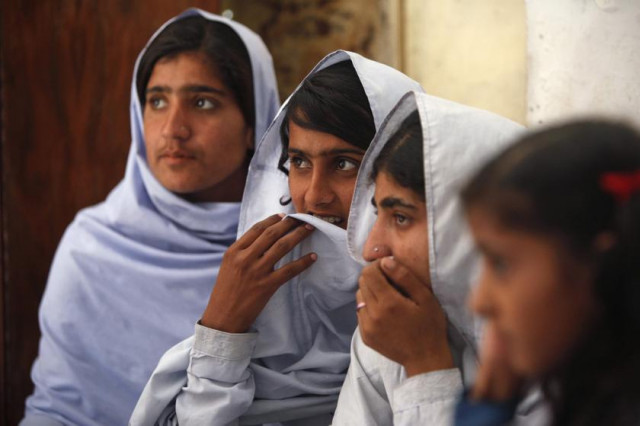
Despite the presence of anti-harassment laws in Khyber-Pakhtunkhwa (K-P), sexual harassment continues to plague educational institutions across the province, with many victims alleging that internal harassment committees have failed to deliver justice.
Instead of receiving protection, many complainants face pressure, intimidation, and institutional silence, forcing them to withdraw complaints or remain quiet to safeguard their future. Several harassment cases have been reported from colleges and universities in recent years, yet survivors reiterate that the system meant to protect them has largely failed.
Speaking to The Express Tribune on the condition of anonymity, a female student revealed that she was harassed by her own teacher and decided to lodge a formal complaint. "I followed the procedure and submitted a written complaint, but instead of help, I was pressurised by the department and members of the harassment committee. The pressure was so intense that I was eventually forced to withdraw my case," shared the victim.
Notably, Khyber-Pakhtunkhwa (K-P) adopted the Protection Against Harassment of Women at the Workplace Act, 2010 following its approval by the National Assembly. The law requires every institution to establish a harassment committee tasked with hearing complaints impartially and ensuring justice after listening to both parties. However, multiple cases from educational institutions suggest that implementation remains weak
According to affected students, harassment committees frequently side with influential faculty members, leaving victims isolated and vulnerable. In several tragic instances, harassment complaints in educational institutions have reportedly led to severe psychological distress among victims, with some students resorting to suicide. Many others choose silence due to family pressure, fear of social stigma, and concerns about their academic future.
Dr Aneesa Qamar, Professor at the University of Peshawar and a former member of the university's harassment committee, believed that no internal university staff should be part of harassment committees. "Harassment committees should consist entirely of women and include independent lawyers and legal experts rather than teachers," opined Dr Qamar, who herself faced intimidation from her colleagues when she tried to support victims.
According to data released by the Federal Ombudsperson for Women, a total of 823 harassment cases were reported across Pakistan between July 2023 and June 2024. Of these, 593 involved women and 230 involved men. Provincial figures showed 28 cases from Khyber-Pakhtunkhwa, 219 each from Punjab and Islamabad, 69 from Sindh, and seven from Balochistan.
Meanwhile, statistics from the Khyber-Pakhtunkhwa Ombudsperson's Office indicated that 169 harassment complaints were reported in the province between January and December 2024. This reflected a growing willingness to report incidents but also raised questions about institutional accountability.
Legal expert and Peshawar High Court Advocate Saif Mohib Kakakhel stressed the urgent need for amendments to the harassment law. "Serious concerns exist regarding the composition and independence of harassment committees. These committees are often pressurised, and their members lack protection. Independent individuals must be appointed instead of institutional heads or teaching staff," noted Kakakhel.
However, former K-P Ombudsperson Rakhshanda Naz defended the legal framework, stating that harassment committees were constituted strictly under the law. "The law already provides all necessary mechanisms. Several offenders have been punished and dismissed from service. Nevertheless, further work is needed to strengthen implementation and ensure effective enforcement," said Naz.
Rubab Mehdi, K-P Ombudsperson, reaffirmed the office's zero-tolerance policy toward harassment in all forms. "Students have the right to a safe, harassment-free environment and may approach either institutional committees or the Provincial Ombudsperson, who is empowered to act on complaints and ensure justice," claimed Mehdi.












This material may not be published, broadcast, rewritten, redistributed or derived from. Unless otherwise stated, all content is copyrighted © 2026 The Express Tribune.





COMMENTS
Comments are moderated and generally will be posted if they are on-topic and not abusive.
For more information, please see our Comments FAQ