NATO to launch scaled-down Baltic Sea drills amid competing military deployments
Updated 16 minutes ago

Fears of a US attack have eased since Wednesday after Trump said killings in Iran were slowing
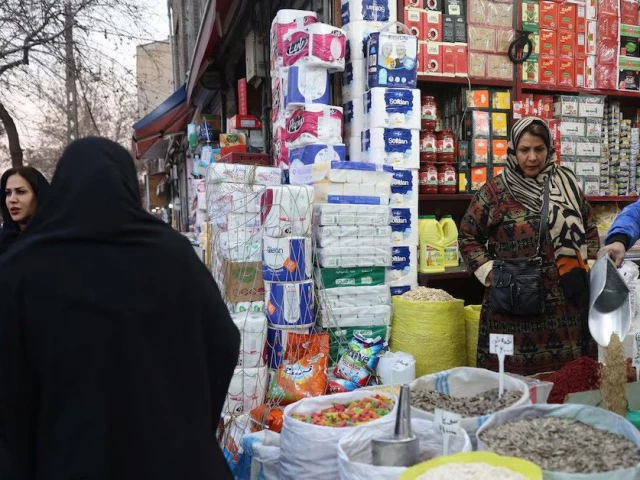
Iran’s crackdown appears to have broadly quelled protests for now, according to a rights group and residents, as state media reported more arrests on Friday in the shadow of repeated US threats to intervene if the killing continues.
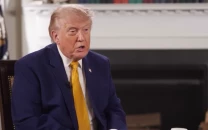
Fears of a US attack have retreated since Wednesday, when President Donald Trump said he had been told killings in Iran were easing.
US allies, including Saudi Arabia and Qatar, conducted intense diplomacy with Washington this week to prevent a US strike, warning of repercussions for the wider region that would ultimately impact the United States, a Gulf official said.
Israel’s intelligence chief, David Barnea, was also in the US on Friday for talks on Iran, according to a source familiar with the matter, and an Israeli military official said the country’s forces were on “peak readiness.”
The White House said on Thursday that Trump and his team had warned Tehran there would be “grave consequences” if there was further bloodshed.
Calm in Tehran and Northern Cities
Several residents of Tehran reached by Reuters said the capital had been comparatively quiet for four days. Drones were flying over the city, but there were no signs of major protests on Thursday or Friday.
Another resident in a northern city on the Caspian Sea said the streets appeared calm. The residents declined to be identified for their safety.
As the internet blackout eased this week, more accounts of violence have emerged. One woman in Tehran told Reuters by phone that her 15-year-old daughter was killed a week ago after joining a demonstration near their home. “She was not a terrorist, not a rioter. Basij forces followed her as she was trying to return home,” she said, referring to a branch of the security forces often used to quell unrest.
Read More: Iran warns of 'decisive response' to any military aggression at UNSC
The protests erupted on December 28 over soaring inflation in Iran, whose economy has been crippled by sanctions, before spiralling into one of the biggest challenges yet to the clerical establishment that has run Iran since the 1979 Islamic Revolution.
The US is expected to send additional offensive and defensive capabilities to the region, though the exact composition and timing of the forces remain unclear, a US official said, speaking on condition of anonymity. The US military’s Central Command declined to comment, citing policy not to discuss ship movements.
Axios reported that the director of Israel’s Mossad spy agency, David Barnea, arrived in the United States on Friday for talks on the situation in Iran. Israeli Prime Minister Benjamin Netanyahu’s office did not immediately respond to a request for comment.
Israel’s intelligence chief, David Barnea, was also in the U.S. on Friday for talks on Iran, according to a source familiar with the matter, and an Israeli military official said the country’s forces were on “peak readiness.”
Pahlavi Calls for Increased Pressure
Reza Pahlavi, the US-based son of Iran’s last shah and an opposition figure, urged the international community on Friday to increase pressure on Tehran to support protesters in overthrowing clerical rule.
“The Iranian people are taking decisive action on the ground. It is now time for the international community to join them fully,” Pahlavi said, though his level of support inside Iran is unclear.
Trump this week appeared to downplay the idea of US backing for Pahlavi, expressing uncertainty that the exiled royal heir could muster significant domestic support. Pahlavi met US envoy Steve Witkoff last weekend, Axios reported.
Rights group reports heavy security deployments
With information flows from Iran obstructed by an internet blackout, several residents of Tehran said the capital had been quiet since Sunday.
They said drones were flying over the city, where they had seen no sign of protests on Thursday or Friday.
Iranian-Kurdish rights group Hengaw said there had been no protest gatherings since Sunday, but “the security environment remains highly restrictive”.
Also Read: Can Pakistan afford regime change in Iran?
“Our independent sources confirm a heavy military and security presence in cities and towns where protests previously took place, as well as in several locations that did not experience major demonstrations,” Norway-based Hengaw said in comments to Reuters.
Another resident in a northern city on the Caspian Sea said the streets there also appeared calm. The residents declined to be identified for their safety.
Reports of sporadic unrest
Iranian-Kurdish rights group Hengaw said there had been no protest gatherings since Sunday, but “the security environment remains highly restrictive.”
“Our independent sources confirm a heavy military and security presence in cities and towns where protests previously took place, as well as in several locations that did not experience major demonstrations,” Norway-based Hengaw said.
There were still signs of unrest in some areas. Hengaw reported that a female nurse was killed by direct gunfire from government forces during protests in Karaj, west of Tehran. Reuters could not independently verify the report.
State-affiliated Tasnim news outlet said rioters set fire to a local education office in Falavarjan County, central Isfahan Province, on Thursday.
An elderly resident in Iran’s northwestern region, home to many Kurdish Iranians, said sporadic protests continued but less intensely. “I have not seen scenes like that before,” she said.
Video circulating online, verified by Reuters as filmed in a Tehran forensic medical center, showed dozens of bodies on floors and stretchers, most in bags. Reuters could not confirm the date.
The state-owned Press TV cited Iran’s police chief as saying calm had been restored across the country.
Casualty figures
A death toll reported by US-based rights group HRANA has increased little since Wednesday, now at 2,677 people, including 2,478 protesters and 163 government-affiliated personnel. Reuters has not independently verified HRANA’s figures.
An Iranian official told the agency earlier this week that about 2,000 people had been killed. These figures dwarf the death toll from previous bouts of unrest suppressed by the state, including in 2009 and 2022.





This material may not be published, broadcast, rewritten, redistributed or derived from. Unless otherwise stated, all content is copyrighted © 2026 The Express Tribune.



COMMENTS
Comments are moderated and generally will be posted if they are on-topic and not abusive.
For more information, please see our Comments FAQ