Gold, silver prices decline in local market as global rates fall
Updated 8 hours ago

Arif Habib details governance reforms, commits Rs125b for fleet, routes and debt cleanup
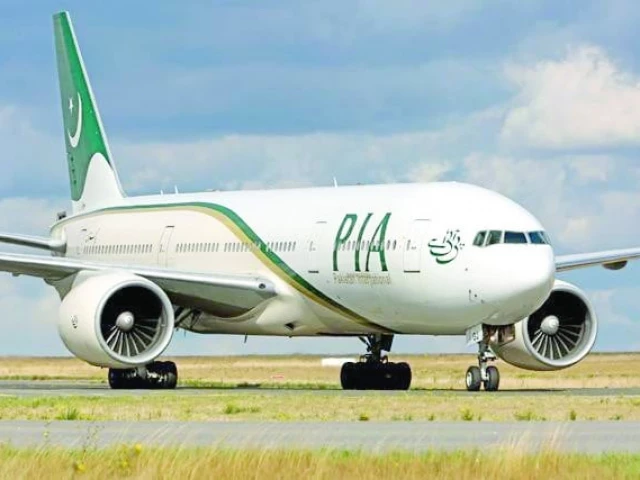
Arif Habib, chairman of the investment firm that headed the consortium which secured a 75% majority stake in Pakistan International Airlines Corporation Ltd (PIACL) through a televised public auction on December 23, 2025, outlined plans to revive the national carrier during a media briefing in Karachi.
The winning bid of Rs135 billion (approximately $482 million) marked the first major privatisation of a state-owned enterprise in nearly two decades and underscored Pakistan's commitment to market-driven economic reforms supported by the International Monetary Fund (IMF). The government will retain the remaining 25% stake, with potential future discussions on its acquisition by the consortium or a strategic foreign partner.
Habib said the airline's revival will require disciplined capital management and professional governance, representing a clear departure from decades of sovereign-backed operations. "PIA incurred losses of nearly Rs800 billion because previous managements did not bother to hedge," he said. "They assumed money was going straight to government coffers, so there was little incentive to manage risks from fluctuating oil prices or currency devaluation." Under private ownership, he added, every financial decision carries direct consequences, making risk management, operational efficiency and profitability essential.
The consortium's ownership structure shows that Fauji Fertiliser Company Limited (FFC), a military-affiliated and publicly listed fertiliser giant, holds 25% of the privatised stake. The Arif Habib Group, together with Fatima Fertiliser, holds another 25%, while the remaining 25% is shared among AKD Group Holdings, City Schools (Private) Limited and Lake City Holdings (Private) Limited, a real estate company. Habib explained that FFC joined after the auction at the consortium's request. "Fauji Fertiliser said whoever wins the auction, they will join that party," he said. "We told them that if they wanted us to be the Imam of this prayer, they would need to offer the prayer behind us." He said FFC's inclusion added financial heft and strategic credibility to the consortium.
The consortium plans to assume full operational control around April 2026 and has committed to reinvesting approximately Rs125 billion from the bid proceeds into fleet modernisation, route expansion, debt management and broader operational improvements. Habib said no layoffs were planned for at least one year. "We want to give current employees time to adjust to the new dynamics, polish their skills and align with a performance-oriented culture," he said.
He praised the dedication of PIA employees for keeping the airline operational despite years of systemic hurdles, weak management and service challenges that drove millions of Pakistani travellers and members of the diaspora toward competing airlines.
A central pillar of the turnaround strategy will be a renewed focus on high-value passenger segments, including Hajj and Umrah pilgrims travelling to Saudi Arabia and Pakistanis living abroad. These segments, numbering in the millions, were historically loyal to PIA but shifted to competitors as service standards declined under state management. "We intend to regain their trust by restoring service quality, safety and reliability," Habib said.
Operational plans include a merit-based approach to workforce management. Employees demonstrating competence and adaptability will be retained, while training and coaching programmes will be offered to those falling short of performance benchmarks. Fleet expansion is also a priority, with plans to raise the number of operational aircraft from the current 15 to 18 to 38 in the short term, including Airbus A320S, Boeing 777s and ATR aircraft. Habib said safety would remain non-negotiable, with zero tolerance for violations of standard operating procedures.
He also emphasised the broader economic implications of the privatisation, arguing that disciplined private capital could help restore investor confidence. He contrasted this with state ownership, where financial losses were absorbed by the government rather than directly affecting decision-makers. "This is not just about reviving PIA; it is about signalling to domestic and international investors that Pakistan can execute major reforms responsibly," he said.
The privatisation is widely viewed as a milestone in Pakistan's economic reform agenda and a test case for whether private capital can turn around loss-making state-owned enterprises. If successful, it could pave the way for further divestments while demonstrating that disciplined management, performance-based incentives and strategic investment can restore operational viability and public confidence.














This material may not be published, broadcast, rewritten, redistributed or derived from. Unless otherwise stated, all content is copyrighted © 2026 The Express Tribune.


COMMENTS (3)
Comments are moderated and generally will be posted if they are on-topic and not abusive.
For more information, please see our Comments FAQ