Sanjay Dutt returns as villian in the role of Khalnayak
Updated 5 hours ago

Running at NAPA till Jan 19, The Last Show's play refuses easy villains in a family falling apart
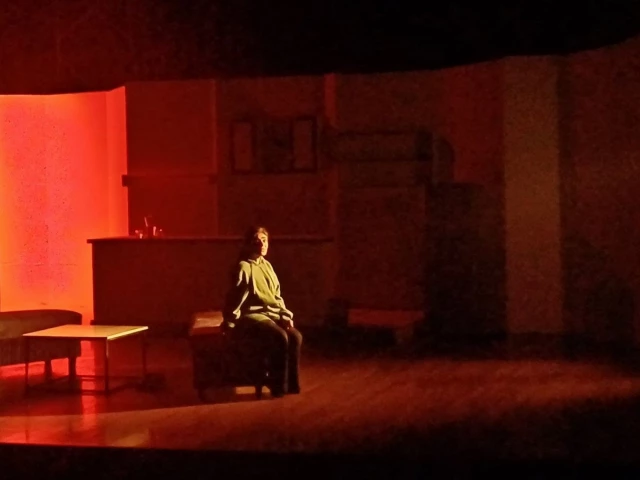
It’s rare to sit in a theatre and completely forget that you’re watching actors on a stage. Usually, you’re aware of the lights, the blocking, the performance. But once in a while, a play quietly pulls you in so deeply that you stop noticing the mechanics altogether.
The Mother, written and directed by Usama Khan, did exactly that for me. It didn’t rely on spectacle or dramatics. It worked through emotional honesty. Adapted from Florian Zeller’s play of the same name, this version never felt like a foreign story awkwardly placed in a Pakistani setting. It felt familiar in the best and most uncomfortable way. The silences inside marriages, the emotional distance between parents and grown children, the way families slowly stop talking honestly to each other. You recognize these people. You recognize these rooms. That’s what makes the play hit so close to home.
At the center is Haleema, played with heartbreaking restraint by Nimra Bucha. She is a sleepless mother trying to survive loneliness, a fading marriage, and the fear of being emotionally abandoned by her son Arsalan, played by Ashmal, who has moved out to live with his girlfriend. Her husband Saad, played by Sunil Shanker, is emotionally absent and always leaving for “seminars.” When Haleema’s son stops replying to her messages, something inside her begins to unravel. Pills, alcohol, memory, fear, and imagination start bleeding into each other.
What stayed with me was how the play refuses to turn Haleema into a typical bechari mazloom aurat. She is loving and cruel, needy and manipulative, vulnerable and controlling. Nimra makes her feel almost symbolic of many aging mothers who quietly feel invisible, emotionally starved, and terrified of losing relevance in their children’s lives. The story gently touches on children neglecting parents as they grow older, beauty standards around aging women, and how overly enmeshed motherhood can sometimes suffocate a child’s independence, without ever lecturing the audience.
Usama Khan’s direction keeps you slightly unsettled in the best way. Scenes repeat, but they don’t feel the same emotionally each time. Sometimes you’re unsure what is real and what might be happening inside Haleema’s mind. In a post-show conversation, Usama shared why this story mattered to him. “This is a story that belongs to every home. It is my mother’s story too. Relationships may differ in shape and intensity, but the emotional pain is something we all recognize.” He also said he consciously avoided portraying Haleema as just a victim. “It would have been very easy to show the mother as a bechari figure, especially in our culture. But I didn’t want audiences walking out only saying, ‘the poor mother.’” Instead, he wanted all the characters to live in moral grey areas so no one feels entirely right or wrong. He added, “I never want to impose a message on the audience. I want people to see themselves on stage and reflect on where they stand in their own lives.”
Nimra echoed this beautifully when she spoke about still discovering Haleema. “The journey of understanding this character hasn’t really ended yet,” she said. “Sometimes you observe your emotions, and sometimes you confront them. That inner conflict is the real work.” Watching her perform, you can feel that tension in every small gesture and pause. The simple, muted set makes the house feel emotionally hollow rather than warm. Haleema’s red costume stands out sharply against it, like a visual heartbeat.
The supporting performances are equally strong. Ashmal captures the quiet guilt and tenderness of a son torn between love and independence. Sunil Shanker brings restraint and emotional distance to the husband without turning him into a villain. Esha gives Sana confidence and defensiveness, making her feel real rather than symbolic.
The final hospital scene lands quietly but painfully. Haleema survives an overdose, only to learn that her son plans to live permanently with his partner. There is no dramatic breakdown, just stillness and ache. The Mother doesn’t comfort you. It stays with you. It reminds you that grief often lives in silence, repetition, and love that doesn’t know how to let go. And that’s exactly why it feels so real.
The writer is a Karachi-based journalist, editor, and poet, with stories forthcoming and published on several local and international platforms. She covers gender, culture, and social issues. She can be reached at fizza_abbas@outlook.com















This material may not be published, broadcast, rewritten, redistributed or derived from. Unless otherwise stated, all content is copyrighted © 2026 The Express Tribune.






COMMENTS
Comments are moderated and generally will be posted if they are on-topic and not abusive.
For more information, please see our Comments FAQ