Man shot dead in suspected robbery
Updated 13 minutes ago

As mercury drops, Karachiites retreat indoors, businesses shorten hours, while demand for warm clothing surges
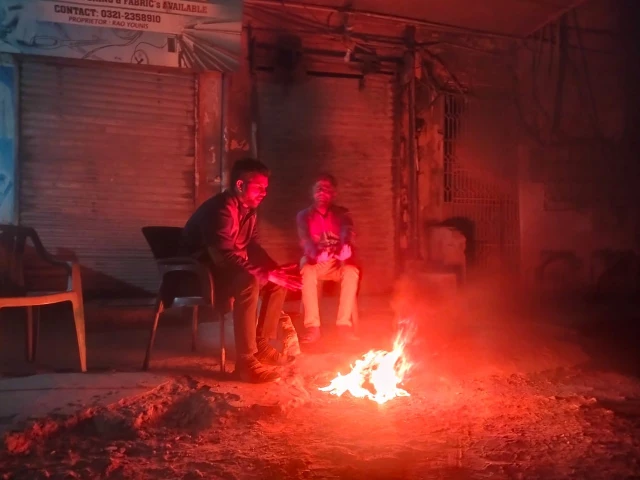
The ongoing cold snap in Karachi has started to affect the daily routines of Karachiites, particularly at night. With temperatures dropping, most people prefer staying indoors, and many neighbourhoods, typically buzzing with activity, are quieter than usual. Public transport is also vanishing from the roads early, further contributing to the city’s nighttime silence.
According to Khawaja Jamal Sethi, Senior Patron of the All Karachi Traders Alliance, the cold has impacted business activities, though not drastically. “Business hours have been shortened due to the drop in mercury,” he said. “Markets and shopping centres that usually stay open until late are closing early, around 9pm, due to fewer customers.”
At night, only food-related businesses are seen operating, and even they experience reduced footfall. Dairy shops, confectioneries, and pharmacies remain open until midnight or up to 1am, but the number of customers has dropped. Many Karachiites prefer returning home early to avoid the cold, leading to a quieter atmosphere in most areas.
Laila Raza, an organiser for a grassroot social welfare group, said the lack of activity is especially noticeable in areas like Nazimabad, Kharadar, Liaquatabad, Korangi, Landhi, New Karachi, Keamari, PIB, Garden, and Ranchor Line, which are usually busy at night.
With the drop in temperature, Karachiites are turning to warm foods to protect themselves from the chill. Chicken corn soup, yakhni (broth), and boiled eggs have become popular choices. Mohammad Khalid, who works at a soup stall in Liaquatabad, mentioned, “The demand for chicken corn soup and yakhni has increased due to the cold wave.”
Tariq Ahmed, a street vendor selling boiled eggs, said the price of an egg has increased to Rs30 while the boiled egg is sold for Rs35 due to the cold. Street vendors are finding it difficult to sell eggs, as many people now prefer boiling them at home, where it’s cheaper.
The sale of warm clothing has seen a slight uptick with the drop in mercury. Middle- and lower-income groups are buying secondhand warm clothes, such as jackets, sweaters, socks, caps, and gloves. However, traders selling secondhand woolen clothing are facing challenges due to the ongoing crackdown on encroachments. Delbar Khan, a vendor at Teen Hatti, said, “The crackdown has impacted our business. Now, people have to go to Lunda Bazaar for secondhand warm clothes.”
The cold weather has also led to a spike in the demand for seafood, particularly fish, which Karachiites are consuming to stay warm. “The demand for fish has risen due to the cold wave, and this has resulted in an increase in the price of various types of fish by Rs100 per kilogram,” said Jaffer Nadeem, a fish vendor at Liaquatabad. He added that people are buying cheaper fish to fry it at home.
The cold snap has impacted the transport sector, with fewer passengers opting for rides at night. Umer Arif, a six-seater rickshaw driver, said, “There are fewer passengers, so many drivers prefer to go home early.” Pervez Ahmed, who drives for a ride-hailing service, echoed similar concerns, saying that many drivers are not working at night due to the cold weather, leaving limited transportation services available during late hours.
Factory worker Rizwan Shahid said that the cold weather has significantly reduced the availability of public transport at night. After finishing his shift, he had to pay an extra Rs300 for a motorbike ride to FC Area, costing him a total of Rs600 due to limited public transport options.
Malik Zafar, a resident of Nazimabad, said that while Karachi is usually warm, the cold weather has allowed people to enjoy the season. “People are indulging in warm foods like barbecue, fish, soup, and platters. However, the usual crowds at food streets like Burns Road and Hussainabad are noticeably smaller, as people prefer staying indoors to avoid the cold.”
Homemaker Sadia Afshan pointed out that the cold weather is particularly challenging for children and the elderly, as it has led to a rise in flu, colds, chest congestion, and coughs. “It has become difficult to send children to school, and the consumption of hot beverages like tea, coffee, and green tea has risen. With gas shortages after 10pm, the use of costly LPG cylinders has also increased,” she added.
Tea stalls, which typically remain open till late, have seen a drop in customers. Aman Khan, the owner of a tea stall, explained that fewer people are stopping by for tea, with most preferring to take tea at home rather than enjoying it at the stall.
Consuming dry fruits during the cold has become a luxury. The price of peanuts and cashews has risen to Rs200–300 per pound, making them less affordable for many lower-income people. Kashif Mahboob, a local resident, said that people are now opting for cheaper alternatives, such as 'gajak' (sesame and jaggery sweets) or 'til ke ladoo' (sesame and sugar sweets), which cost around Rs100.
Across the city, people are lighting bonfires to stay warm. Gathering around the fires, they chat and sip tea to beat the chill. Many citizens have expressed that the prices of cold-weather foods should be reduced to make them affordable during the winter season.














This material may not be published, broadcast, rewritten, redistributed or derived from. Unless otherwise stated, all content is copyrighted © 2026 The Express Tribune.






COMMENTS
Comments are moderated and generally will be posted if they are on-topic and not abusive.
For more information, please see our Comments FAQ