BOI ramps up investor outreach in UK
Updated 10 hours ago

Committee suggests avoiding blanket protection, conducting sector-specific analysis of potential damage
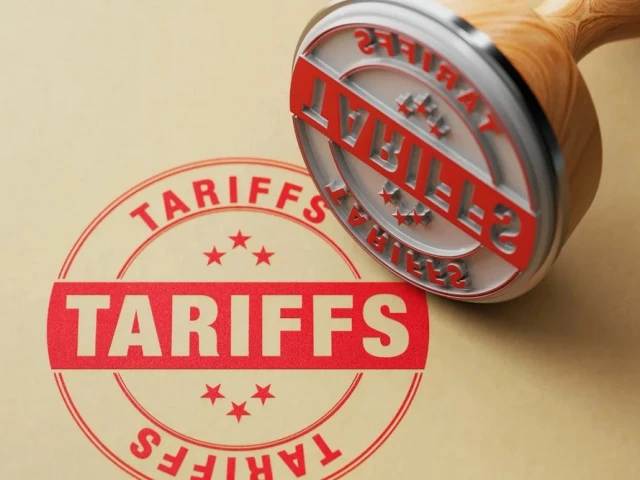
A steering committee has decided to compile product- and sector-wise data on imports, prices and domestic production to take a decision on tariff rationalisation.
The committee has also decided to analyse the impact of tariff rationalisation under the National Tariff Policy and propose targeted, temporary measures – where justified.
In a recent meeting, the committee noted that tariff rationalisation was a gradual process and its impact varied across sectors. Therefore, blanket protection measures should be avoided. Instead, sector-specific analysis should be undertaken to assess the extent of injury, if any, caused to the domestic industry due to increased imports following tariff reductions. The first meeting of the steering committee to deliberate on proposals of the working group on customs, trade, tariff and dumping was held on December 8, 2025. The meeting was chaired by the federal minister for finance.
He informed the participants that during a meeting with the prime minister, it was agreed that the National Tariff Policy 2025-30 would remain in force for the policy period and in line with its terms of reference, the steering committee would identify the sectors or products adversely affected by tariff rationalisation and formulate a strategy to help those sectors remain competitive during the transition period.
The petroleum minister added that in order to make the process more meaningful, the committee should be provided with data for financial years 2024 and 2025 on products that had registered a 25-30% growth in import quantity along with reasons for such increase. Lucky Motor Corp Chairman Muhammad Ali Tabba, who was present in the meeting, endorsed the proposal to prepare a list of products that had registered a 25% increase in imports. He stated that tariff reduction had led to a surge in imports of many goods, particularly in energy-intensive industries. In contrast, the industries that are less energy-intensive or less capital-intensive are experiencing a relatively smaller impact. To reduce the cost burden on energy-intensive industries, he suggested that the 50% duty on coal should be reduced to zero.
Secretary commerce emphasised that the analysis of data should clearly show how tariff reforms introduced under the National Tariff Policy had impacted the market and whether they had caused a surge in imports of certain products. It was suggested that measures against dumping should be pursued separately under the relevant legal and regulatory framework. Special assistant to the PM on industries and production stated that, for a credible and evidence-based analysis, the industry's input must reflect the actual impact on domestic production during five months prior to tariff changes.
The level of protection after July 2025, following the tariff reforms, should be compared with the protection level before the reforms to determine whether domestic production increased or decreased during the period. He stated that, based on the data, the committee would decide whether tariffs should be slowed down or whether alternative remedial measures should be adopted. It was emphasised that the data submitted should also include price trends, production levels and import quantities, supported by statistics from relevant ministries, departments and attached organisations, including the Pakistan Bureau of Statistics and the Customs Division, to ensure accuracy and reliability.
Committee members highlighted that while tariff rationalisation was aimed at improving competitiveness and reducing input costs, it must not disproportionately harm the local industry, particularly in sectors facing unfair competition from imported goods. Any policy response should, therefore, strike a balance between consumer welfare, industrial sustainability and trade liberalisation objectives, they said.
The committee discussed that the purpose of the exercise was not to reverse the tariff reforms, but to identify the sectors that may require temporary support measures during the transition phase. Members agreed that any intervention should be time-bound, data-driven and consistent with Pakistan's international trade obligations.
A representative of the Federal Board of Revenue (Customs Wing) informed the committee that detailed import data, including HS code-wise quantities and values, could be shared to facilitate evidence-based decision-making. He added that Customs data would help differentiate between normal growth in imports and abnormal surges possibly linked to dumping or market distortion.
Members underlined the need for close coordination between the Ministry of Commerce, the Ministry of Industries and Production, the Finance Division and the Customs Division to ensure the timely availability and verification of data. The committee agreed that once the required data and analysis were compiled, a consolidated report would be prepared and submitted for consideration of the steering committee, followed by recommendations to the federal government.











This material may not be published, broadcast, rewritten, redistributed or derived from. Unless otherwise stated, all content is copyrighted © 2026 The Express Tribune.







COMMENTS
Comments are moderated and generally will be posted if they are on-topic and not abusive.
For more information, please see our Comments FAQ