Noor Mukadam case: SC upholds Zahir Jaffer's death sentence, dismisses review petition
Updated 2 hours ago

Killing of two key commanders disrupts suicide wing, shakes command structure
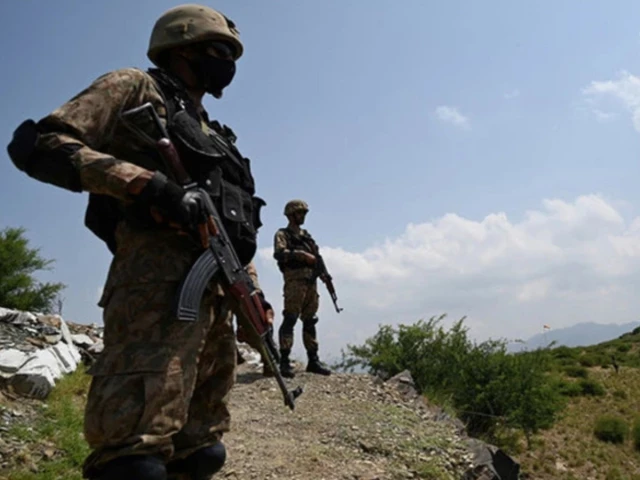
There has been a visible decline in high-profile and mass-casualty ter ror attacks in Balochistan, which is partly being attributed to a major setback suffered by the banned Balochistan Liberation Army (BLA), after two senior commanders of its suicide wing, the Majeed Brigade, were killed abroad under mysterious circumstances. The Express Tribune has learnt.
Security analysts say the back-to-back eliminations have knocked a hole in the BLA's command-and-control structure and blunted the operational edge of its allied network, the Baloch Raaji Aajoi Sangar (BRAS).
Formed in November 2019, BRAS is an umbrella of Baloch terror outfits — including the BLA and the BLF — created to pool resources for suicide attacks and urban warfare against the state.
The BLA and other Baloch groups have been officially designated as 'Fitna al Hindustan' as the government claims they are acting as proxies of India, which wants to destabilise Pakistan through hybrid warfare.
Sources said Captain Rahman Gul, also known as Gul Rahman and Ustad Mureed, a senior commander of the Majeed Brigade, was killed on September 17, 2025, in Afghanistan's Helmand province after being targeted by unidentified gunmen in Sangin district. He was the last surviving member of the three-man BRAS Command Council.
Described as one of the most dangerous figures within the BLA hierarchy by sources, Gul served as deputy commander of the Majeed Brigade, headed the suicide squad of BRAS, and was second-in-command within the BRAS leadership. He was the mastermind behind the Jaffar Express train hijacking in March 2025. Gul's killing delivered a major blow to the group's strategic planning and suicide-attack infrastructure, sources added.
The second senior BLA commander to have been eliminated was Jaafar, also known as Amin and Mulla Amin, who headed Majeed Brigade's specially constituted "Fateh Squad", tasked with carrying out suicide attacks and urban warfare. He was killed in the third week of November 2025 in Iran's Sistan-Baluchestan province.
Jaafar was targeted in a remote mountainous area while returning from a clandestine training site used to prepare suicide bombers, including operatives trained to attack trains. He had assumed leadership of the Fateh Squad following the killing of Rahman Gul.
A native of Balochistan's Harnai district, Jaafar was described by security analysts as a key operational planner with a central role in coordinating high-impact urban attacks. His killing, coming on the heels of Gul's death, further eroded the Majeed Brigade's ability to mount coordinated suicide and guerrilla-style operations.
Security analysts said the elimination of the two commanders has crippled the BLA's suicide attack network and disrupted its cross-border operational structure, indicating mounting pressure on militant leadership operating from hideouts outside Pakistan. Sources said sustained intelligence-based operations have reduced the operational space available to terrorist networks, eroding their leadership depth, a trend reflected in the noticeable decline in terror activity across Balochistan.
The killing of BLA commander Rahman Gul in Afghanistan adds to a growing body of evidence, lending credence to Islamabad's concerns that the neighbouring country is being used by terrorist groups, particularly the TTP and the BLA, as a launch pad for attacks against Pakistan.
Intelligence have confirmed that the BLA and other Baloch militant groups maintain a presence in Afghanistan, with senior leadership hiding in Kandahar and Kabul. The Ain-o-Mina area of Kandahar remains a key base, while terrorists in Kabul are embedded in civilian localities such as Pul-e-Khishti and Wazir Akbar Khan, according to sources.
Sources said BLA training camps are located in Afghanistan's Nimroz province, enabling cross-border movement between Iran and Pakistan. Two major operational bases in Helmand province's Naghai and Sangin areas continue to be used for launching attacks into Pakistan, posing a persistent security threat.
Sources further claimed that intelligence assessments have uncovered an expanding coordination network linking multiple terror outfits, including TTP-Jamaatul Ahrar, the Majeed Brigade and other transnational organisations. The network is aimed at carrying out attacks in Balochistan as well as targeting Chinese interests associated with the China-Pakistan Economic Corridor (CPEC).
According to sources, meetings involving the Mullah Wafa Group of TTP-Jamaatul Ahrar, and the Majeed Brigade were held in Iran during 2024 and early 2025. In the months following these engagements, there was an uptick in attacks directed at Chinese engineers and related interests inside Pakistan.
Sources further said that during a meeting of the TTP Shura in early March, Jamaatul Ahrar was instructed to establish an operational presence in Balochistan and to carry out terrorist activities in coordination with the Majeed Brigade. Under this arrangement, Jamaatul Ahrar agreed to fully cooperate with the BLA in attacks on CPEC projects and Chinese nationals, while refraining from publicly claiming responsibility for such incidents.
Sources linked Jamaatul Ahrar — which had briefly broken away from the TTP — to the planning of the Basham terrorist attack on Chinese nationals in March 2024, saying preparations began even before the group formally rejoined the TTP. After rejoining, the planning reportedly continued with the approval of TTP chief Noor Wali, with a decision taken to avoid using the TTP name and instead claim such attacks under the banner of Tehreek-e-Jihad Pakistan (TJP). The planning of the Basham attack was finalised in Kandahar, sources added.
Sources further revealed that Shaheen Baloch — who was previously linked with both Islamic State Khorasan and the BLA before joining Jamaatul Ahrar — was appointed head of the TTP's Makran zone. He reportedly maintained contact with BLA terrorist Zamran Kundi and travelled to Iran multiple times in February 2024.
Shaheen Baloch was also said to have maintained direct contact with Mufti Burhan Swati Yousafzai, a senior Jamaatul Ahrar leader from Swat who was later appointed Central Naib Amir following the group's reconciliation with the TTP. Burhan Swati reportedly visited Balochistan twice in February 2024, while Shaheen Baloch travelled to Kandahar to meet him.
Meanwhile, senior BLA figures Nadeem Baloch and Hussain Dashti, alias Rais Gachki — operating from Iran and Kandahar — held meetings with Jamaatul Ahrar chief Umar Makram Khorasani and his associates.
These engagements culminated in a formal understanding to share manpower, weapons, and logistical support for terror operations in Balochistan. A coordination committee was subsequently established to facilitate cooperation between the two groups.
Following these developments, multiple meetings were reportedly held inside Balochistan. Sources said that as part of the plan, between 100 and 150 terrorists began infiltrating Balochistan from Afghanistan, with the first group entering the province on April 21, 2025.





This material may not be published, broadcast, rewritten, redistributed or derived from. Unless otherwise stated, all content is copyrighted © 2026 The Express Tribune.








COMMENTS
Comments are moderated and generally will be posted if they are on-topic and not abusive.
For more information, please see our Comments FAQ