Oil rises, stocks waver as new US strikes dampen peace deal hopes
Updated 7 hours ago

Market turns competitive; affordable options remain missing
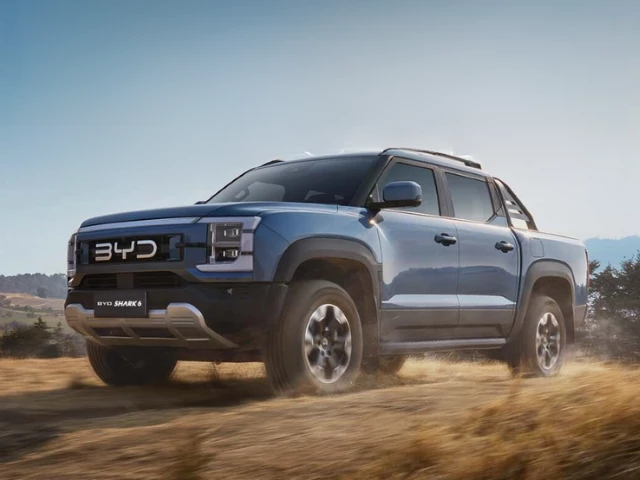
The year 2025 finally delivered a long-awaited wave of locally assembled vehicles in Pakistan, spanning hybrids, SUVs, pickups, and electric models, following a series of government policy interventions aimed at revitalising the auto sector.
While the expanded lineup has brought greater choice, improved technology, and renewed competition, the benefits have so far remained concentrated in the higher-income segment. Affordable options for middle- and lower-income buyers remain largely absent, raising concerns that the current progress has yet to meaningfully trickle down to the broader segments of society, limiting the inclusive impact of the industry's recovery.
According to Mashood Ali Khan, an auto industry expert, the sector operated in a paradoxical environment throughout the year. "While sales recovered and consumer interest returned, deep structural weaknesses persisted," he said, citing policy uncertainty, high taxation, rising used car imports, and weak localisation as major constraints.
He noted that frequent changes in duties and regulations continued to discourage long-term investment in capacity expansion and technology transfer.
Despite these challenges, 2025 saw a visible rebound in volumes, he said. Passenger car production increased sharply, motorcycles recorded one of their strongest years, and trucks and buses nearly doubled in output. Lower interest rates, improved auto financing, and a flurry of new model launches supported demand recovery, particularly in the second half of the year.
However, the defining feature of 2025 was market fragmentation. Brands such as Haval, Changan, Chery (Jaecoo-Omoda), BYD, Hyundai, Kia, and MG aggressively expanded their locally assembled portfolios, particularly in SUVs, crossovers, and electrified vehicles. This influx diluted market share across segments that were once dominated by Suzuki, Toyota, and Honda. "The competition is extremely tough now," said Daniyal Ilyas Gaba, Senior Sales Manager at Kia Motors, Clifton. "People's purchasing power has declined, banks are restricting financing above certain price thresholds, and documentation requirements have increased. At the same time, there are far more options in the market, so demand is divided."
To defend market share, manufacturers resorted to aggressive pricing strategies. Several brands cut prices by Rs1-1.6 million on popular models during the year. According to industry insiders, these cuts were driven by competitive necessity rather than margin expansion.
Alongside price reductions, interest-free and zero-markup installment plans emerged as a defining trend. As the policy rate declined, banks, non-bank lenders, and manufacturers competed aggressively on financing. In many cases, OEMs and dealers subsidised markups to stimulate demand. Notably, such offers extended beyond entry-level vehicles to SUVs, fundamentally altering consumer behaviour. Shafiq Ahmed Shaikh, an expert on Pakistan's automobile industry, described 2025 as "a year of recovery and reset." He noted that the industry transitioned from a production-driven market to a consumer-driven one due to tariff rationalisation linked to IMF-supported reforms under the National Tariff Policy (2025-30). "Prices corrected downwards, financing innovation reshaped demand, and competition intensified across all segments," he said.
However, Shaikh cautioned that the recovery represented normalisation rather than a boom, with sales still below historical peaks. He also pointed out that the Automotive Industry Development and Export Policy (AIDEP) 2021-26 had been diluted in practice. "Export targets were largely unmet, and localisation progress remained limited," he said, adding that the upcoming Auto Policy 2026-31 would further challenge manufacturers by prioritising lower tariffs and competition. Electrification emerged as another major theme. Government incentives under the EV Policy, coupled with rising fuel costs, supported growing interest in electric two-wheelers and hybrid vehicles. Yet concerns remain over unchecked SKD and CKD assembly without meaningful localisation.
From the two-wheeler segment, Managing Director of Eiffel Industries Ltd (Yadea Pakistan), Muhammad Salman, said 2025 demonstrated that EVs, particularly electric scooters, are "here to stay." He noted robust growth compared to 2024, with consumers increasingly shifting from ride-hailing and conventional motorcycles to personal electric mobility due to lower running costs. Eiffel Industries expanded its footprint to 42 3S dealerships nationwide. However, he acknowledged that limited disposable incomes and the absence of widespread charging infrastructure continue to slow mass adoption. "Most customers rely on home charging, but infrastructure remains a chicken-and-egg problem," he said.
Despite visible progress, affordability is a key concern. Most new entrants focused on higher-income buyers, leaving middle- and lower-income segments underserved. Rising energy costs, high GST on small cars, and increased used car imports further complicated the outlook for local manufacturers and vendors. According to Mashood Ali Khan, the industry spent much of 2025 in "survival mode," balancing fragmented demand, cost pressures, and policy uncertainty. Still, he believes the competitive shift could strengthen the sector, if supported by consistent long-term policies, genuine localisation, export development, and technology upgrading.




This material may not be published, broadcast, rewritten, redistributed or derived from. Unless otherwise stated, all content is copyrighted © 2026 The Express Tribune.


COMMENTS
Comments are moderated and generally will be posted if they are on-topic and not abusive.
For more information, please see our Comments FAQ