Bella Hadid turns 30 with intimate visual memoir, revealing life beyond the runway
Updated 2 hours ago

Actor breathed her last at the age of 91
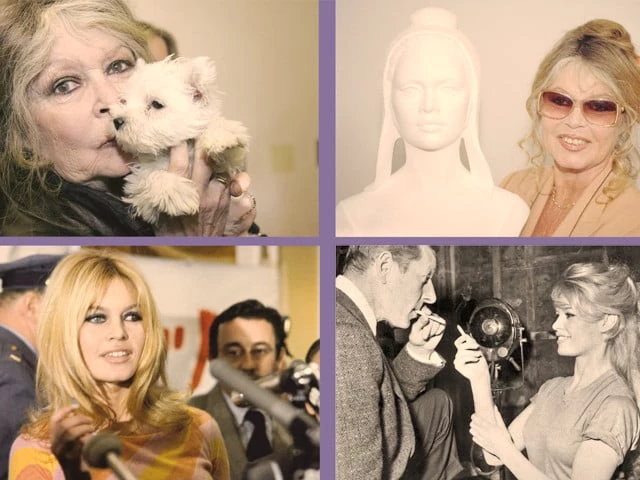
Brigitte Bardot, the French screen legend whose barefoot mambo in the 1956 film 'And God Created Woman' helped redefine womanhood on screen and propelled her to global fame, has died at the age of 91, her foundation announced.
The cause of death was not immediately known, but the news prompted tributes across France for a woman who embodied rebellious glamour, shifting social attitudes, and later an uncompromising defence of animal rights that came to dominate her life.
Born in Paris on September 28, 1934, Bardot grew up in an upper-middle-class family and described herself as a shy child who wore spectacles and felt unattractive.
By 15 she was on the cover of Elle magazine, launching a modelling career that led effortlessly into cinema.
Her breakthrough role came when her then-husband Roger Vadim cast her in 'And God Created Woman', shot in Saint Tropez, where she danced the mambo with tousled hair and fierce energy that shocked censors and mesmerised audiences worldwide.
The film's free spirited Juliette, played with instinctive confidence by Bardot, marked a clean break from the demure heroines of earlier decades. Critics said she radiated a magnetism rarely seen in mainstream cinema, and a global icon was born.
Simone de Beauvoir later wrote that Bardot did not try to shock but simply followed her inclinations with unceremonious simplicity, describing her dazzling genuineness as her "very substance" and hoping she would mature without changing.
Bardot's allure quickly reached far beyond French cinema. Andy Warhol painted her portrait, and Bob Dylan was said to have written his first song about her, the never-released 'Song for Brigitte'.
As the myth of the blond bombshell grew, she became a powerful cultural symbol of 1950s and 60s France, admired and criticised in equal measure. Feminist historians later said she spoke to women of that time through her free-spirited character and ownership of her body.
Yet the fame that followed felt like a prison to Bardot. She complained she could no longer enjoy life's simple pleasures and said the ordeal of fame was horrific. Her private life, played out relentlessly in public, included four marriages, affairs that filled tabloid pages, and long battles with depression.
On her 26th birthday she was found unconscious after trying to take her own life on the French Riviera, with rumours of further attempts emerging in later years. Alongside acting, Bardot also recorded music, collaborating notably with Serge Gainsbourg on 'Je t'aime ... moi non plus', which stirred both acclaim and controversy.
She modelled for a bust of Marianne, the female symbol of the French Republic, her face installed in town halls across the country from the late 1960s. Yet she said that despite great beauty, riches and adulation she had been deeply unhappy and ultimately chose to live alone after many personal disappointments.
By 1973 Bardot had grown disenchanted with cinema and walked away after 42 films, calling the industry "rotten". She said she had given 20 years to film and that was enough. She withdrew to Saint Tropez, where she found solace among animals and the Mediterranean landscape, devoting herself entirely to animal welfare.
In 1986 she created the Brigitte Bardot Foundation and even auctioned off personal belongings to fund the work, calling it the only battle that mattered to her.
Her passion for animal protection became legendary. Bardot supported prominent campaigners such as Paul Watson, protested whaling, and threatened to leave France during disputes over animal welfare, including when two sick circus elephants faced euthanasia.
Bardot's later years were also marked by controversy over her political statements. She married Bernard d'Ormale, a former adviser to the far-right National Front, and publicly supported Jean-Marie Le Pen and later Marine Le Pen, whom she once called "the Joan of Arc of the 21st century".
Despite backlash, Bardot insisted feminism was not her cause, telling French television in 2025: "Feminism isn't my thing; I like men." Bardot later said the dance had been completely improvised and she simply gave free rein to her instincts.
As news of her death spread, tributes flowed. French President Emmanuel Macron said her films, voice, initials, sorrows and passion for animals embodied a life of freedom and a universal radiance, calling her a legend of the century.
Her foundation said she had given everything and given up everything to defend animals. Far-right leader Jordan Bardella said France had lost the Marianne it loved, praising her courage and fierce patriotism.
The woman known simply as BB remained defiantly herself: a reluctant star who reshaped cinema, retreated from fame, and chose animals over people, living and dying on her own terms.













This material may not be published, broadcast, rewritten, redistributed or derived from. Unless otherwise stated, all content is copyrighted © 2026 The Express Tribune.






COMMENTS
Comments are moderated and generally will be posted if they are on-topic and not abusive.
For more information, please see our Comments FAQ