Afghan hackers breach Indian media network, air political message rejecting Taliban-India ties
Updated 1 hour ago

Her martyrdom forced nation to ask why voices of reconciliation, reform are so often silenced violently
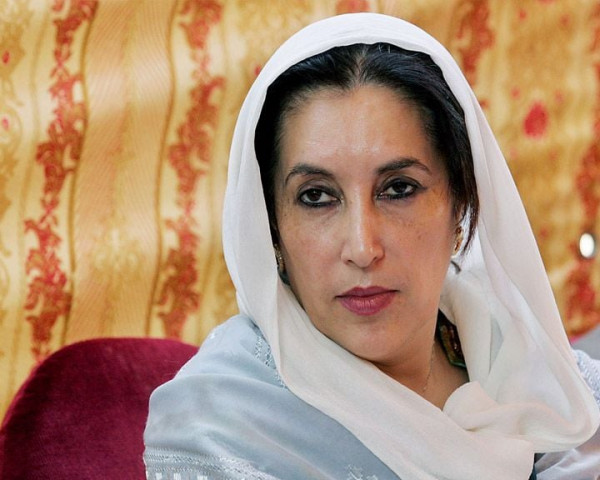
Some assassinations silence a voice. Others ignite a legacy. The martyrdom of Shaheed Mohtarma Benazir Bhutto on 27 December 2007 belongs to the latter. It was not merely the killing of a former prime minister; it was an assault on the idea that Pakistan could be progressive, plural, and governed by the will of its people rather than the gun, the edict, or the shadow.
Benazir Bhutto lived a life lived in full glare of history, of power, of sacrifice. From the moment she entered politics, she carried more than ambition. She carried the weight of a name forged in resistance, the expectations of a dispossessed people, and the constant awareness that the path she chose was paved with danger. Yet she never chose safety over struggle.
Her martyrdom cannot be understood without understanding her defiance. She returned to Pakistan in 2007 fully aware that death threats followed her every move. Extremist forces had openly declared her a target. Advisories were issued. Warnings were whispered and shouted alike. Still, she returned — not for office, not for ceremony, but because she believed Pakistan was at a crossroads, and silence at such a moment would be a betrayal.
Mohtarma Benazir Bhutto's politics were rooted in courage. She stood against dictatorship when it was fashionable to collaborate. She spoke of women's rights when it was considered disruptive. She challenged extremism when appeasement seemed convenient. She believed that terrorism was not merely a security challenge but a moral one, and that the state could not negotiate with forces that thrived on fear and exclusion.
On that fateful day in Rawalpindi, as she addressed supporters and emerged from Liaquat Bagh, she was doing what she had always done - connecting directly with the people. No bulletproof glass could shield a leader who believed in proximity over distance. When the attack came, it was swift and brutal. In moments, Pakistan lost a leader; in seconds, history shifted.
The grief that followed was raw, unfiltered, and nationwide. From villages to cities, from party workers to ordinary citizens, the sense of loss was overwhelming. It was not confined to party lines. Even those who opposed her politics understood that something irreplaceable had been taken. Public grief spilled into the streets, heavy with loss and disbelief.
Mohtarma Benazir Bhutto's martyrdom exposed uncomfortable truths. It laid bare the cost of challenging entrenched forces. It reminded us how fragile civilian politics can be when extremism is allowed to metastasize. It forced the nation to confront the question: why is it that voices of reconciliation and reform are so often silenced violently?
Yet her death did not end her story. In many ways, it sharpened it. Shaheed Benazir Bhutto became more than a leader; she became a symbol of resistance against intolerance and tyranny. Her ideals - constitutional supremacy, social justice, women's empowerment, and peaceful coexistence did not die with her. They were inherited, debated, defended, and carried forward.
For the Pakistan Peoples Party, her martyrdom was both a wound and a responsibility. The slogan "Democracy is the best revenge" was not rhetorical flourish; it was a declaration of intent. It meant resisting the temptation of chaos, choosing ballots over bullets, and continuing political struggle within constitutional bounds even when grief demanded rage.
As a woman in politics, Mohtarma Benazir Bhutto broke barriers that many said were immovable. She did not ask permission to lead in a patriarchal society; she claimed her right through intellect, resilience, and resolve. Her assassination was also a chilling message to women who dare to occupy public space. But her life remains an even louder rebuttal that women belong not on the margins of history, but at its center.
Years have passed, arrests were made and conclusions reached, though failures in protecting a former prime minister still weigh heavily. Memory has not faded. Each year, on 27 December, Pakistan does not merely mourn; it reflects. We reflect on what kind of country we are, and what kind of country she believed we could become.
Shaheed Mohtarma Benazir Bhutto once said that democracy is not a destination, but a continuous struggle. Her martyrdom etched that struggle into our collective conscience. She did not live to see the Pakistan she envisioned, but she gave us the vocabulary to imagine it and the courage to pursue it.
To remember her is not only to grieve her loss. It is to recommit ourselves to the values she stood for, the risks she took, and the future she dared to dream. In that sense, Mohtarma Benazir Bhutto did not fall in Rawalpindi. She rose in history, in memory, and in the unfinished journey of Pakistan itself.









This material may not be published, broadcast, rewritten, redistributed or derived from. Unless otherwise stated, all content is copyrighted © 2026 The Express Tribune.




COMMENTS (1)
Comments are moderated and generally will be posted if they are on-topic and not abusive.
For more information, please see our Comments FAQ