RCCI, minister discuss US trade prospects
Updated 37 minutes ago

Remittances mask loss of tech talent as firewall issues accelerate departures

As the final weeks of 2025 draw to a close, activity at the departure lounges of Pakistan's international airports has become a visible marker of a deeper national shift. In a year shaped by fiscal tightening and digital friction, the country has solidified its position as one of the world's most aggressive exporters of human talent.
This is no longer limited to labourers seeking wages in the Gulf. It increasingly reflects a sustained outflow of high-value professionals, particularly digital workers, whose departure is systematically hollowing out the nation's intellectual nerve centre. The rise of the "digital nomad" has added a new dimension to Pakistan's long-standing migration story.
2024-25 migration snapshot
Migration data from 2024-2025 reveals a staggering trend of human capital flight. According to the Bureau of Emigration and Overseas Employment (BE&OE), 727,381 Pakistanis officially registered for overseas employment in 2024. This momentum accelerated through 2025, with 687,246 individuals proceeding abroad by the end of November alone.
As we enter 2026, the cumulative outflow over the past two years is expected to exceed 1.5 million citizens. While the volume is significant, the qualitative shift is alarming.
In 2025, the composition of migration shifted sharply towards highly skilled professionals. Over the past 24 months, Pakistan has lost approximately 5,000 doctors, 11,000 engineers and 13,000 accountants. The healthcare sector has been among the hardest hit.
Nurse migration, which recorded a historic 2,144% increase between 2011 and 2024, continued its steep rise through 2025. European nations, specifically Germany and Romania, have become the beneficiaries as they offer fast-track residency schemes to address their own ageing populations.
Digital nomads and firewall fatigue
The year 2025 marked a turning point in Pakistan's labour export dynamics. While overall registrations for overseas employment remained high, the qualitative composition of this migration changed. The most notable shift was the widening gap between "manual" and "intellectual" exports.
Official data shows that the physical migration of high-tier IT professionals, including computer analysts and engineers, declined by over 30% compared to 2024. This exodus shows rise of the "invisible migrant or technology professionals who no longer believe a global career is possible within Pakistan's borders. This demographic is fleeing "digital friction" rather than just low wages. Throughout 2024 and 2025, the implementation of a national internet firewall and repeated connectivity disruptions emerged as a primary factor behind their exit.
"Economic instability, inflation, political uncertainty, weak governance, limited tech career paths, and underdeveloped research and innovation ecosystems push skilled workers abroad," said Sai Global CEO Dr Noman Ahmed Said while speaking to The Express Tribune. "Competitive pay, structured tech careers, better living standards and residency opportunities abroad are enough to pull talent overseas."
For the government, however, halting migration altogether is neither realistic nor desirable. Labour mobility can enhance skills, build networks and strengthen diaspora links. The challenge lies in reversing the net loss of human capital by making Pakistan competitive in retaining and attracting skilled talent.
For this, the government must recognise IT and skilled workers as strategic assets by creating clear career ladders in technology, deep tech and digital research and development, added Said.
"If Pakistan keeps exporting its best coders, data scientists and cybersecurity experts without a strategy to bring them back or plug them into our economy from abroad, we are effectively subsidising innovation elsewhere," he warned. "This isn't just about people leaving; it's about ideas, products and patents we never created at home."
Cost of internet shutdowns
The economic impact of digital instability has been severe. A report by Top10VPN Research identified Pakistan as the world leader in economic losses caused by internet shutdowns in 2024, estimating losses of $1.62 billion, or over Rs450 billion. Digital disruptions lasted a cumulative 9,735 hours and affected 82.9 million users, translating into fallout for 2.37 million freelancers who make Pakistan the world's fourth-largest freelancing hub.
As internet speeds fluctuated and access to platforms, particularly X (formerly Twitter), remained erratic, freelancers reported a 70% drop in work opportunities. By late 2025, thousands of software architects and data scientists had relocated to "nomad hubs" in Portugal, Estonia, and the UAE, ensuring that while they remain Pakistani by nationality, their economic productivity now fuels foreign ecosystems.
The remittance paradox
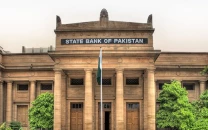
Pakistan's economic stability in 2025 has become inextricably linked to this exodus. The State Bank reported that workers' remittances reached $3.2 billion in November 2025, reflecting year-on-year growth of 9.4%. However, this financial cushion masks a deeper opportunity cost.
Border realities and offloading crisis
As the desperation to leave intensified in late 2025, the state's regulatory response tightened. In a briefing to the National Assembly Standing Committee on December 17, 2025, the Federal Investigation Agency (FIA) disclosed that 66,154 passengers were offloaded from Pakistani airports this year, up from 35,000 in 2024. According to the FIA, around 51,000 passengers were stopped due to "questionable document veracity." The FIA justified the crackdown as a countermeasure against "organised begging rings," noting that 24,000 Pakistanis were deported from Saudi Arabia for begging in 2025alone.
However, the increased use of artificial intelligence and real-time monitoring at immigration counters has triggered complaints of arbitrary profiling. Prime Minister Shehbaz Sharif intervened on December 20, 2025, directing the FIA to ensure legitimate travellers were not inconvenienced, highlighting tension between border enforcement and mobility rights.
The soul of the 2026 economy
As Pakistan moves into 2026, the "Exodus of 2025" stands as the definitive marker of the era. Pakistan has become a "Brain Drain Economy," surviving on the export of the very people it needs to build its future.
While remittances offer short-term relief, they cannot replace the intellectual capital required for innovation. The digital nomad working abroad and the doctor practising overseas symbolise a nation that has globalised its talent but failed to domesticate its opportunities.
The challenge ahead is no longer just "managing" migration, but creating a digital and economic environment that convinces the next generation that departure is not their only option.














This material may not be published, broadcast, rewritten, redistributed or derived from. Unless otherwise stated, all content is copyrighted © 2026 The Express Tribune.







COMMENTS (2)
Comments are moderated and generally will be posted if they are on-topic and not abusive.
For more information, please see our Comments FAQ