Aisha Tyler recalls working with Connor Storrie
Updated 4 hours ago

Actor says movies should elevate the human spirit, not inflame prejudice
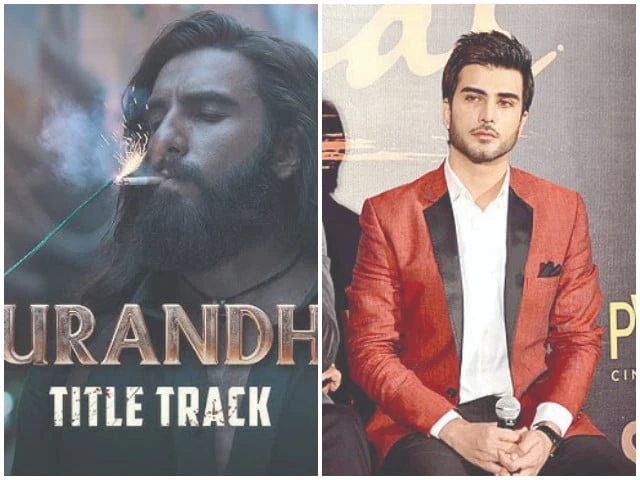
Responses to Dhurandhar, Bollywood's latest film promoting an anti-Pakistan narrative, have been divided in India and Pakistan alike. Although some viewers conceded that the film is technically accomplished, many were unconvinced by its glossy, high-budget treatment, viewing it instead as another attempt by Indian cinema to portray its neighbour in a hostile and unfavourable light.
Actor Imran Abbas added his voice to the growing debate, when he shared a message on Instagram criticising the filmmakers for, in his words, reducing cinema to "a vehicle of hatred, hostility and division."
Abbas stressed that his objection was not rooted in nationalism or rivalry between India and Pakistan, but in what he described as the dangerous exploitation of art itself. Cinema, he wrote, should elevate the human spirit, not inflame prejudice or sow discord.
In a series of remarks, the actor emphasised that art is meant to inspire empathy and understanding. "Cinema should build bridges, not glorify prejudice," he said, adding that while hatred packaged as art may generate profits and applause in the short term, it leaves lasting emotional and social damage in its wake.
Abbas, who has himself worked in Bollywood productions, underlined the immense influence of storytelling, noting that narratives repeated on screen gradually seep into society's collective consciousness. For that reason, he argued, artists carry an ethical responsibility that goes beyond box office success.
Earlier, Abbas had expressed similar views on Facebook, where his tone was sharper. He criticised Pakistanis who watched and praised the film, calling their response "deeply shameful."
He argued that if Pakistan were to produce a comparable film targeting India, there would likely be widespread outrage across Indian society - a reaction he described as both understandable and justified.
Dhurandhar, he said, metaphorically "slaps us in the face and calls it entertainment," and applauding such content should not be mistaken for open-mindedness. Instead, he labelled it a loss of dignity, self-respect and moral clarity.
Abbas's comments have resonated with many who believe that artists and filmmakers have a duty to contribute positively to society. He is also right, many say, to recall a not-so-distant past when Indians and Pakistanis connected through shared music, films and cultural traditions, finding common ground despite political tensions.
The broader concern, however, extends beyond a single film. Critics point to what they describe as the increasing radicalisation and politicisation of sections of India's media and entertainment industry.
In this environment, demonising entire communities — including millions of Pakistanis and India's own Muslim citizens — is often normalised and even celebrated under the banner of nationalism. Historical events are selectively reinterpreted, fictional narratives are presented as reality, and disclaimers such as "inspired by true events" are used to lend credibility to divisive storytelling.
For many observers, Dhurandhar is less an isolated case and more a symptom of a troubling trend - one in which cinema, once a bridge between cultures, risks becoming a tool that entrenches fear, hostility and misinformation.
Meanwhile, the Sindh government has announced the release of a new film, 'Mera Lyari', as a counter to the Indian movie Dhurandhar.
Senior Provincial Minister for Information Sharjeel Inam Memon said the Bollywood film is part of a broader conspiracy against Pakistan, particularly targeting Lyari. "Lyari is not violence — it is culture, peace, talent, and resilience. Next month 'Mera Lyari' will release, showing the true face of Lyari: peace, prosperity, and pride," he wrote in a post on social media platform X.
Memon emphasised that Dhurandhar seeks to misrepresent Lyari, which he described as a symbol of cultural richness and social harmony. He added that the upcoming Sindhi-language film aims to present the city's reality to both local and international audiences.
Earlier, a constitutional petition was filed in a Karachi court against Dhurandhar for unauthorised use of images of the late Benazir Bhutto, the Pakistan Peoples Party (PPP) flag, and party rally footage in its trailer. The petition also accuses the film of portraying the PPP as supportive of terrorists.
The petition was filed by PPP activist Muhammad Amir in the District and Sessions Court (South) in Karachi. It seeks an FIR against the film's director, producers, actors, and other relevant staff involved in creating and promoting the movie.
The petition names director Aditya Dhar, producers Lokesh Dhar and Jyoti Kishore Deshpande, and actors Ranveer Singh, Sanjay Dutt, Akshaye Khanna, Arjun Rampal, R Madhavan, Sara Arjun, and Rakesh Beni. It also lists cinematographer Vikash Nolcha, editor Shiv Kumar V Panicker, and other unnamed crew members as proposed accused.
According to the petition, the official trailer includes images of the late former prime minister and PPP visuals without legal permission. It alleges that the film portrays the PPP as sympathetic to terrorists and labels Karachi's Lyari area as a "terrorist war zone," which the petitioner argues is defamatory, misleading, and harmful to Pakistan's reputation.
Dhurandhar has triggered strong backlash since its release for its portrayal of Karachi's Lyari as a war zone. The Indian movie features Ranveer Singh as a RAW agent, while Arjun Rampal plays a Pakistani intelligence officer.















This material may not be published, broadcast, rewritten, redistributed or derived from. Unless otherwise stated, all content is copyrighted © 2026 The Express Tribune.






COMMENTS (2)
Comments are moderated and generally will be posted if they are on-topic and not abusive.
For more information, please see our Comments FAQ