Mandelson scandal shatters UK PM Starmer's promise of stable government
Updated 1 hour ago

TD Bank’s $3bn penalty raises stakes for Ottawa, financial sector
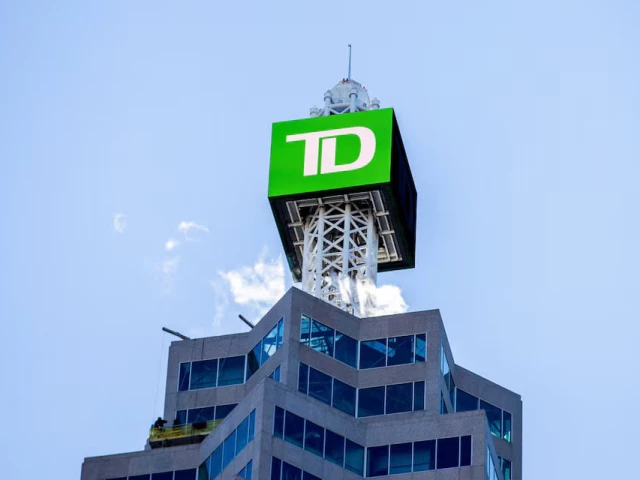
The interviews included executives at TD Bank, which last year paid the largest-ever fine to settle a US money laundering case.
What would normally be a routine once-a-decade review has caused concerns in Ottawa and in Toronto’s financial sector, the sources said, as Canada reckons with TD's $3 billion fine. The visit also coincided with new indictments against fugitive Canadian Olympic snowboarder turned alleged cocaine kingpin Ryan Wedding.
A negative report from the Financial Action Task Force, an international crime watchdog, could hurt Canada’s foreign investments and the country’s reputation as Prime Minister Mark Carney tries to boost productivity and make the Canadian economy less reliant on the United States.
Canada hopes to prove it has taken enough measures since the last review in 2016 found its anti-money laundering efforts needed improvement, particularly on tracking the companies incorporated in Canada and their controlling owners.
"We've had nine years to implement significant changes, and we continue to fall significantly short. And the shortcomings, like the Ryan Wedding story, couldn't come at a worse time," said Christian Leuprecht, a Royal Military College of Canada professor and author of "Dirty Money: Financial Crime in Canada."
Carney's office deferred its response to the Finance Ministry, which said details of the ongoing FATF review are confidential and the results will not be known until June 2026.
Criminal Intelligence Service Canada, an organisation of law enforcement agencies, estimates that up to C$113 billion is "snow-washed" through anonymous companies in Canada each year, up to 5% of Canada’s economy.
Anti-money laundering supervision and sanctions experts from Sri Lanka, Italy, Hong Kong, Japan, Ireland, Australia, the United Kingdom, along with representatives of FATF, asked about enforcement rules and regulations at the federal and provincial levels and how companies have set up their individual risk and anti-money laundering systems during in-person interviews, said the sources, who were not authorized to speak publicly.
One source said government agencies and companies had focused their preparation for FATF interviews on how companies work with enforcement agencies. But the panel's questions centred on each company's internal compliance programs.
Read: Canada introduces 14-day fast-track work permits for foreign doctors
The reviewers will also take into account TD Bank's historic penalty in the US for allowing hundreds of millions of dollars from money laundering networks to flow through the bank, including from international drug traffickers, compliance professionals said.
The Canadian Banking Association, which represents the country's biggest banks, declined to comment on the participants or nature of discussions in interviews. The group said in the lead-up to the FATF evaluation, the banks supported changes to the Canadian anti-money laundering strategy, including information sharing and the establishment of a federal registry to track companies.
Carney, who took office in March, proposed setting up a federal agency to investigate financial crimes, investing C$1.8 billion to combat crime, and creating a path for the country's banking regulator and enforcement agency to exchange information.
A federal financial crime agency was first proposed in the 2022 budget and again in Carney's budget this year, but the agency still has not been created.
"At this precarious moment when Canada is seeking to diversify trade relations and attract investment, a clean bill of health from the evaluation would give partners and investors confidence that our financial system is secure, reliable, and clean," said Salvator Cusimano, executive director of Transparency International Canada, an anti-corruption advocacy group.
Canada's anti-money laundering agency, the Financial Transactions and Reports Analysis Centre of Canada, has increased penalties in recent years.
Compliance analysts say Canada is unlikely to be “grey-listed” by FATF, included in a list of countries that require increased monitoring for financial crimes.
"Where there's going to be criticism will be how effective we have been in using the laws that we have," said Jeffrey Simser, former legal director with the Ontario Ministry of the Attorney General.













This material may not be published, broadcast, rewritten, redistributed or derived from. Unless otherwise stated, all content is copyrighted © 2026 The Express Tribune.






COMMENTS
Comments are moderated and generally will be posted if they are on-topic and not abusive.
For more information, please see our Comments FAQ