IMF loads $7 billion package with 11 new conditions for govt
Updated 2 hours ago

Industry warns billions are lost to raw exports, outdated mining, smuggling
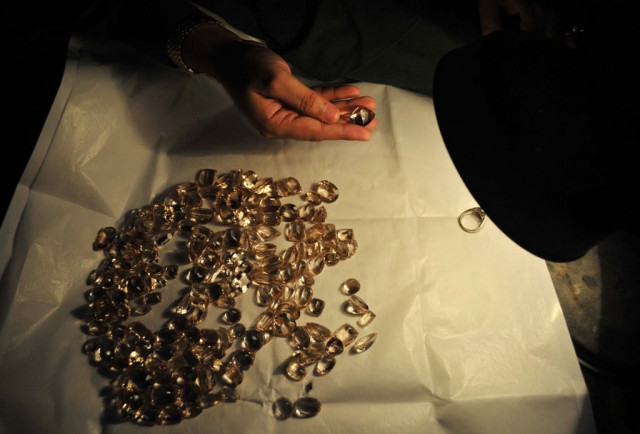
Calls are growing for the government to establish dedicated value-addition zones and marble parks to transform Pakistan's gemstone and marble industry, which remains largely informal despite its significant natural wealth. Industry representatives warn that without modern processing facilities, freight relief, and long-term export-focused reforms, Pakistan will continue to lose billions in potential revenue to regional competitors.
The appeal comes at a time when the global gemstone and related products market is expanding rapidly. According to local industry estimates, the global market for precious and semi-precious stones was valued at around $1,040 billion last year, and the broader gemstone market reached $3,136 billion in 2024-25. Forecasts suggest continued positive growth over the next decade. Yet Pakistan's share remains nearly negligible, despite possessing some of the world's finest quality stones.
Khadim Hussain, board member of the Pakistan Stone Development Company, said the country is losing traditional revenue due to raw exports and informal trade channels. "If the government and private sector work together on value-addition, branding, and improving access to global markets, we can substantially increase foreign exchange earnings and generate new employment opportunities," he said.
Pakistan is home to a diverse range of gemstones, including emeralds, rubies, topaz, aquamarine, peridot, tourmaline, quartz, garnet and spinel. Major deposits lie in Swat, Gilgit-Baltistan, Hunza, Chitral, Neelum Valley and parts of Baluchistan. Swat emeralds, for instance, are internationally known for their deep green colour, while the rubies of Hunza and Neelum have a strong presence in regional markets.
Despite these resources, official gemstone exports remain extremely low, only a few million dollars annually, while a large volume of stones is believed to leave the country through undocumented means. Industry surveys suggest Pakistan may be losing up to $5 billion worth of rough stones each year due to smuggling and under-reporting. Waste is another major issue; outdated and unsafe mining methods result in 4050% of gemstone material being destroyed, significantly reducing exportable volume.
Other stakeholders also said that now is the time for Pakistan to take this industry as a serious matter and create a proper mechanism to add another avenue of foreign exchange, which could build up to tens of billions of dollars with the passage of time by adopting modern mechanisms.
"Most of our stones are exported in raw form, and the real profit is captured by other countries that cut, polish and brand them," said Sohail Raza, a gemstone trader. "Without advanced machinery, trained manpower, and internationally recognised certification, Pakistan cannot claim its rightful position in the global market."
Raza added that buyers in Europe, East Asia and the Middle East increasingly demand traceability, certification and lab-tested grading, areas where Pakistan significantly lags. Establishing accredited gem-testing laboratories and a standardised certification system, he said, would immediately boost credibility and pricing power in international markets.
Pakistan's marble sector also faces similar constraints. Though the country produces high-quality white, green, black and onyx marble, exports remain modest. Official data shows marble exports hovering around $32 million per year, far below potential. Industry players argue that with modern cutting and finishing facilities, Pakistan could enter high-value architectural and luxury décor markets worldwide.
Hussain stressed that creating value-addition zones and marble parks is essential for progress. Such zones would house facilities for cutting, polishing, slab processing and finishing, all aligned with international export standards. He urged the government to reduce taxes and duties, particularly on freight, which has become a major barrier for exporters after global shipping cost escalations.
With Pakistan's gemstone deposits receiving growing attention from geologists and traders alike, Hussain added, "Unlocking value from these natural resources requires modernisation, formalisation, and strategic export planning, steps that could place Pakistan firmly on the global gemstone map and convert natural wealth into sustainable economic gains."







This material may not be published, broadcast, rewritten, redistributed or derived from. Unless otherwise stated, all content is copyrighted © 2026 The Express Tribune.






COMMENTS
Comments are moderated and generally will be posted if they are on-topic and not abusive.
For more information, please see our Comments FAQ