Starmer's Mandelson woes deepen
Updated 6 hours ago

Only the remains of two temples have been confirmed to date, including that of Nyuserre
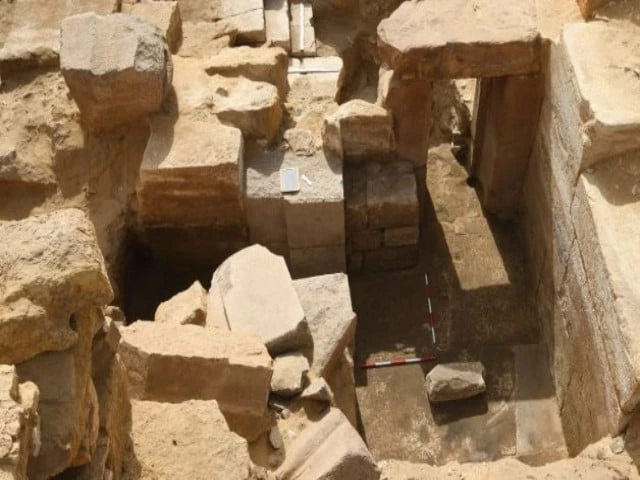
An Italian archaeological mission has discovered the remains of a sun temple belonging to an ancient Egyptian king near Cairo, the Egyptian antiquities ministry said on Friday.
The temple of King Nyuserre is believed to be from the Fifth Dynasty and the remains were found in the Abusir necropolis south of the Egyptian capital. It is part of a monumental complex dedicated to the cult of the sun god Ra and is one of the few solar temples identified to date.
The site was identified as early as 1901 by the German archaeologist Ludwig Borchardt — known for his 1912 discovery of the famous bust of ancient Egyptian queen Nefertiti — but a high water table prevented any excavation at the time.
According to the ministry, the mission has uncovered for the first time more than half of the temple, long buried under River Nile sediment.
The ministry described a colossal structure of over 1,000 square meters "with a unique architecture that ranks it among the largest and most remarkable valley temples in the Memphis necropolis", a stretch of ancient funerary complexes. Architectural features including column bases, wall coverings, and granite thresholds have been identified, as well as a sloping ramp "likely connecting the temple to the Nile or one of its branches", the ministry said.
Abusir, about 20 kilometres (12 miles) south of Cairo, is an archaeological site that notably contains the pyramids of several pharaohs, though they are modest in size compared to the pyramids of Giza. Six solar temples are believed to have been built during the reign of the pharaohs of the Fifth Dynasty, according to the University of Leicester.
Only the remains of two temples have been confirmed to date, including that of Nyuserre, according to the British university, which is famous for identifying the remains of Richard III, the English king who died more than five centuries ago.









This material may not be published, broadcast, rewritten, redistributed or derived from. Unless otherwise stated, all content is copyrighted © 2026 The Express Tribune.













COMMENTS
Comments are moderated and generally will be posted if they are on-topic and not abusive.
For more information, please see our Comments FAQ