IMF loads $7 billion package with 11 new conditions for govt
Updated 55 minutes ago

Sugar, gas charges drive YoY elevation at 3.90%; weekly declines 0.03%
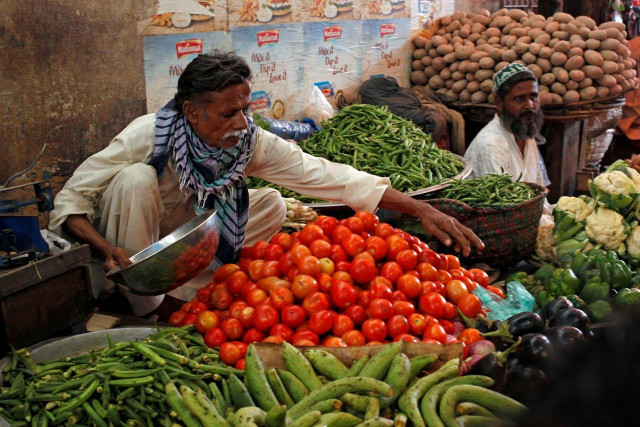
Pakistan's Sensitive Price Index (SPI) for the week ended December 11, 2025, registered a year-on-year increase of 3.90%, reflecting persistent inflationary pressures on essential commodities despite a marginal weekly decline of 0.03%, according to the latest data from the Pakistan Bureau of Statistics (PBS).
The combined SPI, based on 2015-16=100 and tracking 51 essential items across 50 markets in 17 cities, stood at 335.73 points, down from 335.84 points the previous week. This slight easing offers tentative relief to households grappling with elevated costs, particularly in urban centres where food and energy prices dominate expenditure baskets. However, the YoY uptick underscores broader economic challenges, including supply chain disruptions and fiscal adjustments, with sugar and gas charges emerging as key drivers.
Week-on-week, prices of 12 items (23.53%) rose, 10 (19.61%) fell, and 29 (56.86%) remained stable. The sharpest declines were in tomatoes (-16.18%), sugar (-4.91%), onions (-4.08%), and potatoes (-1.71%), alleviating some food bill burdens for lower-income groups. Conversely, chicken surged 6.19% amid seasonal demand, followed by wheat flour (2.88%) and eggs (0.93%), signalling volatility in protein and staple categories. Cooking oil (5 litres) and vegetable ghee (2.5 kg) edged up 0.72% and 0.70%, respectively, while tea prepared and powdered milk saw modest gains of 0.56% and 0.39%.
On a YoY basis, the 3.90% rise was fuelled by sugar (30.28%), gas charges for Q1 (29.85%), wheat flour (21.59%), and gur (14.96%), highlighting sustained hikes in sweeteners and utilities. Beef climbed 13.42%, firewood 12.86%, and diesel 8.42%, exacerbating transport and heating costs. Positive offsets included potatoes (-42.59%), tomatoes (-40.75%), garlic (-37.46%), and onions (-30.23%), with pulse gram dropping 28.95% due to improved harvests.
Disparities across consumption quintiles paint a nuanced picture: the lowest-income group (Q1, up to Rs17,732 monthly) faced a steeper YoY decline of 0.26% but a milder YoY rise of 3.01%, compared to Q5 (above Rs44,175), which saw a 0.02% WoW gain and 3.47% YoY increase. Overall, Q3 posted the highest YoY at 4.08%, underscoring regressive impacts on middle-class budgets.
Historical trends reveal moderation: the combined SPI has eased from a 4.00% YoY in early December to 3.90%, down from peaks above 5% in October. Quarterly data for Q4 2025-26 shows Q1 SPI at 317.38, up 5.68% QoQ but only 2.08% YoY, suggesting stabilising rural-urban dynamics.
Economists view the dip as a welcome breather, potentially signalling harvest gluts in perishables, but warn of upside risks from global commodity volatility and impending energy tariff revisions.













This material may not be published, broadcast, rewritten, redistributed or derived from. Unless otherwise stated, all content is copyrighted © 2026 The Express Tribune.






COMMENTS
Comments are moderated and generally will be posted if they are on-topic and not abusive.
For more information, please see our Comments FAQ