SBP opens formal banking to licensed virtual asset service providers
Updated 4 hours ago

Government poised to do away with fixed return, run gas firms on a commercial basis
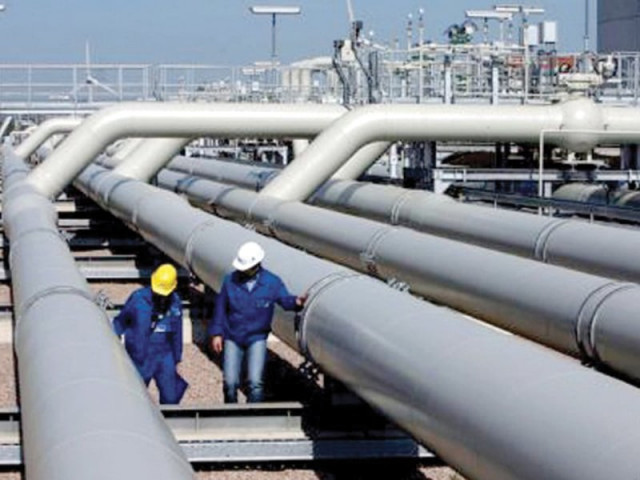
With the imminent entry of private-sector investors in the gas market, the government will restructure public utilities by ending the fixed asset return formula to run them on a commercial basis.
The government has already increased the allocation of gas from 10% to 35% to the private sector from the new gas fields. So far, only two state-owned gas utilities have been functioning, but the entry of private-sector suppliers will spark competition in the gas market.
The Oil and Gas Regulatory Authority (Ogra) has conducted hearings to grant licences to several companies interested in gas marketing. These companies had approached the regulator after the government notified a 35% gas allocation to private investors.
Sources told The Express Tribune that the government had tasked Ogra with restructuring the public gas utilities by ending their fixed asset-based return. They said that the regulator has hired the services of a consultant to review the return formula. The consultant is set to submit its report by the end of December.
Additionally, the Petroleum Division is working with the World Bank for the overall restructuring of the gas sector. At present, the public utilities – Sui Northern Gas Pipelines Limited (SNGPL) and Sui Southern Gas Company (SSGC) – receive a fixed asset-based return, as approved by the government.
As the pipeline network continues to expand, the gas prices and profits of utilities have increased, putting a burden on consumers. Also, the expansion of the network has caused a gas shortage in the country.
SNGPL's operating costs surged from Rs66 billion in the financial year 2019-20 to Rs94 billion in 2023-24, while its earnings swelled to Rs38.9 billion from Rs19 billion during the same time period, despite a decrease in gas availability.
Scores of industries have frequently criticised the fixed rate of return offered to the gas companies. They argue that profits of utilities are rising, whereas supplies are shrinking because of the expansion of the pipeline network.
They have also denounced the unaccounted-for-gas (UFG) benchmark allowed by the regulator. They suggest that a uniform UFG benchmark should apply to all stakeholders, and a law firm should be engaged to review the legal framework governing UFG practices.
The private sector has underlined the need for revamping the organisational structure of the two companies to align their operating costs with actual activities. They call for maintaining separate accounting systems for transmission, distribution and sales to improve transparency as well as seek the replacement of the asset-based return formula with a fixed margin per million British thermal units handled.
Cross-subsidy
Cross-subsidy has been a key factor in the gas market as successive governments have kept tariffs lower for domestic consumers while keeping them elevated for other consumers, like commercial and industrial users.
However, multilateral financial institutions have repeatedly insisted that the government should do away with the cross-subsidy. Industries too have been protesting over this subsidy, noting that it has raised their cost of doing business.
Now, the government has planned to end the cross-subsidy for domestic consumers and introduce a direct budgeted subsidy model by 2026, in line with the mechanism established for the Power Division.
The direct subsidy will be given to the domestic consumers commensurate with their income levels under the Benazir Income Support Programme. The government has hired advisory firm KPMG, and a dedicated group has been formed to examine the replacement of cross-subsidy as part of efforts to revitalise the gas sector. Residential consumers were benefitting from a cross-subsidy of over Rs150 billion, financed by imposing higher tariffs on captive power plants, industrial and commercial consumers.













This material may not be published, broadcast, rewritten, redistributed or derived from. Unless otherwise stated, all content is copyrighted © 2026 The Express Tribune.






COMMENTS (2)
Comments are moderated and generally will be posted if they are on-topic and not abusive.
For more information, please see our Comments FAQ