Brief diplomatic episode or turning point
Updated 10 hours ago

CDF aims to fix Pakistan’s siloed command structure: AI-driven, multi-domain warfare requires arguably unified control
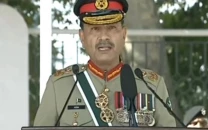
The 27th Constitutional Amendment has introduced the appointment of Chief of the Defence Forces (CDF) in Pakistan which is the subject of several discussions on mainstream as well as social media. The uninformed speculation and debate, unsupported by logic and reason, leads towards confusion which needs to be removed through dispassionate analysis of the need for this important catbird seat in our higher defence organisation (HDO). There is not a frisson of doubt that the reforms in our HDO were long overdue, owing to strategic and operational necessity born out of changed mode of warfare in this artificial intelligence (AI) assisted age.
This is an age of netcentric and multi domain warfare where air, land, sea, space and electromagnetic domains would fight as a network to dominate the famous decision loop i.e. "observe, orient, decide, act" (OODA) through super quick intelligence gathering and concomitant decision making. In this multidomain mode of warfare no single service i.e Army, Airforce and Navy can cast a lone furrow and hope to succeed. Pakistan, like India, had inherited a colonial organisational structure which kept the military organisation highly centralised yet siloed through separate commands in three services.
The British military organisation had a CinC India who used to sit in Viceroy's council and wielded enormous clout in security affairs whilst Air Force and Navy had their own command structure independent of the army hierarchy. The two dominions inherited the three services, one third of which came to the share of Pakistan. Pakistan's first CinC Army was Frank Messervy who was a four-star general while the PAF and PN were led by two-star rank officers who were redesignated as CinCs in 1950. The same designations continued till 1972 when the Joint Staff Headquarters was established and the CinCs of the three services redesignated as COAS, CAS and CNS.
The ostensible objective of HDO reorganisation was to promote jointness and operational synergy between the three services but the actual motive imputed to PM Zulfiqar Ali Bhutto's HDO reform was to gain greater control over the military affairs through a strong Joint Staff Headquarters (JS HQ). He however could not create a potent JS HQ and the appointment of Chairman Joint Chiefs of Staff Committee (CJCSC) remained a ceremonial sinecure for an underemployed four-star general. Though progressively, the military budgeting, tri service coordination in higher military planning, medical & engineering services and strategic planning division affairs were assigned to the JS HQ but the organisation remained powerless and ineffective in bringing the desired operational synergy between the three services.
The result of the above inchoate state of HDO was a wasteful duplication of several functions which in the absence of an effective Ministry of Defence and JS HQ led to profligate waste of resources and lack of desired operational synergy in times of war. The problems were visible during the Kargil conflict where the Army started an operation without due coordination with the other two services, leading to lack of preparedness of PAF for offensive operations during the conflict. Though Army and PAF gelled together well during operations Balakot 2019 and Marka-e Haq 2025, yet the problems might have surfaced had the standoffs graduated to the stage of full-fledged wars.
The future wars would be fought between the networks of sensors, shooters and decision makers (command posts) enabled through multiple domains of space, air, land, sea and cyber space. The mechanised forces like armour on ground and the air platforms would be operating in unmanned mode through UCAVs, drones and UGVs with gilt edged opportunities provided by AI assisted weapon platforms and command posts requiring split second decisions by the strategic military leadership. Without a single empowered commander of the three services, those opportunities might be lost. At present the three Services lack the desired operational synergies both in peace as well as war due to their single service orientation.
All of the modern armies currently follow the tri-service integration model. Americans adopted it after passing the Goldwater Nichols Act in 1986 by establishing unified tri-service combatant commands, while the British adopted the Chief of Defence Staff model in 1959. Indians introduced the concept in 2019 after experiencing friction between Air and Army leadership during the Kargil Conflict and are raising the tri-service unified combat commands. In Europe 32 air forces of NATO operate under a single AIRCOM, which enabled those to generate 1800 joint strikes in 100 days.
The Chinese, Israelis and Russians also follow the same integrated command structure where the jointness and operational symbiosis translates into faster decision making through shortening of sensor-shooter-decision maker loops to minutes from erstwhile hours. Instead of quibbling over turf wars and living in the 30s and 40s era of Douhet, Billy Mitchell and Trenchard, the three services should embrace the new model with alacrity. CDF's efficacy depends upon the powers to exercise meaningful control over the tri-service employment including force readiness, promotions (one star and above), development strategy of three services and employment of forces in war.
Turf wars and stultifying traditions should yield to the dictates of modern warfare which demand jointness in planning and celerity in execution at operational and strategic levels of warfare in present era.











This material may not be published, broadcast, rewritten, redistributed or derived from. Unless otherwise stated, all content is copyrighted © 2026 The Express Tribune.



COMMENTS (17)
Comments are moderated and generally will be posted if they are on-topic and not abusive.
For more information, please see our Comments FAQ