PM Shehbaz hopes of peace deal soon as Iran's Pezeshkian expresses appreciation for Pakistan role in negotiations
Updated 7 hours ago

Medical expert says tetralogy of fallot is most common among children
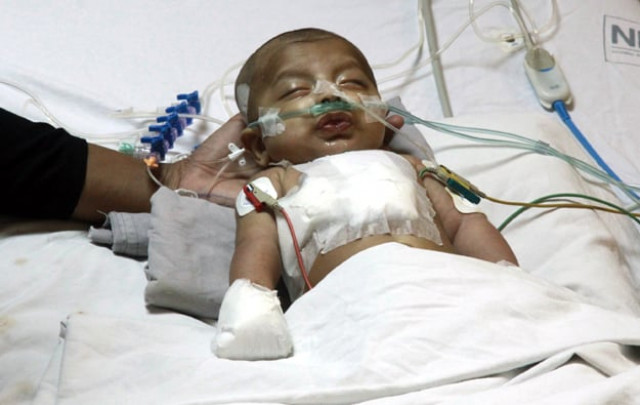
Medical experts have sounded the alarm over what they call a rapid increase in congenital heart diseases among children in Pakistan, with tetralogy of fallot (TOF) emerging as the most frequently diagnosed condition. If not identified and surgically treated in time, TOF can pose a serious threat to a child's life.
Speaking to The Express Tribune, NICVD Assistant Professor and Pediatric Cardiologist Dr Aaliya Kamal Ahsan — the first Pakistani to receive an official fellowship in paediatric cardiac imaging from IJN Malaysia — said her primary area of expertise is congenital heart disease, particularly TOF.
According to Dr Aaliya, around 40,000 to 60,000 children are born with heart diseases in Pakistan every year, out of which 10-12% (4,000-7,000) are TOF cases. At NICVD alone, surgeons perform two open-heart TOF surgeries and two shunt (closed-heart) procedures daily, amounting to thousands of operations annually.
"TOF is not treatable with medicines. It is entirely a surgical condition," she said. The disease comprises four defects: a hole in the heart, narrowing or misalignment of the pulmonary valve, an overriding aorta, and right ventricular hypertrophy. "Surgery is the only definitive treatment," she added.
Dr Aaliya warned that if surgery is not performed in time, the mortality rate can reach up to 40% within the first year of life. In contrast, if corrective surgery is done, the risk of death over the next 40 years drops to around 1%, significantly improving long-term survival.
NICVD surgeons consider TOF correction a routine yet highly specialised procedure. However, the disease presents a wide spectrum of symptoms. "Some infants show signs of blueness (cyanosis) during crying, bathing, or in the early morning.












This material may not be published, broadcast, rewritten, redistributed or derived from. Unless otherwise stated, all content is copyrighted © 2026 The Express Tribune.




COMMENTS
Comments are moderated and generally will be posted if they are on-topic and not abusive.
For more information, please see our Comments FAQ