Workers demand railway minister's removal
Updated 22 minutes ago

Experts urge govt to fix structural weaknesses; say growth model relies on repeatedly taxing existing filers
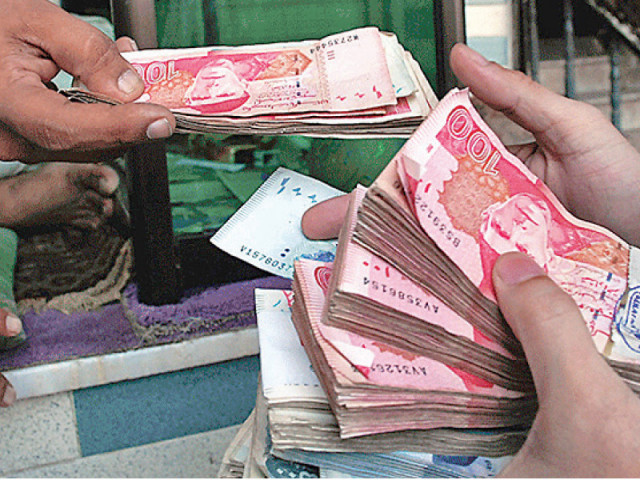
The struggle of Pakistan's financial managers to achieve revenue targets for the current fiscal year has once again come under the spotlight, with early data pointing to a widening gap between projected collections and actual performance.
The first quarter of fiscal year 2025-26 has already revealed a shortfall of nearly Rs200 billion, indicating deeper structural problems in the tax system at a time when the country remains under strict scrutiny from international lenders. The revenue target for the year requires a substantial 20.3% annual growth. However, the Federal Board of Revenue (FBR) has so far managed to achieve only 12.5% growth in the first quarter. This mismatch has prompted growing concerns among business leaders, who believe the government must urgently address flaws in the taxation framework before the gap becomes unmanageable.
Amid these concerns, Pakistan Industrial and Traders Association Front (PIAF) Chairman Syed Mahmood Ghaznavi cautioned that the government is running out of time to correct the structural weaknesses in tax administration. He said that the current growth model, dependent on repeated taxation of existing filers, is proving unsustainable. "The revenue system has deep gaps that must be fixed urgently. Without broadening the tax base and introducing fairer mechanisms, the government will continue to miss its targets," he said, adding that the shortfall emerging so early in the fiscal year is a clear warning sign.
Ghaznavi stressed that expanding the tax base, not repeatedly taxing the same segments, is the only way to achieve meaningful revenue growth. He also said that Pakistan cannot meet ambitious targets solely through coercive measures or arbitrary demands from documented sectors, especially when the undocumented economy remains significantly large. "The government needs to identify new taxpayers and bring informal sectors into the net through practical incentives, not pressure," he added. Business leaders believe the challenge is compounded by the FBR's continued dependence on fragmented, incomplete and sometimes outdated data. Several industry representatives said that the absence of a robust database prevents effective enforcement and leads to unfair taxation patterns. Without accurate information, they say, tax reforms cannot deliver the desired outcomes.
Kamran Aslam, a textile trader and exporter, said that the problem is far bigger than quarterly numbers. "You cannot run a 21st century revenue system on decades-old methods – exporters, manufacturers and traders all face increased scrutiny every year while large segments continue to operate outside the system. If the government wants stability, it must focus on data-driven taxation rather than burdening those who are already contributing."
He added that Pakistan's tax-to-GDP ratio remains stuck at one of the lowest levels in the region because policymakers have not taken bold steps to integrate the informal economy. "There is willingness among small traders to pay taxes, but the system is complex, costly and unpredictable. Unless taxation becomes simpler, compliance will continue to lag," he noted.
PIAF chairman suggested that a fixed-tax pilot project at a lower rate could help bring several untaxed segments into the formal net without confrontation. According to him, a reduced, predictable tax structure will encourage voluntary compliance and could potentially generate revenue far above current expectations. "If the government simplifies taxes and reduces the number of levies, collections may exceed targets by several times," he said.
The broader business community also seconds this view, emphasising that a stable, predictable and fair tax system is essential to attract investment and restore market confidence. Many point out that the International Monetary Fund (IMF) continues to push Pakistan for additional fiscal efforts to meet revenue targets for FY26, but warn that aggressive measures without reforms may harm economic activity. They added that Pakistan's ability to manage its revenue challenges will likely shape the broader economic outlook, particularly at a time when businesses already face rising costs, slowing demand and policy uncertainty. Almost all industry leaders are urging the government to take bold, data-driven decisions.













This material may not be published, broadcast, rewritten, redistributed or derived from. Unless otherwise stated, all content is copyrighted © 2026 The Express Tribune.









COMMENTS (2)
Comments are moderated and generally will be posted if they are on-topic and not abusive.
For more information, please see our Comments FAQ