Romance bestseller 'Beach Read' sets lead pairing
Updated 11 hours ago

Broadcasters weigh Israel's future in Eurovision as political tensions threaten to overshadow next year's contest
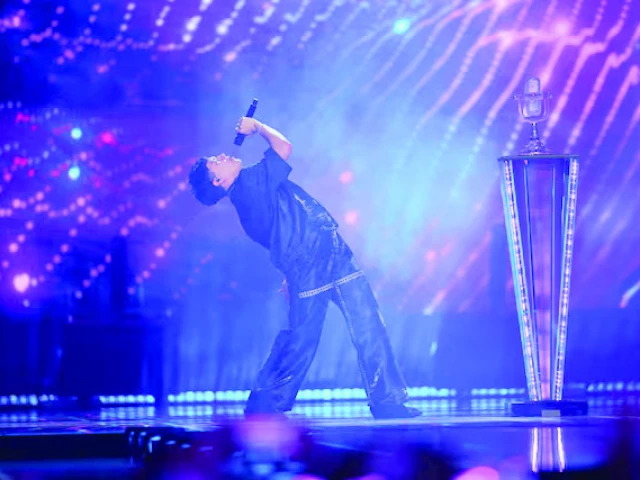
The Eurovision Song Contest faces a "watershed moment" on Thursday (today) when members of the body that organises the competition may vote on whether Israel can participate in 2026, as several countries threaten to withdraw over the Gaza war.
Members of the European Broadcasting Union will meet to consider new rules intended to prevent governments and third parties from disproportionately promoting entries to influence voters, following controversy this year surrounding Israel's second-place finish.
If broadcasters are not satisfied the measures are sufficient, a vote on participation will be held, the EBU said, without naming Israel directly.
Public broadcasters in Slovenia, Ireland, Spain and the Netherlands have all threatened to boycott the event, scheduled for May in Austria, if Israel is allowed to compete. They cite concerns about the Palestinian death toll in Gaza, which has surpassed 70,000, according to Gaza health authorities.
Eurovision, which attracts around 150 million viewers worldwide, aims to remain non-political, but the Gaza conflict has thrust it into dispute. A boycott by some of its biggest European participants, including Spain, could trigger a substantial fall in audience figures and sponsorship interest.
This year, critics accused Israel of unfairly boosting the result of its entrant Yuval Raphael, a survivor of the Oct 7 Hamas attack that triggered the war. Israel has not responded to the accusations but frequently maintains it is the target of a global smear campaign.
"We very much hope the package of measures will assure members that we have taken strong action to protect the neutrality and impartiality of the Song Contest," the EBU said.
Eurovision expert Paul Jordan, who completed a PhD on the competition, said it represented a "watershed" moment. "This is a real crisis point for Eurovision and the EBU — I think it probably has to go to a vote," he said.
Ben Robertson from fan site ESC Insight highlighted the risk of losing viewers but cautioned that excluding Israel could leave Eurovision increasingly isolated.
Luxembourg's RTL broadcaster supported the proposed changes, while Norway's NRK described the EBU's direction of travel as "promising". If a vote against Israel succeeds, Germany would likely withdraw and decline to broadcast the contest, a broadcasting industry source told Reuters.
Austrian host broadcaster ORF wants Israel to participate. Sources at Israeli broadcaster KAN told Reuters they believed any discussion of Israel's exclusion was unjustified, insisting KAN fully complies with EBU rules.
They also pointed to KAN's backing of Israeli performers who, they said, delivered memorable Eurovision moments. Russia has remained excluded from Eurovision since its 2022 invasion of Ukraine.









This material may not be published, broadcast, rewritten, redistributed or derived from. Unless otherwise stated, all content is copyrighted © 2026 The Express Tribune.









COMMENTS
Comments are moderated and generally will be posted if they are on-topic and not abusive.
For more information, please see our Comments FAQ